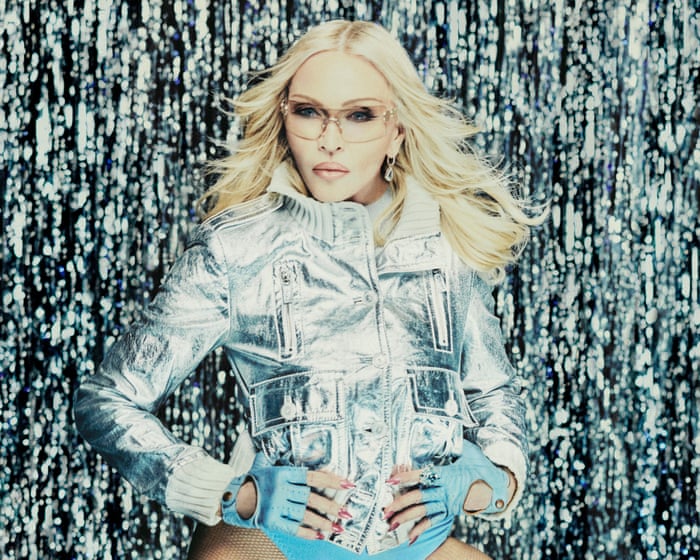
Ask yourself this: what are you doing it for? Is it for you, or is it for them? That’s the question Madonna raises on Bring Your Love, a collaboration with Sabrina Carpenter from Confessions II. It’s a question you could also ask about her decision to release a follow-up to 2005’s Confessions on a Dance Floor—21 years later.
Officially, of course, the answer is that it’s for her. Confessions II was inspired by Madonna’s 2023 Celebration tour, a whirlwind trip through her back catalog. The tour’s staging recreated videos for old hits like Don’t Tell Me and Human Nature, and it apparently got the singer thinking about her past. Sure enough, Confessions II is packed with references to Madonna’s history—not just the album it borrows its title and structure from, with house-influenced tracks flowing into each other like a DJ mix. There’s also the trip-hop vibe of Bedtime Stories (the album ends with a set of slower, more introspective songs), the club-hopping, fame-hungry Madonna from her 1982 debut single Everybody (who keeps popping up in the lyrics), and the maternal, spiritual Madonna of Ray of Light. The Test, a duet with her daughter Lourdes, feels like an older, wiser follow-up to that album’s lullaby-like Little Star, hinted at in its opening lines.
On the other hand, a more skeptical take might say Confessions II is for them—meaning the fans who’ve drifted away from Madonna over the last two decades. Most people agree that Confessions on a Dance Floor was her last unqualified success. Every album since has sold half as much as the one before: her most recent, 2019’s Madame X, moved about half a million copies, compared to Confessions on a Dance Floor’s 10 million. The title Confessions II seems to suggest, “Here’s the Madonna you used to love”—a desperate attempt to win back those who left.
There’s probably some truth to that, but Confessions II doesn’t feel desperate. Its sound avoids cutting-edge dance music trends in favor of more tried-and-true styles. There are hints of UK garage (a noticeable skip in the rhythms of Fragile and Good for the Soul), a whisper of EDM in Everything’s heavy bassline, and Euro pop-dance in Read My Lips’ mix of fast beats, Spanish guitar, and sampled batucada drums. But mostly, its influences are defiantly old school: I Feel So Free is built on Lil Louis’ classic Chicago track French Kiss; Bring Your Love borrows from Inner City’s Good Life; an acid line bursts through the middle of Love Without Words; and One Step Away has a lovely, understated piano that recalls Mr Fingers’ deep house. The slower tracks carry a distinctly 90s Mo’ Wax vibe: breakbeats, hazy atmospherics, crackling vinyl, muted orchestrations, a Gainsbourg-style spoken word bit from Belgian rapper Stromae, and a nod to Erik Satie’s Gnossienne No. 1 on Betrayal (more artfully done than the chunk of Tchaikovsky awkwardly dropped into 2019’s Dark Ballet).
This is music Madonna—and producer Stuart Price—knows well. She sounds far more at home here than she did incorporating trap on Rebel Heart or duetting with Maluma during Madame X’s attempts to latch onto the Latin pop trend. You can hear her confidence in the album’s willingness to let instrumental passages run long, like a 12-inch remix, and even more so in the lyrics. She clearly feels comfortable enough to be vulnerable: there’s some standard “Bitch, I’m Madonna” posturing, but more often the mood is reflective, even fragile and regretful.
Skip past newsletter promotion
Free newsletter | Weekly
Sign up to Sleeve Notes
Get music news, bold reviews, and more.News and unexpected extras. Every genre, every era, every week.
Preview the latest
Enter your email
Sign up
After newsletter promotion
Vagina lasers, bananas, and an awkward Cumberbatch: 10 surprising moments in Madonna’s new video
Read more
The glimpses of her life in early 80s New York are fantastic. Danceteria paints a vivid picture of the famous club, name-dropping not only artists Jean-Michel Basquiat and Keith Haring but also doorman Haoui Montaug. It quotes Lou Reed’s Walk on the Wild Side, neatly connecting different sides of Manhattan’s underground scene. The vintage drum machine-driven LES Girl remembers a guitar-playing bohemian ex, who – not entirely surprisingly – got dumped when it became clear he didn’t share her drive. The most touching song might be Fragile, an acoustic guitar-heavy tribute to her late brother Christopher, with whom Madonna had a rocky relationship – “we shared a fragile bond … don’t forget about me, don’t forget to be happy” – but The Test comes close, filled with maternal regret: “You didn’t ask for all the flashing lights.”
It’s not all good news. Confessions II is nearly 10 minutes longer than the original, and it doesn’t need to be: you could easily cut a couple of the less impressive house tracks, like Love Sensation and School. It lacks a clear, solid-gold pop hit like Hung Up, although Danceteria’s bright disco house – one of two tracks co-written and produced by Andrew Watt and Cirkut – comes close. But even if it’s not quite as good as Confessions on a Dance Floor, it’s definitely Madonna’s best album since Confessions on a Dance Floor, which you suspect will be more than enough for her fans, and might even win back some who had drifted away: a reconciliation with her past that looks good for her future.
This week Alexis listened to
Feeble Little Horse – Shopping
Shoegaze-adjacent, but more sassy than that label suggests. Shopping is poppy, noisy, and a little creepy: “Would you fuck with these shoes? I want to look just like you.”
Frequently Asked Questions
Here is a list of FAQs based on the review title Madonna Confessions II Review A nostalgic dancefloor journey makes this her most exciting album in 20 years
BeginnerLevel Questions
Q What is Confessions II
A Its a new unofficial title for a rumored followup to Madonnas 2005 album Confessions on a Dance Floor The review suggests its a real album that brings back her classic dance sound
Q Why is this album considered her most exciting in 20 years
A The review says it recaptures the fun energy and pure dancefloor vibes of her early hits Fans have been waiting for a return to that sound and this album delivers it
Q Is this a real Madonna album
A The review treats it as a real newly released project Its presented as a nostalgic journey so its likely a legitimate release or a highly anticipated fan concept that feels official
Q What kind of music is on Confessions II
A Its described as a nostalgic dancefloor journey Expect upbeat clubready tracks with disco house and electronic influences similar to her 2005 album
IntermediateLevel Questions
Q How does Confessions II compare to Madonnas recent albums
A According to the review its a big improvement Her recent albums were more experimental or popfocused This one goes back to pure joyful dance music which many fans missed
Q Is this album a direct sequel to Confessions on a Dance Floor
A Yes the title suggests its a direct followup The review implies it carries the same nonstop dance energy continuous mixing and celebratory mood of the 2005 original
Q What does nostalgic dancefloor journey mean in practice
A It means the album feels like a DJ set or a night out The songs blend into each other use retro sounds and are designed to keep you moving from start to finish
AdvancedLevel Questions