At the Croydon secondary school I attended in the late 1990s, the deputy headmistress was a stocky woman with a military haircut who patrolled the corridors in voluminous outfits patterned in shades of brown. Her clothes were often discussed, unkindly, by the teenage girls in her charge—as was her voice, which sounded like a blunt knife being dragged across a rough surface. Thirty years later, I can still hear that terrible voice referring to my “mystery illness.” In truth, she never actually spoke those words—they appeared in a typed letter she sent to my parents about my long absence from school. Still, the accusing force of those five syllables remains as clear in my mind as if she were looming over me.
I was 11, and after catching what seemed like a normal virus, I just never got better. Instead, my body seemed to get stuck in a dull, unchanging state. I had a headache, a sore throat, swollen lymph nodes, body aches that were both dull and sharp, fatigue, weakness, and something I later learned was called “postural orthostatic tachycardia syndrome”—a feeling of faintness and momentary blackouts when sitting or standing up. Listing symptoms like this, as separate and manageable items, feels misleading. I wish they felt separate and manageable. Instead, being ill felt—and still feels—like a thick, heavy cloud. When that cloud settles, my blood feels like old glue mixed with whatever you’d scrape off the bottom of a mop. During bad episodes, I can’t quite find my mind or my personality. Reading is impossible. TV feels grating. Breathing takes effort, and forming words is a struggle.
For a shy, authority-fearing 11-year-old, none of this was easy to explain. The most obvious symptom was the headache, so that’s what doctors focused on. They briefly considered something called “benign intracranial hypertension,” then dropped it. (Whatever was happening, I refused to believe the word “benign” applied.) Meanwhile, the deputy headmistress’s letter to my parents made its point clear: their daughter needed to stop this nonsense and get back to excelling in school.
I’m painting the deputy headmistress as a Roald Dahl–style villain, a Miss Trunchbull to my self-serving image as a tiny Matilda. But she wasn’t wrong to call it a mystery illness—a phrase she may not have meant unkindly. After all, the condition has remained something of a mystery, as chronic illnesses often do, even after diagnosis. I’ve gone half-mad wondering what’s within my control and what isn’t, whether it’s delusional to believe I can fully recover or defeatist to think I can’t.
I can’t say for sure that any doctor ever outright said, “It’s all in your head.” But for decades—first in the suburbs, then in London, then in New York, where I moved in my mid-20s—doctor after doctor essentially told me there was nothing physically wrong with me. The sexism of Western medicine, an institution that has long taken the male body as its default and often dismissed female patients, is now (finally) a recognized problem with its own name: “medical misogyny.” (The phrase was a finalist for the Macquarie Dictionary’s word of the year in 2025, though it lost out to “AI slop.”) But 10—and certainly 20—years ago, this bias was far less acknowledged. Like so many other chronically ill women, I relived the same experience with silent despair.
It always went like this: a doctor would glance at my blood test results in their (but usually his) hands and tell me I was fine. They’d often avoid eye contact as they said it. My test results were indeed fine, and so were my vitals, more or less (apart from slightly low blood pressure), but the situationIt was clear that I was not well. One doctor told me to eat vegetables. When I managed to mumble that I already did, she gave a slight smirk and said, “Yeah, but do you really?” Anger takes energy. Only now, looking back, do I think I would have liked to break a chair. At the time, I could barely speak. It’s a sad truth that the sicker you are, the more you need to advocate for yourself, and the less able you are to do so.
Now, I feel more inclined to give those doctors the benefit of the doubt. They were doing their best—and it’s possible the dismissiveness was partly my own projection. Still, their belief that the truth lay in the numbers on paper, rather than in the obviously sick person in front of them, seemed like the same kind of literalism that leads people to drive into bodies of water because the GPS told them to.
When I could move past self-pity—a constant temptation for the ill—to form an actual thought, it went something like: Do these doctors think I’m acting? In that case, shouldn’t they urge me to become the next Meryl Streep, rather than wasting my talent in a doctor’s office? Not being believed sometimes felt harder to bear than the illness itself. I needed someone to acknowledge my reality—or, in medical terms, a confident and comprehensive diagnosis.
I was in my early 30s when my partner at the time, who was good at researching online, suggested I might have myalgic encephalomyelitis (ME), also known by the extremely frustrating name of chronic fatigue syndrome. It’s frustrating because it can make it sound like the problem is just that you’re feeling a bit “meh,” which describes most people most of the time. People with ME/CFS also typically experience a range of other, shifting symptoms beyond fatigue. On my worst days, I’ve felt gripped by something almost demonic. Once, while listening to a guided meditation for pain relief, a soothing voice instructed me to find a part of my body that wasn’t in pain. My attention settled on my palms. Minutes later, a searing hot sensation shot through both hands, as if I’d had the nerve to try to banish the pain. Oh no you don’t, said the demon.
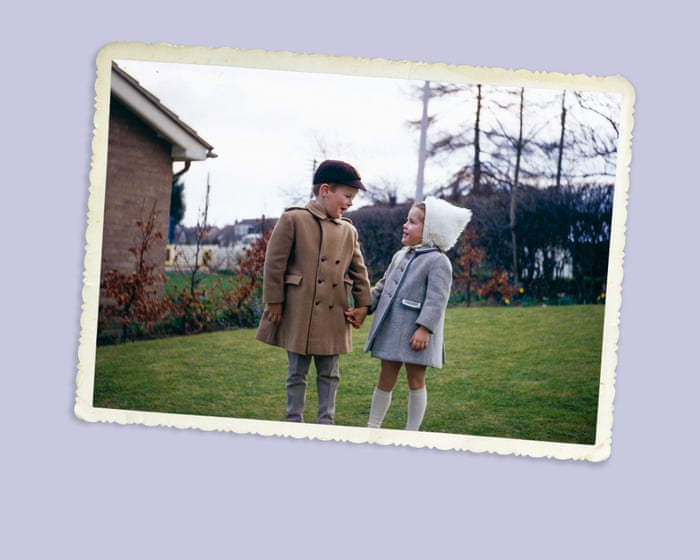
When my partner first suggested his layperson’s diagnosis, I didn’t immediately accept that I deserved such a stamp of legitimacy. My older brother Matthew had been diagnosed with the same condition at age 12, just a year before I also got sick. Was I just a little sister copying her big brother for attention? Here, the person having trouble recognizing or believing in my condition was me. Maybe because the illness started when I was a child, I remained, in a sense, the kid deferring to adult judgment when it came to my own health—and these were adults suspicious of shirkers, loafers, fakers, and hypochondriacs.
Eventually, I made an appointment with an ME/CFS specialist in New York City. The doctor was a blunt Englishman with a plummy accent, military bearing, and strictly side-parted white hair. With something of a deputy headmistress’s brusqueness and patrician confidence, he professionally confirmed my boyfriend’s amateur diagnosis: yes, I had ME/CFS. I learned that the strange, gluey sensation and temporary vision loss I experienced when standing up weren’t just quirks, but authenticating symptoms caused by low blood pressure.
For 20 years, I’d left doctors’ offices in desperation; for the first time, I left in tears of relief. My intermittent condition was no longer a mystery illness but a diagnosable affliction—a complex neuroimmune disease with unknown causes, often triggered by infections. I felt I could now wield the diagnosis like an FBI agent flashing her badge. There is still no standardThe treatment was difficult, but I knew at least that my illness had almost nothing to do with how many vegetables I ate. I wrote a long, earnest Facebook post “coming out” about my ME/CFS, which I deleted soon after, embarrassed by its tone of self-importance and prideful victimhood.
In any case, the psychological relief of a diagnosis probably helped my physical health more than the specialist’s medication, which did little to ease the debilitating episodes. These spells continued to last from a few weeks to several months, but after moving to Colorado in late 2018, I noticed a small improvement, which I attributed to being newly in love—that surely never hurts. The more likely source of my better health, though, was increased vitamin D and serotonin: Boulder, Colorado, at 1,655 meters above sea level, is famous for its sunshine and mountain trails.
When I’m well, which is thankfully most of the time, I look back on past ME/CFS episodes with almost neutral detachment—not from Zen-like acceptance, but because I don’t quite believe in my illness. I suppose this is similar to how someone forgets the agony of childbirth after giving birth. Why look back to dwell on the hell you’ve just escaped? When I’m back to being a functioning person in the world, I sometimes catch myself in a plainly contradictory thought: that didn’t really happen, and it never will again.
In late October 2023, it all happened again, worse than ever. This time, I couldn’t even access the memory of good health. I could acknowledge, in a dull way, that I’d recently climbed massive Colorado mountains, but had I really? Getting out of bed to cross the 10 feet to the bathroom seemed more daunting than scaling a 14,000-foot peak.
I had no appetite, so my husband sought out mood-boosting treats in liquid form: fancy cold-pressed juices, exotic kombuchas, and aspirational sparkling waters—lychee, yuzu, calamansi. (It’s a golden age for few things in the U.S. except bougie seltzer.) There was a surprisingly delicious green elixir called Goldthread plant-based tonic that I drank almost daily. A year or so later, while in good health, I made the mistake of opening one. It was like Proust’s madeleine, but the death-metal-soundtracked, gothic-horror version: one sip hurled me back to the darkness of late 2023. I’ll never drink that stuff again.
After eight weeks, I recovered and once again assumed I’d never be so sick. Then, in the spring of 2024, came another prolonged episode. Desperate, I decided to ask my body what it needed—a question perhaps born from half a decade living in one of the most woo-woo college towns in the U.S. The reply—two words that popped into my mind from who knows where—was strangely clear and succinct: “Healing touch.” Healing touch it was, then. The search term “energy healer Boulder” returned 244,000 results. (Like I said, pretty woo-woo.)
I don’t remember much from my session with whichever practitioner came up first—just two details. First, she told me I had a “leaky sacrum,” a phrase I might have found funny if I hadn’t felt like death. Apparently, a leaky sacrum had to do with over-helping others. (I didn’t attempt to understand this.) The second, more significant moment came when this kind young woman glanced at my intake form, saw “ME/CFS,” and said, “Oh, you need to try brain retraining.” There was a simple confidence in her tone, as though brain retraining—whatever that was—were the insulin to my diabetes or inhaler to my asthma.
The confidence in her voice clashed with my own skepticism. First, there was the name. I liked my brain best of all my organs; I didn’t think it needed retraining. I also felt a general…A general resistance, hardened by thwarted hopes, had built up in me against any new treatment. (I’ve tried IVs, acupuncture, adrenal support protocols, reiki, reflexology, homeopathy, traditional Chinese medicine, and more supplements than I can count.) My biggest mental obstacle, however, was that “brain retraining” sounded like another version of “it’s all in your head.” For nearly three decades, I had insisted the problem was my body—this undeniably physical suffering, these swollen golf-ball lymph nodes (feel them!), this unfakeable weakness (see it!)—not my mind. But in doing so, I had made the mistake of assuming the body and mind were separate territories.
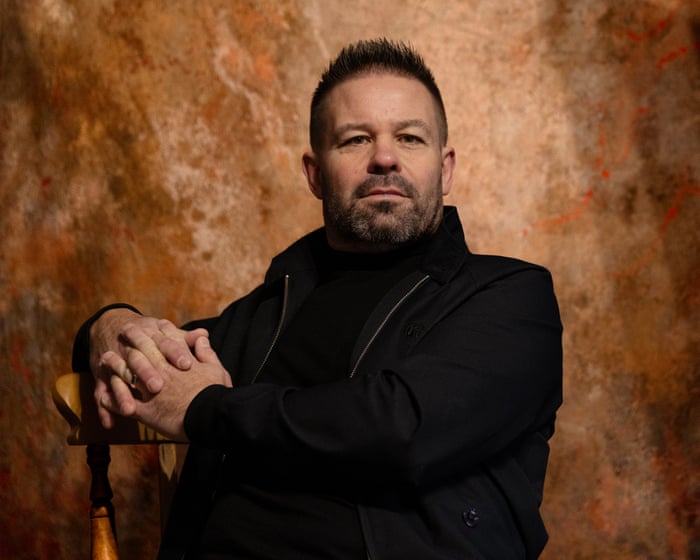
Still, remembering the energy healer’s assurance, I gave it a try. Once again, I was too sick and brain-fogged to do proper research. I simply contacted the first person Google offered: Jason McTiernan, a bright-eyed Irishman with spiky ginger hair and full-wattage optimism. When I met him over Zoom, I guessed he was about a decade younger than his actual age of 40. There on my laptop screen, he rattled off a series of probing, psychological questions that seemed at odds with his cheerful, checklist-style manner: Was I a perfectionist? Would I say I was an overachiever? Did I tend to overextend myself helping others? (Leaky sacrum! I thought.) I answered yes to all of the above. When Jason said, “Ironically, it’s never a lazy person that gets chronic fatigue,” it was another statement I wanted to stamp on a badge and brandish in the face of doubters. Even now, part of me is writing this as a kind of sick note addressed to some skeptical superego—the great deputy headmistress in the sky—to excuse my lack of productivity.
The day after our first Zoom call, I transferred Jason a sum of money that made me wince. With that, he became my “wellness coach,” and so began the retraining of my brain. The first principle of brain retraining is the power of the mind-body connection—the mysterious feedback loop between the psychological and the somatic that explains the placebo effect. The second, more controversial notion is that conditions like long Covid and ME/CFS are explained by the brain and autonomic nervous system erroneously perceiving a threat, causing them to signal the body that it’s in danger. In this way, the theory goes, the mind traps the body in an illness that has outlived its physical cause. Brain retraining seeks to “rewire” the mind’s neural pathways out of these loops. In other words, the very implication I’d railed against for decades was, in some sense, true: “psychosomatic” need no longer be a dirty word, but instead a term that helps explain the vexing nature of autoimmune and neuroimmune disorders. (Skeptics of brain retraining point to research indicating the Epstein-Barr virus may be the original cause of lupus and ME/CFS; even Jason acknowledged the condition involves biology, not just neurology.)
I had homework. I was to log in to Jason’s website and watch messianically positive video testimonials—”recovery stories” in which men and women swore to the miraculous effects of brain retraining. There’s still scant empirical research, but I chose to put my faith in this body of anecdotal evidence. I was also to make an aspirational “vision board” depicting my dream life post-recovery. This offended my dignity, but I did it anyway. And I was to write down every tiny achievement of the day on a scrap of paper, fold it up, and deposit these little chits in a jar. (“Took a bath,” “made a smoothie,” and other such feats.) Most important, though, were the brain retraining exercises themselves, repeated up to 20 times a day. The “deep relaxation technique” involved intoning, “I choose to feel deeply relaxed and at ease.”I was told to be “fully and completely relaxed” before imagining a place associated with feelings of calm. (I not very imaginatively pictured a beach.) I was also to imagine enjoying light exercise without triggering the dreaded condition known to ME/CFS patients as PEM: post-exertional malaise. Finally, I was to thrust my arms out wide, tilt my chin high—like Leonardo DiCaprio on the prow of the Titanic—as I emphatically declared: “I am right on track to making a full and complete recovery!” Croaking out this statement in bed, at a time when I could barely speak, seemed both cruel and funny. Leo, as you remember, drowns.
The aim of all this was to revive the parasympathetic nervous system, known more colloquially as the body’s “rest and digest” mode—as opposed to the more famous, less helpful “fight or flight.” Apparently, I’d been stuck in fight-or-flight mode, even while ostensibly resting and digesting through meditation, deep breathing, and unholy amounts of The Office. If I could believe myself well, I could trick my body into being well—not quite “fake it till you make it,” but, as Jason put it, “embody it until you become it.”
As I immersed myself in the project, I guarded against too much hope by complaining to friends about how corny it all was. But they were too concerned to join in. One said simply: “I don’t think it’s corny to get well.” She was right. The goal was lasting health—and dignified phrasing seemed a small sacrifice for such a prize. I went on beholding my vision board, filling my achievement jars, doing my goofy recitations. In short, I summoned faith, and hoped the ground for it would follow.
While I was sick, the thought of going running was about as tolerable as the idea of ordering pizza after Christmas dinner, but I kept effortfully willing the sensation of feet hitting the trail, heart pumping, generally feeling unstoppable—possibly while Sia’s classic 2016 empowerment anthem Unstoppable blasted through my headphones. In particular, I visualized reaching the trail’s highest point and turning to look back with satisfaction at how far I’d come. (Sometimes a person needs a crashingly obvious metaphor.)
On May 13, 2024, I laced up my trainers and the imagined became real: I sent Jason a grinning selfie from the top of the trail. He replied with several texts and a riot of joyful emojis. “Wahooo!!!! Well done Hermione!!!”; “Freedom increasing!! Wellness, peacefulness, energy!!” and so on.
Yeah! I thought. Or rather: Yeah!!!!!!! Maybe multiple exclamation points were underrated!!!!
There followed a period of quasi-religious mania. I was cured! (!!!) I began referring to my ME/CFS in the past tense and applying the principles of brain retraining to other areas of my life. Finding myself running further and faster, and writing with more ease, I felt superheroic. My husband, delighted to see me well, also became a little wary around me, as if I might take the mind-over-matter credo to the point of attempting to walk through walls.
Last October, I contacted Jason McTiernan for a second time, now as a journalist rather than a client. Some months earlier I’d been flattened by another episode. With it came a new desolation—the loss of faith. Only in this moment did it occur to me that I’d recovered from the previous episode in the usual amount of time. Like some disillusioned priest saying his Hail Marys anyway, I’d run through my brain retraining exercises, making entries in a notebook for all the rounds I was doing. I filled pages. Days passed. Nothing changed. After a couple of weeks I gave up. Why hadn’t it worked?
Jason is an engineer by training—a profession both alien and admirable to me—and I detected an engineer’s mindset in his methodology, not least when he described brain retraining as “giving your internal operating system a huge upgrade, programming in a better, more whole version of you.” Was it my deep aversion to t…Was it the idea that a human is like a computer that held me back? Did my belief that language is not code—and that this is precisely what makes it sacred—keep me from getting better? In short, was it my own snobbery? “Language is very important,” Jason acknowledged. “It needs to feel congruent. If it doesn’t feel congruent, then it’s not going to work.”
There was another concern I didn’t share with Jason: the individualistic wellness culture behind brain retraining makes me politically uncomfortable. A key text in the wellness movement is Joe Dispenza’s bestselling You Are the Placebo, where the author, a corporate consultant, claims to have healed from a severe spinal injury through visualization alone—by meticulously imagining each vertebra mending every day. Citing various case studies, Dispenza argues that we can heal our bodies with our minds. In a country where people die because they can’t afford cancer treatment, this isn’t just hard to believe—it’s snake oil. Under America’s brutal, profit-driven healthcare system, suggesting that someone’s thoughts might be the only medicine they need is dangerously irresponsible. Like others who are suffering, I needed real treatment, not just positive vibes.
For 20 years, I avoided writing about illness. The unwanted topic already consumed so much mental space: I didn’t want to struggle through brain fog to write about brain fog. I’d rather think about things I truly love: books, art, politics. Or even the simple joy of heated car seats, the frivolous pleasure of nice pajamas. Anything, really, except ME/CFS. Secretly, I made a bargain with the demon: I’ll write about you if you leave. No deal. Writing this essay didn’t exorcise anything. In fact, aside from six days on my feet in November, I was in bed from late October until late January, using my limited daily energy to write a few words here and there.
So, I haven’t produced the triumphant recovery story I’d hoped for, but this isn’t a bitter exposé of brain retraining as fraud either. Brain retraining wasn’t the miracle I longed for, nor was it the nonsense I’ve sometimes wanted to denounce it as in my grief and disappointment. Either conclusion would have offered a kind of comfort.
After a couple of very bad days last month, my husband and I discussed whether we should buy a Zimmer frame (a “walker” in American English) so I could get from bed to bathroom without him helping me along like a wounded soldier. If I agreed to have this decidedly unsexy piece of geriatric furniture by my bed, would I be embracing the kind of radical acceptance that could eventually lead to recovery? Or, on the other hand, would a walking frame cement my dreaded identity as “an invalid,” dooming me to despair, self-pity, and worsening health?
The question turned into a mini-psychodrama, torn between acceptance and hope. Once again, I was trying to bargain with the demon, and demons don’t bargain. For a couple of weeks, I moved in a slow relay from one piece of furniture to another to get to the bathroom. Then I walked slowly but unaided, one block up our street and back. The next day, I went a little farther. Suddenly, the idea of a walking frame seemed absurdly hypochondriacal: what had all that worry been about?
I would have loved to emerge from this with some brilliant insight, but the only wisdom I have feels more like a modest lump of coal: illness is meaningless and random—it happens to all of us, to varying degrees, and it simply sucks. I was wrong to think that this chronic condition demanded mMeaning cannot be forced from it. What it demands is far more ordinary—just the ongoing work of management and mitigation. (Last week, a new specialist I saw recommended a series of tests. She didn’t promise a cure, only more information.) I’m certain I’ll hike up mountains again—maybe even next month. I’m also sure that at some point, I’ll once again be in bed for weeks, watching the shadows on the walls. But there’s no demon. It’s just me and my still-mysterious illness. Listen to our podcasts here and sign up for the long read weekly email here.
Frequently Asked Questions
Of course Here is a list of FAQs about chronic fatigue syndrome framed around the powerful sentiment of the struggle feeling almost demonic
Understanding the Basics
Q What is chronic fatigue syndrome
A Its a serious longterm illness that affects many body systems Its not just being tired It causes extreme exhaustion that isnt improved by rest and gets worse after any physical or mental activity
Q Why does it sometimes feel demonic or beyond just physical
A Because the symptoms can be severe unpredictable and invisible The profound exhaustion cognitive dysfunction and pain can feel like theyve taken over your body and mind stripping away your sense of self and control in a way that feels cruel and inexplicable
Q Is it all in my head
A No While the exact cause is still being researched CFSME is a recognized biological illness It involves measurable changes in the immune nervous and energy production systems The psychological distress is a result of coping with a debilitating physical disease
Symptoms and Daily Life
Q What does a crash or PEM feel like
A Imagine a severe flu combined with a hangover and being hit by a truck After even minor overexertion you may experience crushing fatigue intense muscle pain sore throat feverishness and worsened brain fog often 2448 hours later
Q Whats the brain fog like
A Its cognitive dysfunction You might struggle to find words follow conversations read or remember simple things It can feel like your brain is filled with static or thick mud
Q Why do my symptoms fluctuate so much from day to day
A This is a hallmark of the illness Energy levels are not stable Factors like activity stress sleep quality and even changes in weather can trigger a worsening of symptoms making it feel unpredictable and maddening
Management and Coping
Q Whats the most important thing I can do to manage CFSME
A