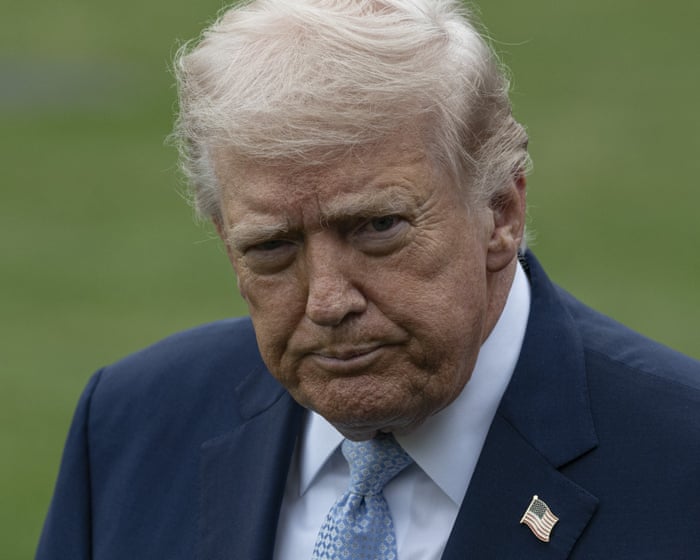
Donald Trump has extended his deadline to “hit and obliterate” Iran’s power stations and energy infrastructure by five days, stating that the U.S. and Iran have held “very good and productive conversations” on ending the three-week-old conflict. He made the announcement on Truth Social, appearing to avert a major escalation for now.
Tehran did not immediately respond officially. However, the Fars news agency, linked to Iran’s Revolutionary Guard, denied any talks with the U.S., and the state-owned IRNA reported that Iran’s foreign ministry said no negotiations had taken place.
Countries including Oman, Turkey, Egypt, and Pakistan have reportedly been involved in recent efforts to broker an end to hostilities, though the effectiveness of these contacts remains unclear. Oman’s foreign minister stated on Monday that Oman is working to ensure safe passage through the Strait of Hormuz.
Trump initially issued a 48-hour ultimatum on Sunday, threatening to destroy Iran’s energy infrastructure. In response, Iran threatened to target power plants supplying U.S. bases in the Middle East, vital desalination facilities in Gulf countries, and to intensify strikes on Israel.
Fars claimed an unidentified source said Trump retreated after hearing Iran would target all power plants in West Asia. Iranian state television displayed a graphic stating, “U.S. president backs down following Iran’s firm warning.”
Iranian attacks have effectively closed the Strait of Hormuz, which handles a fifth of global oil and liquefied natural gas, threatening a severe global economic crisis. Stock markets fell sharply early Monday before Trump announced the extension.
Since then, oil prices have eased and financial markets have recovered some losses.
Trump’s announcement came as the United Arab Emirates reported intercepting new Iranian fire, and Israeli and U.S. warplanes continued strikes across Iran.
In his post, Trump said the U.S. and Iran have had “very good and productive conversations” over the past two days and that he instructed the Department of War to postpone military strikes for five days, depending on the success of ongoing discussions.
It remains unclear how the two sides might reach a “complete and total resolution” to end the conflict, which began last month with a U.S.-Israeli airstrike that killed Supreme Leader Ali Khamenei and many senior officials.
Trump previously stated the goal was regime change and called on “the Iranian people to take back their country.” On Friday, he complained that the U.S. had “nobody to talk to” in Iran, but added, “We like it that way.”
He claimed, “Their navy’s gone. Their air force is gone. Their anti-aircraft is all gone. It’s all gone. Their radar is all gone. Their leaders are all gone.”
Analysts say it will be difficult for the U.S. to fully reopen the Strait of Hormuz through military means alone. There are also concerns about Iran’s stockpile of enriched uranium, whose location is unclear.
Publicly, Tehran has made ceasefire demands that Washington would find impossible to meet, such as an end to the U.S. military presence in the Gulf and massive compensation for war damages.
Trump’s ultimatum came hours after two Iranian missiles struck southern Israel, injuring more than 100 people in the most destructive attack of the conflict.Since the war began, Israeli Prime Minister Benjamin Netanyahu has vowed to retaliate “on all fronts.” Observers noted Iran’s defiant response, with Tehran warning it would “irreversibly destroy” essential infrastructure across the Middle East, including vital water systems, if the U.S. followed through on President Trump’s threat.
Iran also stated it would target power plants supplying electricity to American bases, “as well as the economic, industrial, and energy infrastructures in which Americans have shares.”
The war, launched by the U.S. and Israel on February 28, has resulted in more than 2,000 fatalities, the majority of them in Iran.
Frequently Asked Questions
Of course Here is a list of FAQs about the news that Trump extends Iran deadline by five days calling the talks productive
Beginner General Understanding
1 What exactly happened
Former President Donald Trump announced a fiveday extension to a key deadline in ongoing negotiations or a diplomatic process with Iran stating that the discussions were making progress
2 What was the original deadline for
The specific deadline would have been related to a major point of contention such as the expiration of a sanctions waiver a deadline for Iran to comply with certain nuclear commitments or a congressional notification period for reimposing sanctions
3 Why extend it by only five days
A short extension suggests that negotiators believe they are very close to an agreement on a specific issue but need a little more time to finalize the details Its a sign of momentum not a major reset
4 What does productive talks mean in this context
It means that in the view of the administration at the time both sides were actively negotiating making concessions and moving toward a potential deal or understanding rather than talks being stalled or hostile
Advanced Contextual Questions
5 What was the broader diplomatic context of this extension
This likely occurred within the framework of the US maximum pressure campaign on Iran where the US had withdrawn from the JCPOA and was using sanctions to force a new stricter agreement Extensions were tactical tools to keep talks alive
6 What are the potential benefits of such a short extension
Maintains Pressure Keeps the deadline leverage intact
Shows Flexibility Signals a willingness to negotiate in good faith
Prevents Collapse Avoids an immediate dramatic escalation that could derail talks completely
7 What are the common problems or criticisms of this approach
Kicking the Can Critics might argue it just delays an inevitable confrontation without achieving a breakthrough
Encouraging Brinkmanship It could teach the other side that deadlines are always negotiable potentially encouraging them to stall further
Domestic Political Pressure Extensions can be criticized by hardliners on both sides as showing weakness