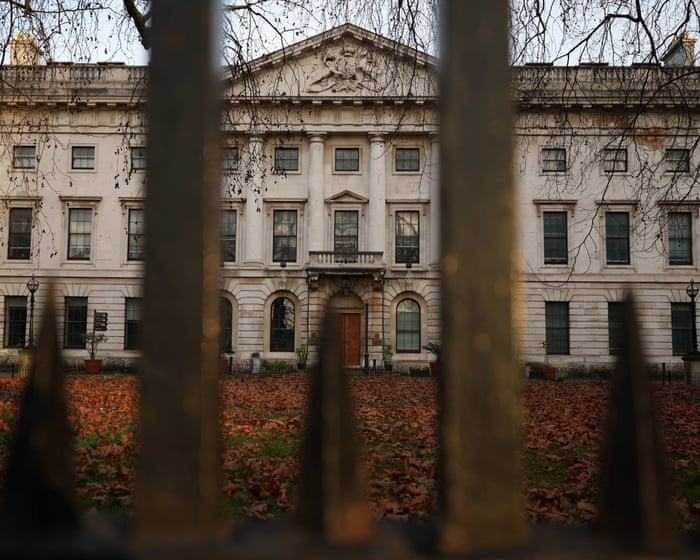
UK Communities Secretary Steve Reed has approved China’s plans to build a large new embassy near the Tower of London after intelligence officials assured him that any national security risks could be managed.
The decision clears the way for Prime Minister Keir Starmer to visit Beijing in the coming weeks, though local residents intend to legally challenge the approval, which could delay the project for months or years.
Reed stated that “ethical or similar objections to the provision of an embassy for a specific country cannot be a material planning consideration,” as he largely accepted a report from the department’s Planning Inspectorate.
MPs from across the political spectrum have opposed the application. However, security services have indicated they can handle potential espionage risks from the expanded site, which is located near data cables running to the City of London.
Reed noted that neither the Home Office nor the Foreign Office, after consulting with police and intelligence agencies MI5 and MI6, had specific security concerns that would warrant blocking the development. He added that the owners of the nearby cables had also not raised any issues with him.
Shortly afterward, the government published a joint letter from MI5 head Ken McCallum and GCHQ head Anne Keast-Butler, outlining the national security risks posed by the embassy and stating that, in their view, these risks could be managed. They acknowledged that it is “not realistic to expect to be able wholly to eliminate each and every potential risk,” but said they had developed “a package of national security mitigations” that is “expert, professional and proportionate.”
This conclusion was supported by the cross-party Intelligence and Security Committee. However, its chair, Lord Beamish, criticized the process by which spy agencies informed the planning decision, calling it poorly coordinated and insufficiently robust for such a significant matter. The Labour peer said there was a lack of clarity regarding the role of national security considerations and that key reports lacked necessary detail, were handled piecemeal, and appeared outdated. The committee plans to write to the prime minister to express its concerns.
Critics argue that the embassy’s size—it would be the largest in Europe, housing over 200 staff—would make it a hub for Chinese espionage and intimidation of dissidents, including those from Hong Kong, as well as a target for large, difficult-to-police protests.
Shadow Foreign Secretary Priti Patel accused Keir Starmer of a “shameful super-embassy surrender,” claiming the prime minister is giving Chinese President Xi Jinping “what he wants—a colossal spy hub in the heart of our capital.” Iain Duncan Smith, a former Conservative leader and co-chair of the Inter-Parliamentary Alliance on China, also criticized Reed for ignoring security warnings and broader concerns, calling it a “terrible decision” that overlooks the Chinese Communist Party’s alleged human rights abuses and espionage activities.
Reed, however, stated that China has agreed to consolidate seven existing diplomatic sites into the new location.Once the new embassy is built, MI5 has indicated that consolidating diplomatic sites into one location would make monitoring easier. In a 23-page letter released on Tuesday morning, Reed concluded that any espionage against the UK, harassment of dissidents, or surveillance conducted by China from the embassy site could be addressed through “other legal processes and by various agencies,” and could not be controlled “through the planning system.”
Residents living near the site said they hope to seek a judicial review if they can raise £145,000 to fund legal representation. Mark Nygate, treasurer of the Royal Mint Court residents’ association, stated, “The residents are determined to keep fighting today’s decision.”
Former head of GCHQ’s National Cyber Security Centre, Ciaran Martin, said on Sunday that British intelligence agencies would not allow the “mega embassy” to proceed if it posed unmanageable risks.
Although officials claim there has been no political influence in the planning process, the approval is likely to ease tensions ahead of Starmer’s expected visit to China at the end of January.
Beijing has prioritized the embassy in the UK-China relationship. Xi raised the matter directly with the prime minister during their first phone call in August 2024.
For years, the UK’s plans to redevelop its own outpost in China’s capital have been blocked by Xi’s government due to the dispute over the London embassy.
Frequently Asked Questions
FAQs UK Approval of New Chinese Embassy in London
Basic Understanding
What was just approved
The UK government has approved plans for China to build a new larger embassy complex in London
Where will the new embassy be
It will be built on the site of the Royal Mint Court a historic location in London near the Tower of London
Why is this news
The approval came after a significant delay due to security concerns raised by UK intelligence agencies about the size and design of the proposed complex
What is an embassy
An embassy is the official headquarters of a countrys diplomatic mission in another countrys capital It represents its government assists its citizens abroad and is considered that nations sovereign territory
Security Concerns
What were the main security concerns
UK security services were worried the large multibuilding complex could be used for espionage activities potentially allowing surveillance of nearby government and financial institutions
How were these concerns addressed
China reportedly agreed to significant design and layout modifications Specific details are classified but they likely involve reducing the buildings height changing window placements and adjusting the site plan to address oversight risks
Does this mean the UK fully trusts China now
No The approval means the specific identified security risks for this building project have been mitigated to a level the UK government finds acceptable It does not change the broader complex UKChina relationship which is described as one of systemic competition
Will the embassy have extraterritorial status
Yes like all embassies the grounds will be Chinese sovereign territory protected by international law However its construction must still comply with UK local planning and safety regulations
Implications Reasons
Why does China want a new embassy
Its current embassy is considered outdated and too small for its growing diplomatic and consular staff A new modern complex reflects Chinas global stature and expanding overseas interests
Why did the UK approve it despite tensions
Diplomatic relations require functional embassies Blocking it entirely could have severely damaged ties The UK likely balanced security needs with the practical necessity of maintaining diplomatic channels with a major global power
What does this say about UKChina relations
It shows that pragmatic diplomacy can proceed even amidst significant strategic rivalry The UK is engaging with