The idea of “virtue-signaling” – publicly adopting progressive views that require no personal sacrifice to boost your own moral image – has been around since at least the early 2000s. Politically, it meant always being the person to correct “chairman” to “chairperson,” constantly on guard for any hint of prejudice, and never missing the right protest. While its underlying values were often reasonable – essentially an effort to make kindness more consistent – it was easy to mock because it felt staged and overly sensitive.
What has emerged since, however – “vice-signaling” – is not simply its opposite or counterpart, just as cruelty is not the equal and opposite of decency. They operate in completely different realms. The term truly came to life with the rise of Donald Trump. Think back to 2015: although Trump had hinted at running for president for years, his campaign launch at Trump Tower was where he first promised to build a wall on the Mexican border. In remarks that seemed off-the-cuff – grammatically messy, rambling, and full of vague, repeated language – he claimed Mexico was “sending people that have lots of problems, and they are bringing those problems to us. They are bringing drugs, and bringing crime, and they’re rapists.”
This is classic vice-signaling: breaking taboos, both general ones against hate speech and specific ones against falsely linking criminal behavior to an ethnic group. He was signaling his willingness to say what the political establishment wouldn’t, framing himself as an authentic, courageous figure who couldn’t be silenced. His recent video depicting the Obamas as apes – a shockingly racist trope – didn’t come out of nowhere. Trump and his allies have been signaling racial hostility for over a decade, with each new provocation creating space for the next, more extreme one.
Vice-signaling is a form of attention-seeking. As Ruth Wodak, emeritus professor of linguistics at Lancaster University, explains, it’s a common strategy of the far right: “to constantly violate taboos, and in this way escalate the dynamics of the whole conversation, while getting immediate media attention, usually front page.” This works for political outsiders like Trump or Nigel Farage, breaking through establishment barriers to gain coverage. And even after gaining power, provocateurs often continue, as Silvio Berlusconi showed with his dog-whistle remark about Barack Obama – “young, handsome, and tanned” – long after serving as Italy’s prime minister.
Misogynistic vice-signaling has always been politically risky, since women make up half the electorate – even if some may vote for candidates who openly mock them. The recent surge in radical sexism seems less about appealing to voters and more about rhetorically “kicking the door down” for the next provocateur.
The escalation has been rapid: Trump’s “grab ’em by the pussy” comment (later dismissed as “locker room talk”) opened the way for JD Vance to claim the Democratic Party was run by “childless cat ladies” (later downplayed as sarcasm), which then led to Tucker Carlson’s “daddy’s home” speech on the eve of the election (“Dad is pissed. And when dad gets home, you know what he says? ‘You’ve been a bad girl… you’re getting a vigorous spanking right now’”). To be fair, that last remark wasn’t literally directed at…Some conservatives argue that liberals have metaphorically “become women.” More concretely, Christian nationalists have begun promoting the idea that voting should be done by household—effectively disenfranchising women—a view that was recently amplified on social media by U.S. Defense Secretary Pete Hegseth.
Each time a politician voices open misogyny without facing consequences, it emboldens his allies. These signals shift the political climate. As Tim Bale, a politics professor at Queen Mary University of London, explains, “People’s preferences are endogenous as well as exogenous”—meaning political events shape public opinion just as personal experiences do. Today’s politicians make alarming, taboo-breaking statements that create a longing for calm. So when Donald Trump appears at a press conference in a good mood, not threatening deportations or invasions, it brings a wave of relief that feels like relaxation, even camaraderie. This is a form of trauma bonding.
Vice-signaling itself isn’t new. Ruth Wodak first observed it in the 1980s with Jörg Haider, leader of Austria’s far-right Freedom Party, who was notorious for antisemitic and revisionist remarks. But while historical perspective can be soothing, it’s also dangerous. Today’s right-wing provocations share similarities with past ones, but this isn’t just the usual undercurrent of racism or misogyny. The effect and intensity differ—for instance, Elon Musk’s apparent Nazi salute is not the same as Ronald Reagan’s racially coded “Welfare Queen” trope.
What’s particularly alarming about today’s overt vice-signaling is that it still attracts attention and frames one’s agenda in a favorable light, yet carries less political risk than before. Historically, such rhetoric posed a twofold danger: it could cost votes—commentators thought Trump was foolish to run in 2015, believing the Hispanic vote was crucial for Republicans—and it could lead to ostracism by the political establishment. Enoch Powell is a classic example; after his 1968 “rivers of blood” speech, he was sidelined from mainstream politics despite gaining a devoted following. That establishment gatekeeping no longer functions, and Trump’s rise as a Republican candidate should have signaled this shift a decade ago.
We often discuss why voters support politicians who make openly racist and misogynistic comments: whether it reveals previously hidden prejudices, or whether people admire rule-breakers and distrust the establishment more than they dislike bigotry. But we talk less about the failure of the first line of defense. Why did the Republican Party nominate Trump after his 2015 remarks? Why wasn’t Boris Johnson sidelined after comparing Muslim women to letterboxes in 2018, or earlier for his “watermelon smiles” comment about Commonwealth citizens? Why did Kemi Badenoch dismiss Robert Jenrick only when he planned to defect to Reform, not when he lamented the lack of “white faces” in Birmingham? And why, in a country with strong hate-speech laws, does Herbert Kickl, leader of the far-right Freedom Party in Austria, continue to thrive?How does Austria’s Freedom Party manage to outmaneuver its critics so effectively? (“He’s a clever speaker,” notes Wodak. “His speeches build in intensity. They’re full of hate, yet often hard to pin down.”) And why would David Lammy choose to go fishing with JD Vance, after Vance repeatedly reduced women’s value to motherhood?
Nigel Farage has faced allegations of shocking antisemitism from his school days, along with more recent criticism for using well-known antisemitic tropes like “Jewish lobby,” “new world order,” and warnings of a “globalist” government. While he denies any antisemitism, this represents a bold form of “vice-signaling”—breaking taboos around such language and shattering the right’s longstanding pretense that antisemitism was solely a left-wing issue. How has he maintained his friendly media image?
In the UK, right-wing media operates in something of an echo chamber when it comes to challenging these trends. Print outlets have increasingly pushed boundaries in step with political shifts. “They’ve gone off the deep end,” says Bale, “in a way that would have been unimaginable just ten years ago.” We debated why this is happening—he believes “legacy media” is competing with the chaotic internet for clicks, while I argue that right-wing media in particular has abandoned restraint around hate speech and othering, reflecting the interests of increasingly aggressive billionaire owners. We agreed to disagree.
Meanwhile, right-wing broadcasters like GB News and TalkTV were created precisely to “say the things you’re not allowed to say,” according to political communications adviser Scarlett MccGwire. For decades, centrist and center-right figures in media and politics acted as a firewall between robust debate and hate speech, deriving legitimacy from what they excluded: open racism, misogyny, hate speech, and dehumanizing imagery. Just as importantly, public figures who spread outright lies would historically face permanent dismissal. Seeing the mainstream lose confidence in these principles has been disorienting.
At its worst, vice-signaling normalizes hatred. “There’s a German term, Empörungsmüdigkeit—‘outrage fatigue,’” says Wodak. Vice-signaling “spreads; antisemitic and racist slurs become part of everyday conversation.” This mirrors the “broken windows” theory: the more an environment is vandalized, the less people care for it. Even when backlash occurs, it’s inconsistent. Former Conservative MP Lee Anderson faced outcry in 2024 for claiming Mayor Sadiq Khan had “handed London to his mates”—a statement widely seen as Islamophobic and false. Anderson, who denies being Islamophobic (defining it as “an irrational fear of Islam”), refused to apologize, lost the Tory whip, and found a home further to the right by defecting to Reform.
In other words, the right has tested the boundaries and found there’s no real electric fence. But this is partly due to a “heads I win, tails you lose” tactic—a key characteristic of fascism. Criticism isn’t addressed; it’s welcomed, because it creates a new domestic enemy: the “metropolitan elite” in the UK or “liberal elite” in the US. Being called a liar only proves the leader isn’t playing by the establishment’s rules. “Trump, for all his lies, is seen as more honest and authentic than his opponents because he’s so unfiltered,” Bale observes. This is a relatively new phenomenon.
So, from the attention gained by vice-signalers and the explosive distractions from real issues, to the gradual erosion of norms—like broken windows—that once kept hate speech in check, the landscape has shifted dramatically.In the public sphere, creating a fanbase and sparking street violence to manufacture a national crisis around race or values—where none existed before—represents significant victories for vice-signalling. It’s clear why they pursue this strategy.
According to Bale, it also shifts what he calls the “centre of gravity”—a term he prefers over “Overton window,” which describes the range of ideas acceptable to the mainstream public. He notes that the language used by figures like Farage has dragged this centre of gravity, pulling even the Labour government along with it. From Keir Starmer’s “island of strangers” immigration speech to Home Secretary Shabana Mahmood’s proposal to use AI surveillance to preempt crime, the effect is disheartening.
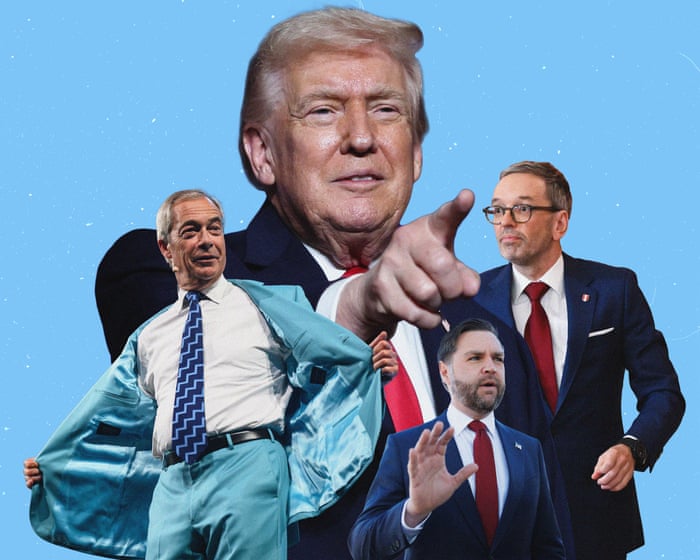
I once believed the primary goal of vice-signalling was to throw opponents into disarray. Progressives often struggle with binary thinking and absolutes; we’d rather debate whether a statement was racist than whether racism itself is wrong. Undoubtedly, these signals have left the left and centre in turmoil. However, Alyssa Elliott, a member of the UK chapter of the anti-Trump movement Indivisible, frames the crisis within the Democratic Party differently. It’s less about not knowing how to argue and more about a collapsing worldview. “They’re still stuck in the mindset that ‘Maga can’t do that because it’s against the rules,’” Elliott explains. “This applies to government statements as much as to the dismantling of institutions. We still have Democrats saying they’ll fund ICE if we mandate more training. That’s no longer the issue. The real shift is understanding that the rules are over. Many people simply refuse to accept it.” Every vice-signal—whether from Trump, Farage, Jenrick, or Herbert Kickl—is a message that the rules no longer apply. If you don’t believe it the first time, at least believe it by the hundredth.
Frequently Asked Questions
FAQs The Rise of Virtue Signaling Political Hatred
BeginnerLevel Questions
1 What exactly is virtue signaling
Virtue signaling is the public expression of opinions or sentiments primarily to demonstrate ones good character or moral correctness to others rather than to genuinely contribute to a cause or debate
2 How has it poisoned politics
It often shifts focus from substantive policy debates to performative displays of morality This can deepen divisions as people are judged more on their perceived moral purity than their ideas turning disagreements into accusations of bad character and fueling hatred between groups
3 Can you give a simple example of political virtue signaling
A politician or public figure making a strongly worded social media post about a complex issue without proposing any concrete policy solutions or demonstrating a history of action on that issue The primary goal appears to be gaining praise from their base rather than solving the problem
4 Isnt it good to show support for good causes
Yes genuine advocacy and solidarity are crucial The problem arises when the main purpose is selfpromotion or tribal belonging and the action stops at the signaloffering no real help dialogue or compromise
5 How is this different from just having strong beliefs
Strong beliefs are held with conviction and often lead to sustained action and openness to discussion Virtue signaling is often shallow reactive and focused on the appearance of holding the right belief to fit into a social or political group
AdvancedLevel Questions
6 Whats the connection between virtue signaling and cancel culture
Virtue signaling can fuel cancel culture Publicly signaling virtue often involves condemning those who are perceived to lack it This creates an environment where people are incentivized to perform moral outrage and seek social punishment for others to prove their own allegiance stifling debate
7 Does social media play a role in this rise
Absolutely Social media platforms reward quick emotional and performative content with likes and shares They create echo chambers where signaling allegiance to a groups values is more rewarded than nuanced bridgebuilding discourse
8 How can I tell if Im virtue signaling or acting authentically
Ask yourself