Diet
According to dietitian Rick Miller: “By the time a man reaches his mid-40s, several physical changes are already happening. Testosterone drops by about 1-2% each year starting in the mid-30s, insulin sensitivity decreases, and the liver’s ability to process certain nutrients changes. The diet that kept a man lean and energetic in his 30s simply stops working.”
Men’s metabolism also tends to slow down during middle age. Miller says this isn’t due to aging itself, but rather the loss of muscle that often comes with it—so dieting isn’t the solution. “Cutting calories—especially if it means eating less protein—only speeds up muscle loss, which further slows metabolism, creating the very cycle men are trying to break,” he explains.
A better approach is to focus on eating more protein, along with strength training at the gym. “The latest research suggests that men over 40 need to eat between 1.6g and 2.2g of protein per kilogram of body weight each day to maintain the metabolic engine that controls blood sugar, supports hormone function, and determines how well a man ages. Men should also limit refined carbs, like bread and pasta, to keep insulin stable.”
While protein is the most important “macronutrient” for middle-aged men, Miller says their micronutrient needs also change during this time. “Magnesium absorption becomes less efficient, vitamin D production through the skin declines, and zinc—which plays a direct role in testosterone production—is often low in men who eat a heavily processed Western diet. This negatively affects energy, thinking, mood, and body composition.” To make up for this, men should prioritize foods rich in magnesium (nuts, seeds, and dairy), vitamin D (eggs, cod liver oil, and mushrooms), and zinc (shellfish and legumes).
Many chronic conditions start silently in midlife before showing up decades later
Heart disease is the number-one killer of men aged 45-54. It’s often seen as a cholesterol problem, but Miller says this is too simple: “A more accurate picture involves chronic low-grade inflammation, insulin resistance, and endothelial dysfunction [damage to the lining of blood vessels].” All of these can be significantly improved with the right diet. Many of us eat too much omega-6 (found in refined oils and processed foods) and not enough omega-3 (found in oily fish).
“Eating two to three servings a week of salmon, mackerel, sardines, herring, or trout directly helps with inflammation, brain function, and heart health,” he says. “A high intake of polyphenols (from colorful vegetables and berries) and enough dietary fiber (especially the soluble kind from oats and legumes) helps manage heart risk—as does avoiding ultra-processed foods, which cause inflammation and increase insulin resistance.” Alcohol should also be limited, as it “lowers testosterone production, disrupts the deep sleep stages where testosterone is mainly made, and adds to inflammation at a time in life when men can least afford it.” The UK chief medical officers recommend no more than 14 units per week, spread over at least three alcohol-free days.
Finally, be careful about late-night snacking. “Eating most of your food earlier in the day matches the body’s natural cortisol and insulin rhythms, improving metabolic efficiency and sleep.”
Before problems start to build up, think of exercise as investing in a ‘strength pension’
Exercise
“Midlife is arguably the most important time for shaping our future health and independence,” says David Vaux, author of Stronger: 10 Exercises for a Longer Healthier Life. “Many chronic conditions start silently during these years, before showing up decades later.”
Reducing these risks requires more than just light activity.He says, “Cardio is still important for heart health, weight control, and mental well-being. But walking 10,000 steps a day won’t protect us from becoming frail as we age. Research consistently shows that people with low muscle mass and strength are much more likely to die early. That’s why middle-aged men need both steps and strength training.”
After age 30, muscle mass starts to drop by 3 to 8 percent each decade, which leads to less strength and function. Vaux explains, “Keeping our skeletal muscle strong through resistance training is like future-proofing our body’s ability to work normally. If we ignore it, our ability to recover from injury, fight off infections, or even think clearly will suffer as we get older. It’s not about how we look. It’s about keeping our function, resilience, and quality of life.”
The NHS recommends at least two sessions of resistance training each week, using weights, body weight, or gym machines. Vaux supports functional strength exercises like lunges, squats, and pull-ups because “they work multiple joints and muscle groups at once, improving balance, coordination, and real-world strength.” He suggests thinking of exercise as building a “strength pension, which supports almost every part of healthy ageing.”
While resistance training becomes more important in middle age, he warns against a “no pain, no gain” attitude. “Many men in midlife still train with the ‘go hard or go home’ mindset they had in their 20s. Unfortunately, that often backfires as you get older—you can’t train consistently if you’re always injured. The key is to take recovery as seriously as training. Learning to notice fatigue, stiffness, or pain and adjusting your workouts accordingly is what separates lifelong fitness from spending months on the sidelines with avoidable injuries.”
Skincare
Some good news! According to Dr. David Jack, an aesthetic doctor, “Men start with a structural advantage over women: thicker skin, more collagen, and more active oil glands—all of which give a firmer appearance. During menopause, women lose collagen quickly, while the decline is much steadier for men.”
The bad news? “Men tend to get deeper lines, especially on the forehead and between the eyebrows, and heavier tissues in the lower face can sag due to stronger muscles.” Also, “using less sunscreen means men often have more advanced skin damage by the time they seek help.” He advises making SPF your top priority, since sun exposure is the biggest cause of skin ageing.
Other lifestyle factors matter too. “Poor sleep harms the skin’s repair processes, and chronic stress raises cortisol, which affects collagen production and damages your skin barrier.” Once again, protein is your best friend. “It supports collagen structure, while a diet rich in antioxidants from colorful fruits, vegetables, nuts, and seeds helps protect against damage from UV rays and pollution.”
In a world full of influencers and complicated routines, skincare can feel overwhelming. According to Jack, you only need three simple steps in the morning. “Use a cleanser with AHA (lactic or glycolic acid) or BHA (salicylic acid) to remove excess oil and help men who get clogged pores or ingrown hairs from shaving. Then apply an antioxidant serum, like one with vitamin C, and finish with a moisturizer that has broad-spectrum SPF 50 or higher—this is the most important way to preserve collagen and prevent dark spots. In the evening, cleanse again and then use a retinoid, which is one of the most proven ingredients for boosting collagen and improving fine lines and texture. You can add a simple moisturizer on top if needed.”Support changes how the brain processes stress. It’s important to invest in these relationships before a crisis hits.
Feel like your crow’s feet need something stronger? “Botox is still the go-to for most men, especially for forehead and frown lines, since it can help reduce a tired look,” says Jack. “Hyaluronic acid fillers are becoming more popular, particularly for restoring jawline definition or midface support. The focus should always be on deeper placement rather than adding volume to the fat pads, which can lead to puffiness.” Meanwhile, lasers and microneedling can boost collagen and improve skin texture, tone, and elasticity.
“The common theme is subtlety,” Jack says. “The best approach combines a few treatments to create an overall impression of looking healthy. Small, well-planned procedures give more natural results than aggressive, one-time treatments.” He recommends finding practitioners with “a strong medical background, a detailed understanding of facial anatomy, and a conservative, tasteful aesthetic. Consultations should feel thorough, with a clear explanation of what’s driving the aging process and how each treatment helps. Being open about risks and complications is also essential.”
View image in fullscreen
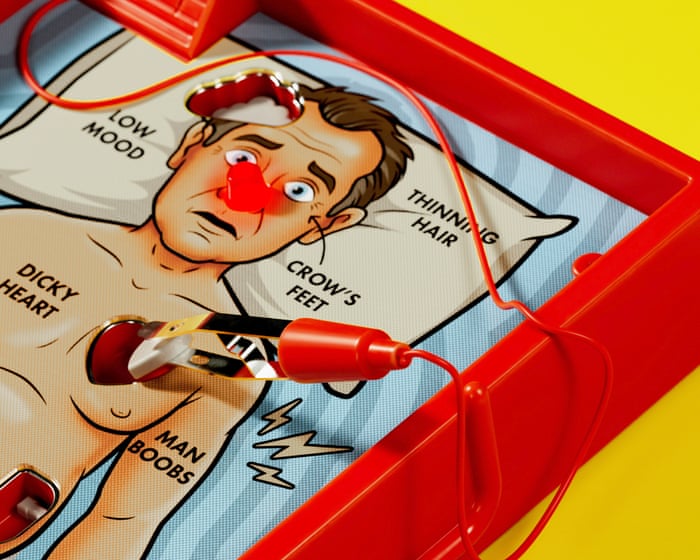
A drop in testosterone can affect mood, energy, thinking, and sexual function, so it deserves medical attention, not to be brushed off.
Mental health
Middle-aged men have the highest suicide risk of any group, yet they are less likely to seek help. According to Dr. Jonathan Garabette, a psychiatrist and psychotherapist at Reborne Longevity: “Unemployment, divorce, financial stress, work, and family responsibilities all peak during midlife, and they can combine to significantly increase risk. Social isolation can make these stressors even worse.” He adds: “Mental illness in men is often overlooked or labeled as anger issues or addiction, which may actually be secondary problems.” Along with social and economic factors, biological and hormonal changes in midlife—like the natural decline in testosterone—”can affect mood, energy, thinking, and sexual function. These symptoms deserve medical attention, not to be dismissed as ‘just getting older.'”
Thankfully, lifestyle changes can make a big difference. “Regular exercise, good nutrition, enough sleep, social connection, and stress management can reduce the risk of depression by more than 50%,” says Garabette. “Exercise is especially effective, with benefits comparable to medication for some people.”
Community and connection also support good mental health. “Social support literally changes how the brain processes stress. It’s important to invest in these relationships before a crisis hits, and not wait until you’re at a breaking point to seek support. Small, consistent actions across multiple areas—physical health, relationships, meaningful activities—all add up to significant protection.”
As for therapy, only 33% of referrals to NHS talking therapies are for men, and according to Garabette, services haven’t always been designed with them in mind. “It might help to think of seeking help as proactive maintenance, like going to the gym or servicing a car, rather than ‘admitting defeat,'” he says. “Psychotherapy comes in many forms, and finding the right type for each patient’s needs and preferences is important. Men should know that therapy can be practical and goal-focused, not just ‘talking about feelings.'”
Samaritans offers 24/7 support to anyone in distress (freephone 116 123). ANDYSMANCLUB has free peer-to-peer support groups across the UK and online.
Speak up, man: how talking circles are supporting a healthier masculinity
Read more
Hair loss
Most men will experience hair loss in their lifetime, with 66% of men aged 35 already thinning. There are two main causes, says Dr. Marco Nicoloso, a hA hair loss expert and medical director at Ouronyx explains: “The most common type is androgenic alopecia, or male pattern hair loss, which is genetic and hormone-related. About 80% of men will experience it at some point—it can start as early as 16 or as late as 60. The second most common type is telogen effluvium, which is shedding caused by a stressful event. If the stress goes away, the hair usually grows back.” A trichoscopy, where a dermatologist takes close-up digital images of the scalp, can help determine the cause.
Just like with skin aging, lifestyle factors can speed up hair loss. Since Ozempic became popular, Nicoloso has seen more patients losing hair due to calorie restriction. “Hair is 80-90% protein, so it’s really important to eat enough protein if you want to keep it,” he says. Keeping the scalp clean is also key. “It’s a very oily environment full of bacteria and fungi, so it needs to be washed every day. Shampooing removes the sebum, balances the pH, and protects the hair follicles.”
While many men are okay with losing their hair, 62% say it hurts their self-esteem, and 21% report feeling depressed because of it. “Some patients accept it—they shave their heads and are totally fine,” says Nicoloso. “For others, it has a strong psychological impact.”
Although hair transplants have become much more popular, starting medical treatment at the first signs of thinning can “delay or even avoid the need” for one. Nicoloso suggests asking your doctor about finasteride, a prescription medication that blocks hormones to slow down thinning. (It can have side effects, like problems with libido and erections, but these usually improve during treatment and stop once you quit.) This should be used with minoxidil, which stimulates hair follicles to promote growth and thickness. Minoxidil is available as a prescription pill or over the counter as a topical treatment. If you do decide to get a transplant, these medications will improve the results by keeping your hair thick in the “donor area” where hairs are taken from.
Transplants can be life-changing for “the right candidate at the right time,” says Nicoloso. “I see a lot of patients who get transplants too soon, and without trying medication first. Transplanted hair isn’t affected by the thinning process, so it stays thick. But without medication, the existing hair will keep getting thinner, leaving gaps. A 360-degree approach—fixing any deficiencies, living a healthy lifestyle, taking care of your scalp, and considering medication—will give you the best results.”
Frequently Asked Questions
Here is a list of FAQs based on the topic covering the unspoken concerns of midlife wellness
BeginnerLevel Questions
1 What exactly is midlife wellness Does it just mean avoiding getting sick
No its much broader Its about proactively managing the physical mental and emotional changes that happen roughly between ages 40 and 60 Its not just about avoiding disease its about maintaining energy strength brain sharpness and a positive mood so you can enjoy this stage of life
2 Im gaining weight in my belly even though I havent changed my diet Why
This is very common especially for men Its usually due to a combination of a slowing metabolism loss of muscle mass and hormonal shiftsspecifically a drop in testosterone in men and estrogen in women The body starts storing fat differently often around the midsection
3 Is man boobs a real thing or is it just chest fat
It can be both True gynecomastia is a small firm lump of glandular breast tissue caused by a hormonal imbalance Pseudogynecomastia is just excess chest fat A doctor can tell the difference with a simple exam Both are common and treatable
4 Why am I losing my hair and is there anything I can actually do
The most common cause is genetic where hair follicles are sensitive to a hormone called DHT Yes there are real treatments topical minoxidil and oral finasteride are FDAapproved and effective for many men Lowlevel laser therapy and PRP injections are also options
5 I feel tired all the time even after sleeping 8 hours Is this just getting older
No its not normal to feel exhausted constantly While sleep quality often declines in midlife persistent fatigue can be a sign of sleep apnea low testosterone thyroid issues vitamin D deficiency or even depression Its worth a checkup not just accepting it
Advanced Embarrassing Questions