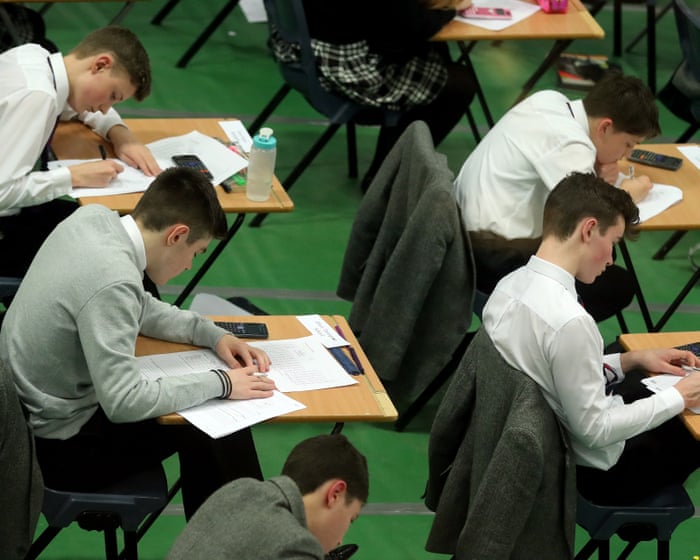
For years, the exam system has harboured a troubling secret: rigid rules and alarmingly high failure rates in compulsory GCSE retakes. Finally, this serious issue is receiving the attention it deserves. This year, nearly a quarter of all maths and English language entries in England, Wales, and Northern Ireland were from students aged 17 or older attempting a retake. Yet only one in six of those retaking maths managed to pass.
Jill Duffy, head of the OCR exam board, has rightly called this a crisis, shining a light on the problem. But acknowledging the issue, as officials are now doing, is only the first step. Opinions differ on what should come next.
Reforming GCSEs falls outside the scope of the review led by Prof Becky Francis, but a proposal to scrap compulsory retakes is under consideration. The Sixth Form Colleges Association suggests that after a second failed attempt, students should be offered a modular alternative. This would allow them to focus on areas where they need improvement, rather than endlessly repeating content they have already mastered.
Predictably, former Conservative schools minister Nick Gibb has opposed change, insisting that all schools should follow the example of the highest achievers. While it’s important to examine variations in results and learn from success, this response is inadequate. Many experts argue that the qualifications are poorly designed if their goal is to serve as a universal gateway to employment. Instead of sticking to essential skills like numeracy, statistics, and reading comprehension, the current exams include topics like calculus and geometry in maths, and quasi-literary analysis in English.
It’s unfortunate that the Labour Party did not address these issues more effectively while in opposition. Changing the curriculum and exam system is a slow and careful process. Prof Francis’s review offers the best opportunity to break this destructive cycle. However, the Department for Education’s recent engagement with the further education sector—where most retakes happen—has been lacking. There is no secondary English specialist on the review panel, and ongoing concerns remain about teacher shortages and support for students with special educational needs and disabilities.
The retake problem should also be viewed as part of a broader debate about the future of post-16 education. This includes the government’s plan to abolish courses seen as competing with T-levels. Critics of this policy, much like those concerned about retakes, worry most about less academically inclined students with lower scores. Even government figures show a gap, with tens of thousands of students enrolled in threatened courses—including some BTecs—who may not be suited to the newer alternatives.
With a skills white paper expected this autumn, there is still time to address these unanswered questions. A better balance between ambition and practicality can surely be struck. Many jobs in the UK do not require knowledge of calculus or textual analysis. T-levels were intended to support less academic, more practical-minded young people. This year’s retake figures add to existing evidence that the system is failing these students most. Ministers must be certain that any changes they make will improve the situation, not make it worse.
Frequently Asked Questions
Of course Here is a list of FAQs about The Guardians editorial on GCSE resits designed to be clear and helpful
General Beginner Questions
Q What is this editorial about
A Its about the UK governments policy of requiring students who dont pass their GCSE English and Maths exams to retake them continuously until they are 18 The article argues that while the government acknowledges this is a problem simply making students retake the exams isnt a good solution
Q What are GCSE resits
A GCSE resits are when students who didnt get a grade 4 or above in their Maths or English GCSE exams have to take the exam again usually the following year
Q What is the main problem with the resit policy according to The Guardian
A The main problem is that its a onesizefitsall approach that often sets students up to fail repeatedly It doesnt address the underlying reasons why they struggled the first time like a lack of individual support or different learning styles
Q Does The Guardian think resits are a bad idea
A The editorial doesnt say resits are inherently bad It argues that the current system is flawed The problem is forcing students into the exact same type of exam repeatedly without providing better alternative ways to learn
Advanced Detailed Questions
Q What alternative solutions does The Guardian suggest
A The article suggests moving away from a rigid examretake model It proposes more practical and functional skills qualifications that are directly relevant to different careers alongside better funding and tailored teaching support for these students
Q What does the editorial mean by acknowledging the issue is only the beginning
A It means that the government admits theres a high failure rate in resits but that admission is useless without action The next step is to actually fix the broken system with better policies and resources not just keep doing the same thing
Q How does this policy affect students psychologically
A The article implies that repeatedly failing the same exam can be demoralizing damage a students selfconfidence and make them feel like a failure which can harm their overall education and future prospects
Q Is there any data mentioned to support The Guardians argument
A Yes the editorial cites that only