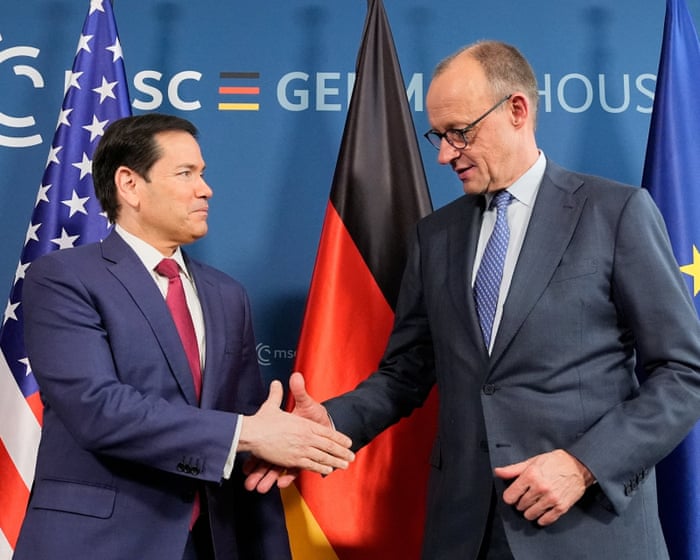
La Conferencia de Seguridad de Múnich trajo algunas buenas noticias: la relación transatlántica no empeoró drásticamente. Tras el shock del año pasado, cuando JD Vance dejó atónitos a los asistentes con un ataque directo de EE.UU. contra las democracias liberales europeas, muchos encontraron "tranquilizador" el tono aparentemente más conciliador de Marco Rubio este año, incluido el veterano diplomático alemán y presidente de la conferencia, Wolfgang Ischinger. De hecho, el secretario de Estado estadounidense recibió una ovación de pie, probablemente más por alivio que por admiración. Pero, ¿ha cambiado realmente el mensaje de la administración Trump a Europa desde el asalto de Vance hace doce meses? ¿Qué trampas se están tendiendo y qué lecciones deberían aprender los europeos?
Hace un año, Vance acusó a Europa de rendirse ante la supuesta tiranía y censura de los liberales "progresistas" y de perder de vista los vínculos culturales a través del Atlántico. Su ataque desconcertó a los líderes europeos, quienes, aunque a menudo centrados en luchas internas, no consideran las restricciones a la libertad de expresión como una preocupación principal. El vicepresidente estadounidense sorprendió a Múnich al insistir en que la mayor amenaza para Europa era la amenaza "interna" progresista, incluso mientras respaldaba a nacionalistas de extrema derecha como el AfD de Alemania. El insulto caló tan hondo que este año, el canciller alemán Friedrich Merz utilizó su discurso inaugural para advertir sin rodeos contra los valores unilateralistas estadounidenses, declarando que "la guerra cultural del movimiento Maga no es la nuestra".
Ansiosos por recibir garantías, los europeos buscaron cualquier señal de solidaridad transatlántica en el discurso de Rubio. El secretario de Estado ofreció palabras cálidas, celebrando la herencia cultural compartida, la historia y específicamente el cristianismo occidental. Describió a EE.UU. como un "hijo de Europa" y afirmó que América no estaba interesada en gestionar el declive occidental, sino decidida a liderar un renacimiento de la civilización occidental.
Sin embargo, bajo la superficie, el discurso de Rubio este año y el de Vance en 2025 eran dos caras de la misma moneda. El de Vance fue crudo, escandaloso, incluso ridículo: afirmar que el mayor problema de Europa es la falta de libertad de expresión es absurdo en un momento en que la democracia retrocede en la mayor parte del mundo.
El discurso de Rubio fue más sutil y coherente, pero esencialmente transmitió el mismo mensaje: Washington aún cree que Europa y EE.UU. deberían definirse por valores etnopolíticos de cultura, tradición y religión. El hecho de que esta historia también produjera nacionalismo, racismo, fascismo y colonialismo parece no ser motivo de vergüenza.
En Europa, muchos pensaron que habíamos avanzado, definiendo el continente en oposición a su pasado, abrazando valores cívicos e ilustrados como la democracia, los derechos humanos, el estado de derecho, el multilateralismo, la inclusión y la integración, mientras rechazábamos el flagelo del nacionalismo. Pero para los abanderados del movimiento Maga, el nacionalismo es algo que celebrar. El orden basado en reglas no solo está muerto, como reconocen los propios líderes europeos; en palabras de Rubio, es directamente "tonto".
Pero si la civilización occidental debe cultivarse sin reglas, la visión que Rubio esbozó es fundamentalmente la de un imperio. En esta visión, América y Europa están unidas por la ascendencia y la religión, "conectadas espiritualmente", como dijo Rubio. Las fuerzas nacionalistas orgullosas a ambos lados del Atlántico deben luchar conjuntamente contra el globalismo, la cultura de la cancelación y el "borrado civilizatorio" que supuestamente amenaza la migración masiva.
Sin embargo, este "siglo occidental" estaría marcado por el poder bruto, ejercido primero y principalmente dentro del propio imperio por los fuertes, Estados Unidos, contra los débiles: países europeos pequeños y medianos, Canadá y estados sudamericanos. Dentro del imperio, instituciones como la OTAN pueden y deben existir. Pero la intención de EE.UU. es clara: ustedes pagan, lo cual es... Es justo que sigamos dando las órdenes, pero no debería serlo. Habrá otros imperios en el mundo, incluidos Rusia y China, y el imperio estadounidense competirá con ellos. Sin embargo, también está dispuesto a cooperar, quizás incluso a coludirse, especialmente si el precio de la colusión lo pagan sus súbditos coloniales.
El mensaje de Rubio fue más sofisticado y estratégico que el de Vance. Pero era igual de peligroso, si no más, precisamente porque bajó la temperatura transatlántica y pudo haber adormecido a Europa con una falsa sensación de calma. Como dijo Benjamin Haddad, ministro europeo de Francia, en Múnich, la tentación europea podría ser presionar el botón de posponer una vez más.
Hay buenas razones para creer que esto no sucederá. Merz, junto con Emmanuel Macron, Keir Starmer, Pedro Sánchez y la presidenta de la Comisión Europea, Ursula von der Leyen, hablaron de la necesidad de la independencia europea, de dar sustancia al artículo 42.7 del tratado de la UE, un compromiso de asistencia mutua en caso de ataque, y de una OTAN europeizada. Como dijo von der Leyen, las líneas que se han cruzado no se pueden descruzar. La guerra de Rusia contra Ucrania, que se acerca a su cuarto aniversario, añadió un sentido de urgencia. También lo hizo el sobrio recordatorio de la primera ministra danesa, Mette Frederiksen, de que la amenaza estadounidense a Groenlandia no ha desaparecido.
Si bien la determinación y la acción colectiva europeas muy probablemente continuarán, la mayor parte de la energía se dedicará a trabajar dentro de los marcos transatlánticos existentes, especialmente la OTAN. Esta debería ser, de hecho, una línea de trabajo clave. El hecho de que el Reino Unido e Italia estén asumiendo cada uno mandos de la OTAN desde EE.UU. señala un paso importante hacia el establecimiento de un "pilar" europeo dentro de la alianza de defensa. EE.UU. seguirá siendo crítico, proporcionando mando y control, capacidades especializadas y, sobre todo, el paraguas nuclear. Los diplomáticos creen que al final de este camino, la OTAN tendrá un aspecto muy diferente, con EE.UU. representando aproximadamente una quinta parte o menos de su capacidad militar, frente a poco menos de la mitad actual.
Sin embargo, si EE.UU. está impulsado por una visión imperial en la que sus intereses estratégicos divergen de los de Europa, si Washington ya no considera a la Rusia de Vladimir Putin una amenaza para la seguridad nacional, ¿deberían los europeos depositar sus esperanzas de seguridad exclusivamente en una OTAN europeizada?
Un pilar europeo dentro de la OTAN es la ruta más efectiva hacia una Europa segura a medida que EE.UU. reduce su responsabilidad en la defensa del continente. Sin duda, es mucho más alcanzable que convertir a la UE en una alianza militar o incluso defender Europa a través de coaliciones formalizadas de los dispuestos y capaces.
Pero en la práctica, no puede garantizar la seguridad europea si EE.UU. persigue su trayectoria imperial actual. Si los europeos se sintieron reconfortados por una falsa sensación de tranquilidad al salir del abarrotado hotel Bayerischer Hof en Múnich, corren el riesgo de caer directamente en la trampa que la América Maga les ha tendido.
Nathalie Tocci es columnista de Guardian Europa
¿Tiene una opinión sobre los temas planteados en este artículo? Si desea enviar una respuesta de hasta 300 palabras por correo electrónico para ser considerada para su publicación en nuestra sección de cartas, haga clic aquí.
**Preguntas Frecuentes**
Por supuesto. Aquí hay una lista de preguntas frecuentes sobre el reciente discurso del senador Marco Rubio a Europa, enmarcadas en un tono natural con respuestas directas.
**Nivel Básico - Preguntas Generales**
1. **¿Cuál fue el punto principal del discurso de Marco Rubio a Europa?**
El punto principal fue una advertencia contundente de que el enfoque principal de Estados Unidos está en la competencia con China y que Europa debe asumir un papel mucho más grande e independiente en su propia defensa y en los asuntos globales, en lugar de depender de Estados Unidos.
2. **¿Por qué la gente dice que su discurso fue "tranquilizador" cuando no lo fue en absoluto?**
La frase sugiere que, aunque algunos podrían esperar que un discurso de un líder estadounidense fuera una promesa reconfortante de apoyo estadounidense, el mensaje de Rubio fue lo contrario: una declaración directa de que Europa ya no puede contar con el mismo nivel de protección estadounidense y debe valerse por sí misma de manera más agresiva.
3. **¿A quién se dirigía Rubio?**
Hablaba en el Foro Europa del Hudson Institute, un evento al que asistieron diplomáticos, responsables políticos y expertos en seguridad europeos.
4. **¿Habla Rubio en nombre de todo el gobierno de EE.UU.?**
No. Como senador estadounidense, daba su propia perspectiva y la de una facción significativa dentro de la política exterior estadounidense. Sin embargo, sus puntos de vista sobre priorizar la competencia con China e instar a la autonomía estratégica europea reflejan un sentimiento bipartidista creciente en Washington.
**Nivel Avanzado - Preguntas Analíticas**
5. **¿Qué quiso decir al afirmar que EE.UU. está en una "fase de preguerra"?**
Quiso decir que EE.UU. y sus rivales se están posicionando activamente económica, militar y tecnológicamente para un período prolongado de conflicto y competencia intensos, que podría escalar a una guerra real. Es un llamado a la acción urgente y a un cambio de mentalidad.
6. **¿Cómo se relaciona este discurso con la política anterior de EE.UU. y la OTAN?**
Representa un cambio significativo. La política estadounidense posterior a la Segunda Guerra Mundial ha sido la base de la seguridad europea a través de la OTAN. El discurso de Rubio desafía esa suposición de décadas, impulsando a Europa hacia lo que a menudo se llama autonomía estratégica: construir su propia fuerza de defensa integrada y capaz, separada del liderazgo estadounidense.
7. **¿Qué acciones específicas sugirió Rubio que Europa tomara?**
Instó a Europa a: 1) Aumentar drásticamente el gasto en defensa e integrar sus industrias militares. 2) Asumir el liderazgo en su propia seguridad regional. Y 3)...