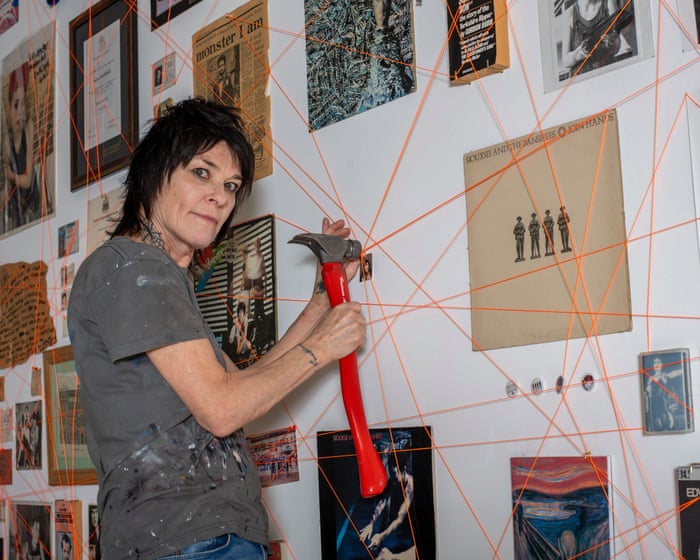
Sue Webster ricorda le ubriacanti inaugurazioni d'arte degli anni Novanta. Affiora un ricordo sfocato di Damien Hirst che cavalca sulle spalle di Leigh Bowery, e di una terribile lite con Jake Chapman alla galleria di Charles Saatchi. "Fu una cosa verbale, ma probabilmente stava per darmi un pugno. Ci si ubriacava parecchio con lo champagne gratuito."
Webster, insieme al suo ex partner nell'arte, nel romanticismo e nel generale spirito punk rock, Tim Noble, arrivò a Londra nel 1992 mentre i Giovani Artisti Britannici salivano alla ribalta. Cinque anni dopo, Saatchi fece un salto nel loro economico spazio abitativo/lavorativo a Shoreditch e, con il taxi ancora in moto fuori, comprò una scultura luminosa chiamata **Toxic Schizophrenia** e una "scultura d'ombra" intitolata **Miss Understood and Mr Meanor**. Queste sculture d'ombra erano meticolosamente assemblate da spazzatura e detriti, proiettando silhouette di autoritratti sul muro quando illuminate da un lato. Webster dice che a volte piangeva quando diceva addio a un'opera dopo averla venduta.
Quindi, cosa fa un'artista quando una partnership così lunga e di successo finisce? "Volevo districare il mio cervello e capire come sono finita qui", dice.
Webster è di Leicester e incontrò Noble, che è del Gloucestershire, il loro primo giorno alla scuola d'arte di Nottingham. La coppia, che ha creato opere insieme per oltre 30 anni, smise di vivere insieme nel 2012, divorziò nel 2018 e recise i legami professionali nel 2020. Ora, alla vigilia della sua prima mostra personale istituzionale, Webster si riferisce a "Tim e Sue" in terza persona, "come se fosse un marchio e io ne sia dissociata, come se quel lavoro l'avesse fatto qualcun altro".
Siamo nel suo studio a Mole House a Londra, che ha costruito con l'architetto David Adjaye dietro la facciata trasandata della casa un tempo di proprietà del famigerato "uomo talpa", che scavò tunnel sotto le strade dalla sua cantina finché la strada alla fine cedette. Il suo gatto si crogiola sul riscaldamento a pavimento mentre lei mi accompagna attraverso le sue nuove opere. La mostra è organizzata attorno a **Crime Scene**, un'opera confessionale che riempie una parete e collega centinaia di reperti della sua vita, a partire dall'adolescenza. Siouxsie and the Banshees compaiono in primo piano, così come la sua ossessione per tutto ciò che è tedesco, dalle Adidas ai nazisti. C'è un tascabile di **Qualcuno volò sul nido del cuculo**, l'**Urlo** di Munch e una confezione sigillata del 2016 di patatine Walker che celebra la vittoria del Leicester City in Premier League. Webster vede **Crime Scene** in parte come un esorcismo. "Ho passato metà della mia vita con Tim", dice. "Non avevo mai vissuto da sola. È stato quasi come una morte. È stato traumatico."
Sparpagliati per lo studio ci sono mappe mentali più piccole, scritte a mano, viste per la prima volta nel libro del 2019 di Webster **I Was a Teenage Banshee**, che lei dice "mi ha aiutato a districare chi ero". Era una ragazza ossessionata dai Banshees che non proveniva da un background artistico, anche se lavorare per suo padre elettricista si rivelò poi utile per cablare sculture luminose. Paragona le sue mappe mentali anche a diagrammi di cablaggio.
Nel 1980, a 13 anni, il suo "lato inconscio autodistruttivo" venne alla ribalta, e passò sei mesi in un reparto di degenza a Leicester. Alcuni aspetti della vita lì plasmarono chi è. "Ero come un cagnolino, una palla di muscoli che aveva bisogno di essere portata a passeggio due volte al giorno", scrive, "ma essere scortata in bagno era spesso l'unica forma di esercizio che avevo. Essere avvelenata da sedativi intorpidiva qualsiasi pensiero indesiderato che altrimenti mi sarebbe potuto venire. Di conseguenza, più tardi nella vita ho sviluppato una vigorosa routine di allenamento. Devo nuotare ogni mattina o fare boxe nella mia palestra la maggior parte delle sere della settimana per esorcizzare la cattiveria che sembra accumularsi dentro e ha bisogno di essere espulsa alla fine di ogni giornata."
Tra i documenti appuntati al muro in **Crime Scene** c'è una lettera dell'ospedale del 2011 dopo che ebbe un aborto spontaneo. Portava in grembo il suo bambino con Noble. "Definisco quello come il punto di svolta nella nostra relazione", dice. "Stava finendo, ma vivevamo ancora insieme e scoprii di essere incinta." Aveva più di 40 anni. "E dissi, beh, sono a un'età in cui non ho scelta. Posso avere questo bambino da sola." Poi, inspiegabilmente, le si ruppero le acque a 17 settimane, ma "il bambino non era abbastanza formato per sopravvivere", dice. "Mi dissero di andare a casa. Dovevo stendermi e aspettare che il bambino uscisse. Dovevo andare in ospedale e poi prendere questa terribile pillola, quasi come una pillola suicida, che ti separa dal bambino, e poi dissero che devi sederti e aspettare di partorire. È stata una delle cose peggiori di sempre."
Dopo quello, dice, Noble trovò qualcun altro con cui fare famiglia. Ma ora, a sfidare lo sguardo dalle pareti dello studio, ci sono dipinti che Webster ha fatto di sé stessa mentre era incinta del suo figlio di cinque anni, Spider, che hanno ispirato il titolo della sua nuova mostra, **Birth of an Icon**. In queste opere più grandi del vero, il suo ventre nudo esplode gloriosamente da una giacca di pelle o a righe. Ebbe Spider nel 2020, quando aveva 52 anni. Ha detto di essere stata orgogliosa di ribaltare il "vecchio cliché" secondo cui solo gli uomini possono avere figli tardi nella carriera, e dice di non aver subito alcun giudizio per aver avuto un bambino a cinquant'anni. "Non c'è stato altro che 'questo è ciò che doveva accadere'." Ha avuto Spider da sola, tramite fecondazione in vitro, e ci sono voluti quattro tentativi. "Quindi sì, ci sono stati altri aborti spontanei, ma ora abbiamo un bambino sano."
Webster ha passato gli ultimi anni a perfezionare con tenacia le sue abilità pittoriche e a innamorarsi degli oli (al contrario degli acrilici dei suoi giorni di scuola d'arte). Ha guardato tutorial su YouTube e ha persino chiesto consiglio a un uomo dietro il banco di Atlantis, il suo negozio di materiali artistici locale. "Dissi: sto cercando di fare un tono carne, e lui disse: 'Oh, ti serve il bianco titanio, ti serve il rosso rosa, ti serve il giallo Napoli, ti serve la terra di Siena bruciata.' Prese questo pezzetto di tela e li mescolò in un tono carne, e puoi aggiungere un po' di verde." Ed eccolo lì, mi mostra, insieme ai pennelli di pelo di donnola che un'amica ritrattista l'ha incoraggiata a usare.
Cosa ne pensa Spider dei risultati? "Sa che è nella pancia della mamma", dice Webster. "Scende e mi dà una critica: 'Mi piace questo. Non mi piace quello perché è un po' disordinato, e quello non è finito.' E poi dirà: 'Questo è un 15 su 20. Questo è un 17 su cinque'."
Dopo la separazione, ha pubblicato il suo libro, personalizzato una serie di giacche di pelle ed esposto il suo primo enorme autoritratto da incinta per la mostra collettiva curata da Sarah Lucas del 2023, **Big Women**. È felice di essere arrivata a questo punto, ma rimane in deposito un'intera mostra di opere inedite di Tim e Sue. Credeva che la mostra che stavano per aprire a Berlino nel 2020 "sarebbe stata la mostra più fica del mondo". Quello fu il momento, sfortunatamente, in cui si rese conto di non poter più lavorare con Noble, e poi il mondo fu inghiottito dalla pandemia comunque.
"Sarebbe davvero strano mostrarla ora, perché sono su una traiettoria con il mio lavoro, quindi non posso tornarci", dice. "Sono riuscita a separarmi da quel lavoro." La sua nuova produzione non potrebbe essere più diversa. "Tim ed io siamo andati entrambi in direzioni completamente opposte", dice. "Lui è andato nella sua mente. Ho visto il suo lavoro. Sono felice per lui. Io sono andata nel mio io interiore. Sono diventata molto introspettiva. Sto facendo il lavoro più personale." Quando faceva parte di un duo artistico, dice... Sentiva che qualsiasi progetto personale su cui lavorava nel tempo libero sembrava insignificante. "Sono grata per la possibilità di creare il lavoro che sto facendo ora", dice. "Mi sembra autentico. Prima non mi sentivo a mio agio, ma ora sì. E credo che il mondo sia pronto a vederlo." **Sue Webster: Birth of an Icon** è in mostra al Firstsite di Colchester dal 31 gennaio al 10 maggio.
**Domande Frequenti**
FAQ Intervista a Sue Webster "Faccio boxe per combattere i miei demoni"
Generale / Background
D: Chi è Sue Webster?
R: Sue Webster è una rinomata artista britannica, nota soprattutto come una metà del duo artistico Tim Noble e Sue Webster. Crea opere scultoree provocatorie e spesso illuminate al neon.
D: Di cosa tratta questa intervista?
R: In un'intervista schietta, Sue discute le sue lotte personali con l'alcol e le liti, la sua motivazione per iniziare la boxe, i suoi attuali progetti creativi e la sua esperienza nel diventare madre tramite surrogata all'età di 52 anni.
Boxe / Lotte Personali
D: Perché Sue Webster dice di fare boxe?
R: Fa letteralmente boxe come disciplina fisica e mentale per gestire la sua turbolenza interiore o "demoni", che includono passate lotte con l'alcol e volatilità emotiva.
D: A cosa si riferisce quando parla di litigi da ubriachi?
R: Ha parlato di periodi turbolenti nel suo passato, in particolare durante la sua lunga relazione e partnership artistica con Tim Noble, in cui l'alcol alimentava conflitti intensi.
D: La boxe è un modo comune per gli artisti di affrontare le cose?
R: Sebbene non universale, molti artisti usano attività fisiche intense per canalizzare l'energia creativa, gestire la salute mentale e creare struttura. Per Sue è uno strumento personale per la resilienza e la concentrazione.
Maternità / Età
D: Come è diventata madre a 52 anni?
R: Ha avuto sua figlia Dolly tramite surrogazione di maternità. Ciò significa che un'altra donna ha portato avanti la gravidanza utilizzando un embrione creato con l'ovulo di Sue e spermatozoi di donatore.
D: Cosa ha detto sull'essere una madre più anziana?
R: Ha espresso immensa gioia e un senso di rinascita, affermando che la maternità le ha dato un nuovo scopo e prospettiva più tardi nella vita, cambiando le sue priorità.
D: Ci sono state sfide uniche nell'avere un figlio a quell'età?
R: Sebbene non dettagliato in ogni intervista, la gravidanza tramite surrogata in età avanzata spesso comporta considerazioni mediche, legali ed emotive complesse. Sue l'ha descritta come una decisione profondamente positiva che ha cambiato la vita.
Arte / Progetti
D: Quali sono i suoi nuovi progetti entusiasmanti?
R: Mentre i progetti specifici si evolvono, continua il suo lavoro da solista, esplorando spesso temi di identità, celebrità e luce. Rimane attiva nella scena artistica contemporanea con mostre e installazioni.