For Alec Priest, an instrument technician at the Sullom Voe oil terminal on Shetland, the argument for building tunnels under the narrow ocean channels separating his home from work is straightforward.
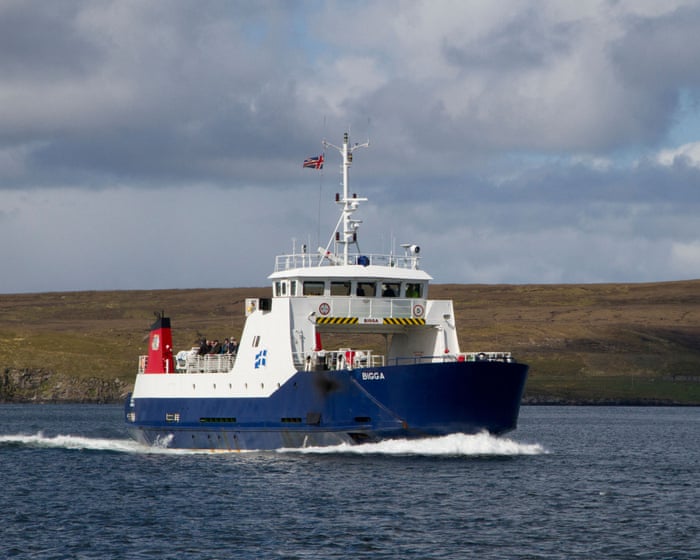
Currently, two aging ferries that cross tidal straits known for their strong currents break up his commute. For a casual tourist, this adds to the charm. But for time-pressed islanders, care workers, and businesses, it means delays, stress, and extra costs.
Those two ferries crossing Bluemull and Yell Sound turn a 34-mile drive from Priest’s home in Baltasound on Unst—Shetland’s northernmost island—to Sullom Voe on the Mainland into a three-and-a-half-hour round trip. He works 12-hour shifts at the terminal.
“It’s a colossal waste of time,” he said. “During the winter, if there are any gales, there’s a good chance the ferries will stop. It does make you cautious.”
Building tunnels between Yell, Unst, and Shetland’s Mainland could dramatically shorten that journey to perhaps 40 minutes each way. Instead, Priest stays in staff hostels at Sullom Voe, often away from home for weeks at a time. “It’s a shame for my family, but it’s the only option,” he said.
Priest is part of a vigorous campaign by islanders on Yell and Unst to promote tunnels. In 2025, they commissioned and funded geological surveys and hired advisers experienced in Scandinavian tunnel engineering to demonstrate the tunnels’ economic, social, and financial value.
Campaigners argue that the social cost of not having tunnels is significant, as it drives depopulation and isolation. Priest’s sister, for example, moved her family from Yell to Shetland’s Mainland to avoid the unreliability of ferry travel. He noted that school enrollments on Yell fluctuate as families come and go.
They point to the Faroe Islands, north of Shetland, where road tunnels connect many islands—including the world’s only underground roundabout, the brightly lit Eysturoyartunnilin. Shetlanders also look enviously at Norway, where islands have been linked to the mainland for decades.
Their campaign, supported by Liberal Democrat MP Alistair Carmichael, is credited with putting tunnels and bridges firmly on the political agenda. Scottish ministers have included fixed links in their strategic transport plan and allocated £10 million to Shetland to explore options ranging from ferry replacement to flights and tunneling.
A government spokesperson suggested that further commitments could come with the publication of an updated infrastructure strategy alongside the Scottish budget in January.
“Inter-island connectivity, including funding, has been a focus of discussion at the Orkney and Shetland ferry replacement task forces since early 2023, and we will continue to work in partnership with local authorities,” they said.
Officials in the Western Isles are also making their case to complete what they call a continuous “spinal link” connecting their chain of islands, with bridges or tunnels linking south Harris to north Uist, and south Uist to Barra.
As the crow flies, Leverburgh in south Harris is about five miles from north Uist; the ferry trip takes up to 80 minutes as it winds for nine nautical miles (10 statute miles) among a dozen small islands to Berneray.
However, there are debates about the merits of tunnels versus longer bridges. Orkney is focusing on replacing its aging ferry fleet, while contending with Scottish ministers reluctant to fund them, as Orkney’s ferries are owned and operated by the local council.
Torcuil Crichton, the Labour MP for Na h-Eileanan an Iar (Western Isles), arguesHe argues that building tunnels or new bridges in his constituency is an expensive “fantasy solution” that would take too long to complete. The islands need new ferries immediately, along with much greater investment in social and health services.
“The quickest way to connect the islands is to fund some ferries,” he said. “Political energy is being spent on a long-term solution when we are facing a connectivity emergency right now.”
Carmichael believes the idea will be very appealing; he noted that islands in Shetland already linked to the Mainland by causeways do not struggle with depopulation. “I have always said the most difficult tunnel to build would be the first one. Once you’ve proven the concept, you won’t have to make the case for others. Communities will be knocking on your door.”
Alice Mathewson, the development manager for the North Yell Development Council and a resident of Unst, says tunnels would significantly improve the islands’ resilience. Ferry crews get sick and ferries break down. She and Priest estimate the two tunnels could cost between £115 million and £135 million to build, while replacing Shetland’s ferries would cost an additional £100 million on top of their £7 million annual subsidies.
Tunnels can carry and protect essential internet and electricity connections—recently, subsea phone lines have been accidentally cut several times—and ensure Shetland’s salmon farms can transport their goods to market. She added that islanders would be willing to pay tolls to help fund the tunnels and support public-private financing.
“The ferry service has served our islands very well, but that’s a 20th-century form of transport,” she said. “In the 21st century, the answer is: dig a hole. Scotland has to drag itself into the 21st century.”
Frequently Asked Questions
FAQs The Answer is Dig a Hole Tunnels vs Ferries in Scotland
Basics Definitions
What does The answer is dig a hole mean
Its a phrase used by campaigners in Scotlands island communities to argue that building fixed links is a better longterm solution than relying on aging unreliable ferry services
What are fixed links
Fixed links are permanent transport connections like tunnels or bridges They replace or supplement ferry routes allowing cars and people to travel without waiting for a boat
Which islands are we talking about
Primarily islands in the Hebrides and the Northern Isles where specific tunnel projects are being seriously considered
Why Tunnels Benefits Reasons
Why do islanders want tunnels instead of ferries
Islanders cite reliability independence from weather cancellations better economic opportunities and an end to the stress and uncertainty of ferry travel Tunnels offer a 247 allweather connection
What are the main advantages of a tunnel
Reliability No cancellations due to bad weather
Convenience Travel on your own schedule no need to book far in advance
Economic Growth Easier movement of goods services and tourists
Community Sustainability Helps retain and attract residents by improving access to healthcare education and jobs
Arent tunnels incredibly expensive
Yes upfront costs are high However proponents argue that over decades tunnels are cheaper than the continuous massive subsidies required for ferry fleets
Has this been done successfully elsewhere
Yes Norway has built an extensive network of subsea tunnels to connect its coastal and island communities which is often cited as the model Scotland could follow
Challenges Concerns
What are the biggest arguments against tunnels
The enormous initial cost long construction time potential environmental impact during building and concerns that easier access might change island culture or lead to overtourism
Wont tunnels hurt the ferry industry and related jobs
There would be a transition Some ferry