For over thirty years, Liz Johnson Artur has been photographing “the people I’m with”—a humble phrase that doesn’t quite capture the warmth, closeness, and quiet brilliance of her work. Her vast collection of thousands of images honors beauty, strength, community, and resistance. Her photos, often taken spontaneously in streets, nightclubs, and homes, feel immediate and vibrant, pulling you into moments just before they vanish.
Her latest book, PDA, pays tribute to a now-gone London underground music scene. PDA was a beloved monthly queer club night held in a Hackney basement from 2011 to 2021. The name didn’t stand for just one thing; the founders playfully suggested it could mean Public Display of Affection, Please Don’t Ask, or even Pretty Dick Available.
A lot happened both in front of and behind the DJ booth!
Johnson Artur was drawn to the club night’s fluid and inclusive atmosphere. “In the 1990s, I photographed at a queer club in Brixton, but back then, it was more segregated between men and women. There was some mixing, but PDA had a completely different energy.” Though she’s “never been a clubber,” she became a regular at PDA. “There was so much happening around the DJ booth! PDA welcomed everyone without any door policy. I was 30 years older than most people there, but it was beautiful to see them claim their space.”
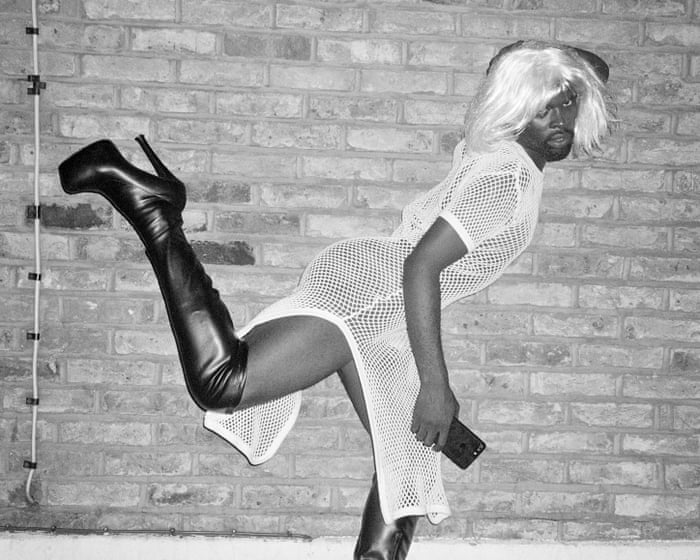
In black-and-white and color photos taken over several years at PDA events, Johnson Artur, now 61, captures partygoers in thigh-high boots, glistening with sweat on the dance floor, holding cigarettes, smiling, and sipping Schweppes. The images seem to pulse with the beat of the bassline.
This isn’t her first time photographing people at parties. Why does she love shooting music events so much? “They do something to people,” she says during a phone call while walking through Brixton on a Monday morning. “People can let go. Music is the most generous art form because it needs us. It thrives on how we respond to it—and you feel like it’s yours, and no one can take that away.”
The book also reflects her lasting interest in self-expression and identity in temporary, DIY, and unconventional spaces. She traces this curiosity about strangers’ lives to her childhood train journeys with her mother from Germany back to the Soviet Union, which took four days. “You’d spend 24 hours with strangers in a small compartment,” she recalls. “At first, you’re wary of each other, but in Russian culture, you share food and start talking.”
Sharing close quarters with strangers shaped how she connects with her subjects. “I photograph people because everyone has a story. I may not be able to tell it in words, but I can say something about human existence. We’re told we’re all different, but when you hear people’s stories, they often feel familiar.”
Johnson Artur’s own background reflects the 1960s era when African students studied in Eastern Europe—how her Ghanaian father met her Russian mother. Born in Bulgaria and raised speaking Russian at home, she later moved to Germany with her mother. “That’s just who I am. I don’t know any different—everyone has their roots, and I don’t see mine as special. My work isn’t about being black or anything like that. It’s about the desire to be yourself.”
They once lived as illegal immigrants. As Johnson Artur…Unable to attend school, she spent much of her time on the streets while her mother worked. She received her first camera in the mid-1980s, when film was costly. “I never had enough money to shoot freely. With just five rolls, I had to make them last to capture the images I wanted. There was no room for error. I had to concentrate and master my tools in any situation. It’s crucial to me not to take photos I consider poor—that’s my German upbringing. Every image in the archive matters.”
In 1991, Johnson Artur moved to London, studying at the Royal College of Art and immersing herself in the city’s music scene. “I suddenly experienced music in a whole new way; it was woven into daily life. I saw places where people could express themselves, create something from nothing, and take control. They’d set up clubs in any available space, even if just for a few months. But things are changing. That’s not possible now. Finding space is getting harder, and it’s deeply painful.”
A frequent presence in the PDA photos is Carrie Stacks, the co-founder DJ and nightlife icon. They appear both at the decks and in more personal moments at home, getting ready or applying makeup. These intimate daytime shots reveal a tight-knit community beyond the club. “I don’t see it as just a club book,” Johnson Artur says. “It’s always about observing people and how they create safe spaces for each other.” The book flows with images that mirror the rhythm and energy of a night out—from striking poses in glamorous outfits upon arrival to the wild, chaotic dancefloor where hands are raised and people embrace.
It blends striking, posed portraits of the club’s stylish young crowd, who often gaze directly at the camera wearing little more than sequins, heels, and sunglasses, with spontaneous, candid moments where the photographer and her camera are swept up in the action—like near the DJ booth as someone grabs the mic or when two people share a laugh or a kiss. The result is irresistibly joyful, honoring a specific time and place while capturing universal themes of desire, freedom, and escape.
As her subjects stride into the club in their finest, they radiate a confidence that contrasts with the hostility they often face outside. “Not just on the streets, but at home too, where many struggle to be themselves within their own communities.”
The book emerged from a close collaboration with PDA organizers. Was that challenging for a photographer with such high standards? “I’m used to controlling which pictures go where based on quality, but I had to let go of that. It’s an interesting process—you can’t collaborate and only get your way. You have to open up.”
PDA also traces Johnson Artur’s evolving role in the community. “I guess I developed almost aunt-like feelings,” she shares. Once her daughter was old enough, she brought her along. “We’d all come back to my place for food. It wasn’t just about nightlife; we genuinely enjoyed each other’s company.” That mutual respect and trust, she notes, shine through in the photos. “When people see and trust you, they give of themselves. That’s the beauty I receive.”
A typical PDA night lasted until 6 a.m., and the book’s final image shows a reveler heading home in the early hours. Shot from behind and a distance, the figure glows white against the dark, empty street, the soft focus evoking the blurry vision after a long night. It’s a reminder that nothing lasts forever. “That’s how we exist as humans,” Johnson Artur reflects. “We have a wondrous…””Life is a powerful time, then suddenly it’s over.” PDA embodies that sentiment. “We’re only here for a minute,” she continues. “Let’s enjoy it.”
PDA by Liz Johnson Artur is published today by Bierke.
Frequently Asked Questions
Of course Here is a list of FAQs about the legendary queer club PDA based on the evocative description provided
General Beginner Questions
Q What was PDA
A PDA was a legendary and iconic queer nightclub famous for being a space of freedom selfexpression and vibrant nightlife
Q What was the vibe or dress code at PDA
A The vibe was bold glamorous and intoxicating People wore daring outfits like heels and sequins with very little else celebrating their bodies and identities
Q Who went to PDA
A It was primarily a space for the queer community and its alliesanyone looking for a night of uninhibited fun dancing and connection in a safe celebratory environment
Q Why was it considered legendary
A It earned its legendary status through its electrifying atmosphere its role as a vital safe haven for the queer community and the unforgettable shimmering nights people experienced there
Deeper Advanced Questions
Q What made the nights at PDA so intoxicating
A It was a combination of the music the collective energy of the crowd the freedom to be your true self without judgment and the visually stunning shimmer of bodies on the dance floor
Q Beyond the fashion what was the significance of the style at PDA
A The daring fashion was a powerful form of selfexpression and rebellion It was a way to defy conventional norms and celebrate queer identity and body positivity in a very visible way
Q What kind of music was played at PDA
A While the specific genres arent named clubs like this typically featured highenergy dance music like house techno disco and pop remixes that kept the dance floor packed all night
Q What are some common challenges a place like PDA might have faced
A Like many queer spaces it might have faced issues like societal prejudice licensing challenges pressure from authorities or the ongoing struggle to maintain a safe space free from internal discrimination
Practical Tips Legacy
Q How can I find a club with a similar vibe today
A Look for queerowned or queerfocused clubs and events in your city Read reviews and community boards to find spots known for their inclusive vibrant and bodypositive atmospheres