John Carlos, the African American sprinter who gave a Black Power salute from the Olympic podium in 1968, once told me: “In life, there’s a beginning and an end. The beginning doesn’t matter. The end doesn’t matter. All that matters is what you do in between—whether you’re ready to do what it takes to create change. That requires physical and material sacrifice. When everything is said and done, the greatest reward is knowing you did your job while you were here on this planet.”
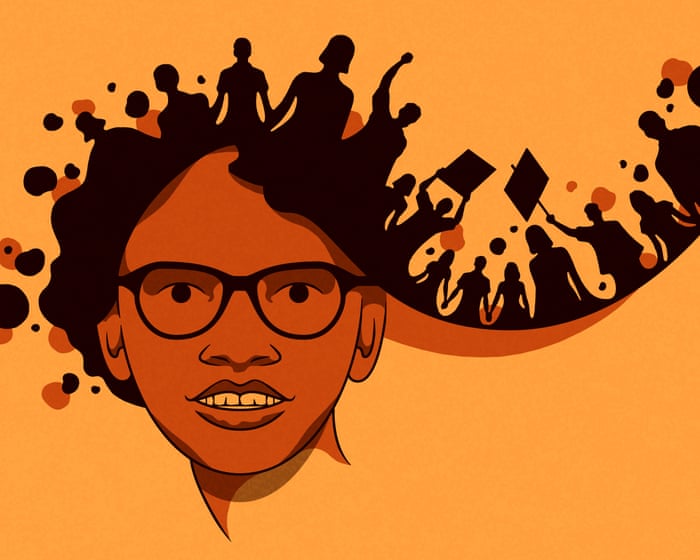
Claudette Colvin, who passed away earlier this week in a Texas hospice, did her job while she was here, though it took decades for her physical and material sacrifice to be recognized. On March 2, 1955, in Montgomery, Alabama, Colvin, just 15 years old, took a stand by refusing to give up her bus seat to a white woman.
The driver called the police, who kicked her a few times and, when she still wouldn’t move, took her to City Hall and charged her. Her lawyer, Fred Gray, believed she would be a strong test case to challenge segregation in the city. But the hierarchies in the Deep South extended beyond just black and white. The male-dominated, church-led leadership saw Colvin as a liability—she was young, rebellious, outspoken, dark-skinned in a society where skin tone mattered, and poor. “The black leadership in Montgomery at the time thought we should wait,” Gray said.
Nine months later, Rosa Parks faced a similar situation when she refused to give up her bus seat to a white passenger. Local leaders considered her an ideal candidate. “I probably would’ve looked at a dozen more before finding someone if Rosa Parks hadn’t come along,” said local leader E.D. Nixon.
In the time between the two arrests, Colvin became pregnant and, for many decades, faded into the footnotes of history. When I interviewed her at her home in the Bronx 45 years later, she was working as a nurse’s aide in a Manhattan care home, largely unknown and uncelebrated.
Uruguayan writer Eduardo Galeano once told me: “There is a system of power that always decides, in the name of humanity, who deserves to be remembered and who deserves to be forgotten. We are much more than we are told. We are much more beautiful.” Eventually, well into her 60s, Colvin’s story broke through that system. Her obituary this week appeared in the New York Times, the BBC, the Washington Post, Le Monde, and even the Telegraph.
There are many lessons we can learn from Colvin’s life and brave actions, but for now, I want to focus on four that feel urgent and relevant. First, popular history is made by ordinary people like Colvin doing extraordinary things—yet it is often written as if it were the work of saints in a simple morality play. This not only distorts the truth but diminishes everyone involved, including those who are sanctified. In the case of the Montgomery bus boycott, Parks is often portrayed as a seamstress who just happened to be in the wrong place at the right time. “She was a victim of both the forces of history and the forces of destiny,” said Martin Luther King Jr., who, as a young preacher in town, was chosen to lead the fightback. But Parks was nobody’s victim. She was a militant feminist and anti-racist who had a good relationship with Dr. King, though her hero was Malcolm X. “I had almost a life history of being rebellious against being mistreated because of my color,” she said.
Second, the fact that inequalities of race, class, gender, and skin tone mean some people are more likely to be honored in history or promoted in politics takes nothing away from the bravery or significance of their actions.
Last September, Silverio Villegas González was shot dead in Chicago by a U.S. Immigration and Customs Enforcement (ICE) agent who claimed he feared for his life.González was an undocumented migrant, and there is no video to dispute ICE’s version of events. Renee Good, a white U.S. citizen, was shot and killed by an ICE agent in Minneapolis last week while peacefully protesting an ICE raid. Her death has been commemorated worldwide. The fact that she was white and a citizen plays a role in why she is remembered in a way that Villegas González and so many others are not. The challenge is not to diminish Good’s sacrifice and bravery, but to also speak the name of Villegas González—just as we should speak Claudette Colvin’s.
Colvin resented that her protest left her vulnerable and unsupported, yet she understood why the movement championed Rosa Parks instead of her. “They picked the right person,” she said. “They needed someone who would bring together all the classes. They wouldn’t have followed me.”
Ultimately, the story of Montgomery isn’t about Colvin or Parks alone, just as the story of immigration rights isn’t only about Good or Villegas González. The struggle against segregation required organization—much of it led by women—and thousands working together to create change. It was only after the Black community boycotted the buses for 13 months that Montgomery’s establishment relented. An individual may resist, but resistance is collective.
Finally, resistance never stops. The very rights Colvin fought for are being rolled back today. Key civil rights and voting rights protections are being reversed. Last week, Donald Trump claimed civil rights have led to “white people [being] very badly treated.”
When asked if she would help promote the opening of the Rosa Parks museum for her own closure, Colvin refused. “What closure can there be for me?” she said. “There is no closure. This does not belong in a museum, because this struggle is not over. We still don’t have all that we should have. And, personally, there can be no closure. They took away my life. If they want closure, they should give it to my grandchildren.”
Gary Younge is a professor of sociology at the University of Manchester.
Do you have an opinion on the issues raised in this article? If you would like to submit a response of up to 300 words by email to be considered for publication in our letters section, please click here.
Frequently Asked Questions
Of course Here is a list of FAQs about Claudette Colvin framed around the idea that her story reminds us resistance is a shared and ongoing effort
BeginnerLevel Questions
1 Who is Claudette Colvin
Claudette Colvin is a civil rights pioneer who at age 15 was arrested in Montgomery Alabama on March 2 1955 for refusing to give up her bus seat to a white womannine months before Rosa Parks famous act
2 Why isnt she as famous as Rosa Parks
The NAACP and other organizers felt that Rosa Parks an older married secretary with a calm demeanor was a more sympathetic public figure for a citywide boycott Claudette was a teenager became pregnant soon after her arrest and her family faced intense threats
3 What does her story have to do with shared effort
Her case directly challenged bus segregation in court She was one of the key plaintiffs in Browder v Gayle the 1956 federal lawsuit that successfully ended bus segregation in Montgomery Her legal courage was a crucial though less visible part of the team effort that led to victory
4 How does her story show that resistance never ends
Claudette Colvin has spent her life advocating for justice speaking about her experience and fighting to have her story recognized Her lifelong commitment shows that the fight for equality doesnt end with one act or one court case
Advanced Deeper Questions
5 Wasnt her arrest just a personal act of defiance How was it part of a larger plan
While her initial act was spontaneous it was fueled by lessons about the Constitution and Black history from school The NAACP had been looking for a test case While they didnt initially use her case for the boycott her attorney filed the crucial federal lawsuit that strategically built upon her arrest and others
6 What specific challenges did she face that highlight the complexities of shared movements
She faced criticism from within the Black communitynot just for her age and pregnancy but also because her skin tone was darker than the idealized image some leaders wanted to present This shows how movements can struggle with internal biases while fighting external injustice