A few weeks ago, a TikTok video from Florida mother Paige Carter went viral. In it, Carter explained that she threw her daughter’s iPad out of the car window after the child misbehaved on the way to school. She filmed herself retrieving the now-cracked tablet. The video has been viewed 4.9 million times, with many commenters praising her approach. One wrote, “Learning FAFO at an early age: top-tier parenting.” This highlights a growing parenting trend that shows no sign of fading: “Fuck around and find out.”
In another popular video, when a young child announces he’s running away from home, his mother simply says “see ya,” closes the front door, and turns off the porch light. She then films him screaming and pounding to be let back in. The clip has 1.5 million likes. His mother said he learned “the meaning of FAFO.”
Last summer, a Wall Street Journal article noted the rise of this “FAFO parenting” and suggested it marked the end of “gentle parenting.” Gentle parenting emerged about a decade ago as a reaction to the more authoritarian “naughty step” methods of the early 2000s. Critics have blamed those older styles for creating entitled young adults unprepared for life’s harsh realities. However, many gentle parents report feeling exhausted by the constant need to let the child lead, explain every decision, monitor every move, and calmly name every emotion.
A backlash against gentle parenting has been building. “You could watch Instagram all day with people taking the mickey out of it,” says Professor Ellie Lee, director of the Centre for Parenting Culture Studies at the University of Kent. She notes that “parenting has become very intensive.”
Supporters of FAFO say it teaches children independence and real-world consequences, even uncomfortable or harsh ones. Critics argue it relies too much on fear and humiliation, which can damage trust even if it forces compliance. In practice, the two styles aren’t always opposites: true gentle parenting includes boundaries and consequences, and FAFO doesn’t have to be cruel. But online, extremes are amplified, nuance is lost, and polarization takes over.
“I’m a fan of children experiencing natural consequences,” says Dr. Maryhan Munt, a psychologist and podcast host. “For example, if they don’t tidy their toys and one gets broken, that can be a good lesson. But I have more of an issue with a parent saying, ‘Go ahead, try that fizzy drink you keep begging for.’ Our role is to provide boundaries and support. Natural consequences are fine where relevant, but if it tips into ‘I can’t be bothered, just do what you want,’ that sends the wrong message.”
Children learn not just from consequences, but from how adults support them through those experiences.
Gentle parenting methods, or at least the popular interpretation of them, can leave parents feeling burned out, says psychologist Dr. Emma Svanberg. “Parents feel they must constantly validate, empathize, explain, and absorb their child’s emotions without having experienced this themselves as children, and with little support. I think FAFO might be a reaction to that—a swing from something seen as permissive to something that seems more authoritarian.”
FAFO is appealing, Svanberg adds, because “on an immediate, explicit level, it gives parents a sense of control and clear cause-and-effect.”This approach allows parents to step back and let natural consequences take their course, rather than constantly negotiating with a resistant child. For parents who grew up in the 1990s, the “tough love” style feels familiar. The rise of “Fafo” coincides with nostalgia for 90s parenting, and people often revert to familiar patterns. After years of pressure to adopt specific, child-focused methods in an era of intensive parenting, a broader societal shift was almost inevitable.
Munt adds that new parents seeing older children raised with “gentle” methods may question their effectiveness, noting that children today seem increasingly anxious.
However, taking Fafo too far has its risks. Svanberg warns that children learn not just from consequences, but from having adults support them through those experiences. If Fafo becomes emotionally distant—adopting a “you’ll learn the hard way, I’m not getting involved” attitude—children may feel shame, unsupported, or overwhelmed by situations beyond their understanding. The danger isn’t fostering independence, but creating emotional isolation and shame.
When Gaby Gonzalez became a mother and joined toddler groups, she noticed different parenting styles, from helicopter parents to those constantly intervening. Fafo appealed to her. While the term sounds harsh, it means allowing safe, age-appropriate consequences instead of constant interference. With her young children, this plays out in small ways. If her three-year-old wants to jump in a puddle, she lets him, even if it means changing his wet clothes in the car later. They then talk it through: “Oh, what happened? You’re cold. Why are you cold?”
Gonzalez, 41, was raised in Los Angeles by Mexican parents in what she now recognizes as a Fafo style. At 12, she helped with the family business, and at 13, while living in Mexico, she learned to drive, sitting on cushions to see over the wheel. “My dad was there to support me—we had a clear and safe dynamic—but I never experienced ‘gentle parenting’ with them.”
Now living in the UK and building an online community for mothers, Gonzalez feels Fafo is slower to catch on there. “People are more cautious,” she says, while in America and parts of Europe, it’s more embraced. She hopes this style will help raise children who are kind, productive, and open-minded—not “asshole kids.”
One could argue these are universal parenting goals, shared by gentle parenting too—it’s just that gentle parenting has often been misunderstood. Svanberg explains that many people practice what they call “gentle parenting” as a high-intensity, child-centered, permissive approach with little attention to adult boundaries or context. This can overwhelm parents and lead children to act out when they lack clear limits. Fafo challenges the idea that parents must prevent all discomfort, but risks swinging from overinvolvement to under-responsiveness or even punitive withdrawal.
Does the permissive side of gentle parenting risk raising “asshole” kids? “Absolutely,” Gonzalez laughs. She saw this in her early years career. “If you don’t have the right tools and knowledge, it can bite you in the ass. Children t…”Children do best with clear rules, guidance, and boundaries. That’s my perspective. The Fafo approach, as she explains, isn’t about letting parenting run wild. You need to understand what you’re doing and ensure safety. This isn’t a lazy way out either—the way Gonzalez describes it sounds just as demanding as gentle parenting, whether it’s helping a child grasp the consequences of their actions or supporting them when things don’t go as planned.
Typical Fafo examples shared online include skipping the struggle to make a child wear a coat and letting them feel cold instead, or allowing them to go to bed hungry if they refuse dinner. Such scenarios might not seem unusual to anyone who grew up in the last century, but they highlight a divide, especially on social media, between parents at opposite extremes. Discussions about parenting styles have now become deeply tied to personal identity.
The concept of “parenting styles” originated in the 1960s with psychologist Diana Baumrind’s three categories: authoritarian, permissive, and authoritative, which blends the best of both. Baumrind was navigating the tensions between traditional views of generational relationships and the changing values of the ’60s. Authoritative parenting—which many gentle and Fafo parents claim to follow—centers on a balance of warmth and expectations.
This style requires a sense of parental authority, which depends on a clear distinction between adults and children. Over time, however, that boundary has become blurred. Childhoods have changed: children’s time is often structured by parents, they have fewer spaces to play freely, they’re exposed to adult media, and they face constant academic pressure. Adulthood has shifted too, with grown children staying home longer, unaffordable housing, and unstable jobs. Add to that the noise of online debates and the polarization of everything, including parenting.
People are trying to navigate this individually, often swinging between messages that urge constant attention to a child’s every feeling and those that tell children to “Fafo.” Both extremes can be problematic.
Is there a political side to this? As one article noted, the gentle versus Fafo parenting divide isn’t exactly like Snowflake Kids versus Maga Kids, but there’s a hint of that. The term Fafo often carries a rightwing tone online, appearing in contexts like supporting ICE actions in the U.S. There’s also an “anti-woke” element in some reactions to gentle parenting, suggesting it may be caught up in culture wars. (Gonzalez, for her part, does not identify as rightwing.)
But it’s tricky to link parenting styles directly to political views. Consider the debate over childhood vaccinations in the U.S., where vaccine skepticism spans groups from Trump supporters to “crunchy” moms and alternative medicine advocates. Politics doesn’t always map neatly onto these trends.
If there’s a backlash against gentle parenting, it’s nothing new. It has been…It has been nearly 30 years since sociologist Sharon Hays wrote The Cultural Contradictions of Motherhood, which examined the increasing demands of child rearing, a burden still carried mostly by mothers. “There’s been a ramping-up of demands which say to mothers, in particular, that you’ve got to spend more time with your children, otherwise you’re going to screw them up and society is going to fail,” says Lee.
“I think the popularity of Fafo tells us less about parents becoming harsher or more relaxed, and more about how unsupported families are,” says Svanberg. “When parenting advice swings between extremes, it often reflects structural failure – too little community, too little rest, too much pressure on individual parents to get it ‘right’.”
Fafo parenting is just the latest trend to gain attention online. “Then it will be something else, but it’ll be another form of the same thing,” says Lee. There are already signs of this, of course. Scrolling through TikTok, I spotted a parenting style that isn’t child-led and where actions have consequences, but without the humiliation or the “I told you so” attitude that some parents online seem to revel in. Its name? Gentle Fafo.
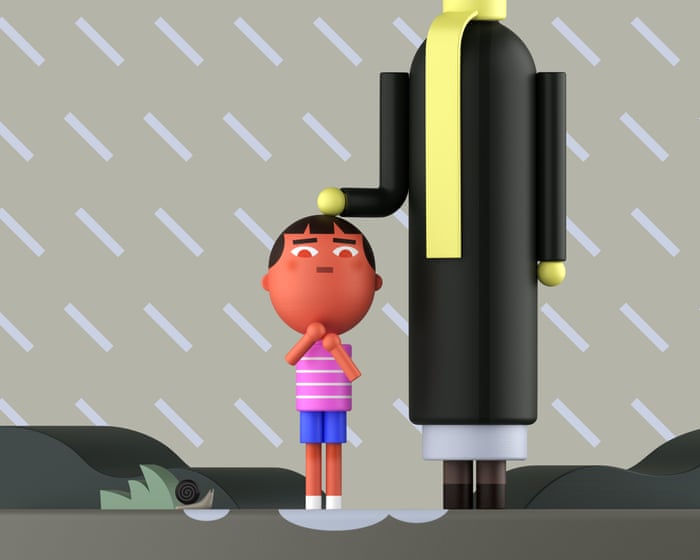
Illustrations by Holly Szczypka.
Frequently Asked Questions
FAQs The Rise of FAFO Parenting
BeginnerLevel Questions
1 What does FAFO even mean
FAFO is an internet slang acronym that stands for F Around and Find Out In parenting it describes an approach where parents allow children to experience the natural logical consequences of their actions even if those consequences are uncomfortable as a primary teaching tool
2 How is FAFO parenting different from gentle parenting
Gentle parenting focuses heavily on empathy connection and guiding emotions before addressing behavior FAFO parenting prioritizes allowing realworld consequences to be the teacher often with less upfront discussion Its seen as more direct and less negotiationbased
3 Is FAFO parenting just being harsh or neglectful
Not when done thoughtfully The core idea isnt to be cruel or uninvolved Its about intentionally stepping back to let a safe related consequence happen instead of the parent always cushioning or rescuing them
4 Whats a simple example of FAFO in action
A child refuses to wear a coat on a chilly day after being warned Instead of arguing the parent lets them go out and feel cold The natural discomfort teaches the lesson more effectively than a repeated lecture
5 Are there any benefits to this style
Proponents argue it builds resilience accountability and realworld problemsolving skills Children learn that their choices have direct outcomes which can prepare them better for adulthood where rescues arent guaranteed
Advanced Practical Questions
6 Does FAFO mean the end of gentle parenting
No its more of a cultural counterpoint or evolution Many see them blending You can be empathetic and connected while still firmly allowing natural consequences The debate is about the balance between protection and experiential learning
7 What are the biggest risks or problems with FAFO
The main risks are misapplication allowing consequences that are unsafe disproportionate or not actually related to the behavior It can also fail if a child doesnt understand the link between their action and the result or if its done without any underlying warmth or support