I can just about fit a £20 note into the back of my phone case, which holds the device I use to pay for almost everything without thinking. But this week was different. After a reckless spending spree on coffee and clothes left a huge dent in my bank account, I decided to take action. Self-control was one option, but a more drastic route was blunt-force restriction. I would ditch contactless payments, along with my debit and credit cards, and rely solely on cash for a week.
After subtracting the lavish lattes and Asos deliveries that had massively inflated my usual weekly spending, I allowed myself £180 for basics like food and travel. For safety, I added an extra £20. My first task was to withdraw £200 in cash from an ATM. But what was my PIN? Thanks to contactless payments, I hadn’t used it in over a year. After Googling how to find it, I discovered I’d have to wait three to five working days for a reminder letter in the post. That wouldn’t do. I decided to go to my local bank and explain my predicament.
“Have you got ID?” asked the cashier. I did. “You can take out cash now,” he said. Perfect. I left the bank with a wad of £20 notes, feeling optimistic about my cash-only week ahead.
Day 1. Starting balance: £200
I was still holding that week’s cash when a strong gust of wind hit me, and I clasped the notes for dear life. I needed something to keep this money safe. Spending a chunk of my budget on a wallet seemed irresponsible. There had to be a more cost-effective option. I found it in Tesco: a flat, translucent pencil case, slightly bigger than a banknote. Perfect—and it cost just £1.
Before heading to the till, I picked up a few other items: 1kg of chicken (£7.90), three packs of Tilda microwaveable basmati rice (£1.05 each), a 200g bag of tenderstem broccoli (£1.35), and a 1kg bag of porridge oats (£1.35). I instinctively headed to the self-checkout when a slightly stressed employee directing shoppers yelled, “Card only!” I lugged my basket to the long queue for the cashier-staffed till. I tapped my foot impatiently as customers made small talk with the woman behind the till, who scanned goods at a leisurely pace.
“Cash or card?” asked the cashier, after dispensing a few cooking tips. I pulled out my wad and handed over my first £20 note.
Total spend: £14.75
Day 2. Starting balance: £185.25
I usually ride a speedy Lime bike to the Guardian HQ in London, and it only dawned on me as I was leaving the house—with 20 minutes to spare before my first meeting (a 15-minute cycle)—that Lime only accepts digital payments. OK, don’t stress, I thought, as I hyperventilated into my plastic wallet.
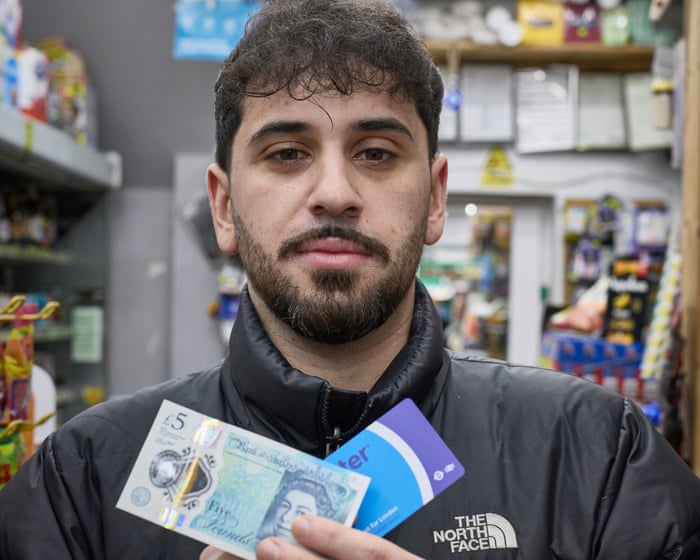
Time was ticking, and even the bus stop was useless (buses in London haven’t accepted cash since 2014). Accepting that I would be late, I rushed to the corner shop to buy an Oyster card. After a small queue for the till (something I soon learned would be common in my cash-only journey), I asked how much an Oyster card would be. Surely it couldn’t be more than a fiver. £10, said the cashier, for the card alone. Open-mouthed but aware of the time, I handed over one of my precious £20 notes, giving me £10 credit on the card, before running for the tube (which took £2.80 off my balance).
After a stressful morning, I fancied a Nando’s for lunch. Usually, I would pre-order on the app, but, surprise, this is only possible if you’re paying by card. I tried to call the nearby branch, but with the lunchtime rush approaching, no one answered, so I hurried there. My quarter chicken with spicy rice and tenderstem broccoli came to £12—butI had just 20 minutes to eat my takeaway once I got it. At the end of the day, rather than beating the rush by zipping home on my electric scooter, I tapped my Oyster card (another £2.80 gone) and joined the crowds on the tube.
Total spend: £32
Day 3. Starting balance: £153.25
I realized it had been a while since I’d had a fancy coffee, so I went to my local upmarket cafe, where I’ve spent far too much in the past. This time, I had loose change ready in my wallet. I gave the barista my complicated order—a decaf caramel latte with oat milk—which cost £4.60. I proudly prepared to pay with exact change, but instead of thanking me, the barista pointed to a sign by the till: “Card only.”
According to Shankha Basu, a marketing professor at the University of Leeds, there are practical reasons businesses avoid cash, like reducing theft risk and handling costs. Card payments are simply easier. But there’s another side: people tend to think less about what they’re buying when using cards, and often spend more or choose pricier options because handing over cash feels more real.
I left the cafe empty-handed. Instead of trying another trendy spot that would likely reject cash, I went somewhere it was still king: a greasy spoon cafe. After waiting behind a group of builders who all paid with notes, I ordered a simple black coffee with a splash of milk for £1.50. It wasn’t fancy, but it did the trick.
I skipped the packed tube and walked 50 minutes to work. For lunch, I kept it modest with a Tesco meal deal—the slightly fancier Finest bundle for £5.
Total spend: £6.50
Day 4. Starting balance: £146.75
To reward my cash-only discipline, I decided to treat myself to a takeaway. As a regular user of Uber One, I’m used to having endless food options delivered with a tap. But most places, especially chains like Wagamama, KFC, and Dishoom, only deliver through apps that require card payments. To pay with cash, I had to do it the old-fashioned way: calling a local takeaway with its own drivers.
I opted for a chicken shish with chips (rice wasn’t available). Calling felt strange—no card details, no app tracker, just telling them what I wanted and where to send it. For a moment, I wasn’t sure if dinner would arrive at all. But about 40 minutes later, it did. And it was cheap: just £11 with a drink, with no extra fees. Maybe ordering direct is the way to go.
Total spend: £11Day 5. Starting balance: £135.75
This was the real test: I went shopping with a friend in central London. I often go out without planning to buy anything, only to come home with less money in my account. I tapped my Oyster card to enter the tube (£2.80 was taken from my topped-up balance) and browsed a few shops. At first, nothing caught my eye, but then I spotted a fragrance I’d wanted for a while, marked down in a clearance sale from £180 to £90. It’s such a good deal, I kept telling myself. I pulled out my pencil case and counted the cash I had left: buying it would use 66% of my remaining budget, leaving me with just £45.75.
There was something about feeling the stack of notes between my fingers that made me hesitate. It physically felt like a lot of money. According to Basu, this hesitation is common. “Spending cash feels painful because you physically experience something leaving you,” he says. In contrast, when you pay with cards or contactless methods, “that feeling of loss is muted, which leads people to spend more than they otherwise would.” I put the bottle back.
After that show of willpower, I went for dinner with my friend. A burger (£15) and three cocktails (£12 each) later, it was past midnight. I needed to catch the last train. I hurried to the station and tapped my Oyster card, but the barriers didn’t open—I didn’t have enough money on it. Panicked, I rushed to the top-up machine and put in a tenner. My train was leaving in two minutes. By the time my Oyster was topped up, I had one minute left. I raced down the escalator, breaking several health and safety rules, and collapsed into the carriage just as the doors closed. A very close call and a reminder that a cash-only lifestyle means always keeping your Oyster topped up.
Total spend: £61
Day 6. Starting balance: £74.75
My sisters and I had planned a day trip to Rye, East Sussex. Usually, I buy my ticket in advance on Trainline so I can scan and dash through the barriers just before the train leaves, but I arrived at the station early, knowing I’d need to buy my ticket in person. The total was £39.50. Out of curiosity, I checked the same journey on the Trainline app: £41.49. I’d saved £1.99, which made the £2.50 bottle of water I bought during our change at Ashford International hurt a little less. After arriving, we got ice cream (£3 for a delicious soft serve) and browsed the charity shops. I left with three books, priced at £1 each. While queuing in a line filled exclusively with cash-wielding people somewhat older than me, I felt like part of the majority when I proudly handed the cashier some coins.
For dinner, we went to a Thai restaurant where I ordered a £10 pad thai. When the bill came, I was the only one at the table not holding out a card. My younger sister was surprised and tried to insist on covering my share to speed things up, but I resisted and handed over my slightly crumpled tenner.
Total spend: £58
Day 7. Starting balance: £16.75
I spent the day at home, doing nothing and finishing the last of my Tesco groceries, which gave me plenty of time to reflect on my cash-only week. With more than a tenner left in my trusty, slightly worn pencil case, I think it’s fair to call the week a success. I spent far less than I usually would and, more importantly, I really thought about every purchase.
I’m suddenly eager to pay for more things with cash—but I seem to be in the minority. According to a report by the trade association UK Finance, cash was used for 9% of all transactions in 2024, the first time this figure has dropped below 10%. In comparison, 34% of all payments were made in cash in 2017. A study last year by the cash machine network Link found that fewer than half of people in the UK now carry cash regularly.I still carry a physical wallet. UK Finance also predicts that by 2034, notes and coins will make up just 4% of all payments in the UK. After my cash-only week, that feels like a shame. Not only did I rein in my spending, but I also had more face-to-face contact with people—I even started to appreciate the constant queues. Plus, the slight restrictions, like fewer takeaway and coffee shop options, actually made life simpler.
As for next week, my cards are coming out of retirement—but they’ll be tucked into my makeshift wallet alongside some trusty cash. I’m also looking forward to finally learning my PIN.
Total spend: £0
Frequently Asked Questions
FAQs My Week of Using Only Cash
Beginner General Questions
1 What does using only cash actually mean
It means you commit to paying for all your daily purchaseslike groceries coffee transportation and entertainmentwith physical banknotes and coins You avoid using debitcredit cards digital wallets and online payments for that period
2 Why would anyone do this in a digital age
To break automatic spending habits Physically handing over money makes you more aware of each purchase which can help curb impulse buys reduce overspending and make your budget feel more tangible
3 What are the main benefits of a cashonly week
The top benefits are Increased spending awareness reduced impulse purchases simpler budgeting and a potential decrease in anxiety from not tracking numerous digital transactions
4 Isnt carrying cash inconvenient and risky
It can be less convenient than tapping a card and there is a risk of loss or theft However planning ahead and using a secure wallet mitigates most risks Many find the mental benefits outweigh these hassles
Common Problems Practicalities
5 How do I handle bills and subscriptions that are autopaid online
Dont interrupt essential payments Keep those on autopay The challenge applies to your discretionary spendingthe money you have direct control over each day For bills you could set aside the cash equivalent in an envelope to visualize the cost
6 What if I run out of cash midweek
Thats a key lesson It forces you to stop and evaluate your spending until your next cash refill It highlights where your money is actually going and encourages better planning for the following week
7 How do I start Whats the first step
1 Define your timeframe
2 Review your typical weekly discretionary spending from past bank statements
3 Withdraw that amount in cash from your bank
4 Put your cards away at home to avoid temptation
Advanced Insights LongTerm Impact