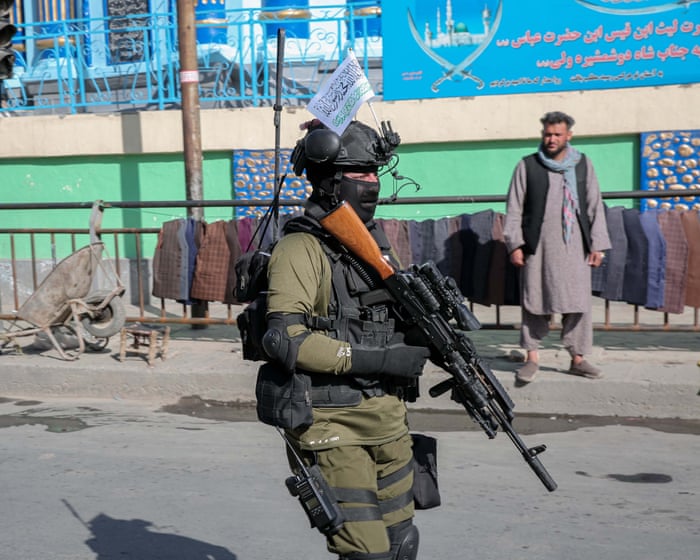
Pakistan has carried out airstrikes on major cities in Afghanistan, including the capital Kabul, with its defense minister declaring that the two hostile neighbors are now in a state of “open war” as retaliatory attacks continue to escalate.
Residents in Kabul and the southern city of Kandahar reported hearing explosions and seeing jets overhead until dawn. The Taliban government later stated that Pakistani surveillance aircraft were still flying over Afghan territory.
This wave of attacks followed an assault by Afghan forces on Pakistani border troops on Thursday night, which itself was a response to earlier airstrikes by Pakistan. The operation marks Pakistan’s most extensive bombardment of Kabul and its first airstrikes on Kandahar, the Taliban’s southern stronghold since they returned to power in 2021.
On Friday morning, Afghan authorities in eastern Nangarhar province reported that fighting was ongoing in the Torkham border area. The provincial information directorate stated that Pakistani mortar fire had struck civilian areas, including a refugee camp. In response, Afghan forces were targeting Pakistani military posts across the border. Dozens of casualties have been reported, with at least 12 people killed.
Tensions between Pakistan and Afghanistan have been high for months. Border clashes in October resulted in dozens of deaths among soldiers, civilians, and suspected militants. Pakistan accuses Afghanistan’s Taliban government of sheltering militant groups that launch attacks across the border and of aligning with its historic rival, India.
A Qatari-mediated ceasefire ended the fighting last year, but several rounds of peace talks held in Istanbul in November failed to produce a formal agreement.
On Thursday around 8 p.m., Afghanistan launched a cross-border attack on Pakistan, calling it retaliation for deadly Pakistani airstrikes on Afghan border areas the previous Sunday. Hours later, Pakistan bombed Kabul and two other provinces.
At least three explosions were heard in Kabul, with conflicting reports from both sides regarding casualties and the locations hit.
A resident of Kabul’s affluent Wazir Akbar Khan neighborhood, located near Taliban headquarters where Pakistani airstrikes occurred on Thursday night, described hearing a massive blast close to his home near Taliban administrative offices. He said, “The blast was followed by gunfire. We stayed inside, afraid to go out. We knew it was Pakistan’s airstrikes, like in October, but we didn’t know if anyone was killed because no one was allowed near the area, and Taliban media reported no casualties.”
The resident, who requested anonymity for fear of Taliban reprisals, added that many people in Kabul are anxious and frightened. “It’s clear that even after the American withdrawal, the war in Afghanistan never ends… We just want to live in peace. Sadly, civilians always suffer, especially here.”
Pakistan’s Information Minister, Attaullah Tarar, claimed that Friday’s strikes in Kabul, Paktia, and Kandahar killed 133 Taliban officials and wounded over 200, with more casualties possible.
Prime Minister Shehbaz Sharif stated that Pakistan’s armed forces could “crush” aggressors, while the defense minister spoke of “open war.” In a post on X, Defense Minister Khawaja Mohammad Asif said Pakistan had hoped for peace in Afghanistan after NATO’s withdrawal and expected the Taliban to focus on the welfare of the Afghan people and regional stability. Instead, he accused the Taliban of gathering militants from around the world and initiating hostilities.Pakistan has accused Afghanistan of “exporting terrorism,” with a Pakistani official stating, “Our patience has now run out. Now it is open war between us.”
Islamabad often blames its western neighbor for the increase in militant attacks within Pakistan, alleging that Afghanistan supports the Pakistani Taliban (TTP) and banned Baloch separatist groups. Pakistan claims the TTP—which is distinct from but allied with Afghanistan’s Taliban—operates from inside Afghanistan, a charge both the group and Kabul deny. Pakistan has also repeatedly accused India of backing the Baloch Liberation Army and the TTP, allegations that New Delhi rejects.
According to Afghanistan’s defense ministry, 55 Pakistani soldiers were killed in border clashes on Thursday, with some bodies taken into Afghanistan and several soldiers “captured alive.” The ministry reported eight Afghan soldiers killed and 11 wounded, along with the destruction of 19 Pakistani army posts and two bases. However, a spokesperson for Pakistan’s Prime Minister Shehbaz Sharif denied that any Pakistani soldiers had been captured.
The clashes began after 8 p.m. on Thursday when Afghan Taliban forces attacked multiple border posts in Pakistan’s northwestern Khyber Pakhtunkhwa province. The border districts of Bajaur and Kurram were hardest hit by gunfire and mortar shells. A resident of Bajaur reported that mortar shells struck Bara Lagharai village in neighboring Mahmund district, killing at least two civilians and injuring six others. The resident described the village as being on the border and directly exposed to the Taliban’s fire.
Bajaur’s deputy commissioner, Shahid Ali, confirmed the casualties and stated that five artillery rounds fired by the Afghan Taliban hit civilian homes across the border.
Tensions between Afghanistan and Pakistan have escalated sharply in recent months, with land border crossings mostly closed since deadly fighting in October that killed over 70 people on both sides. Efforts to reach a lasting agreement have stalled, and a ceasefire brokered by Qatar and Turkey in October now appears increasingly fragile.
The two countries share a 1,640-mile border, known as the Durand Line, which Afghanistan has never formally recognized.
Frequently Asked Questions
Frequently Asked Questions Pakistans Airstrikes Open War Declaration
BeginnerLevel Questions
1 What happened
Pakistan conducted airstrikes inside Afghanistan targeting what it called militant hideouts In response Pakistani officials have used strong language including references to an open war signaling a major escalation in tensions
2 Why did Pakistan launch airstrikes into Afghanistan
Pakistan stated the strikes were in retaliation for a recent major terrorist attack inside Pakistan that killed its soldiers It accuses militant groups operating from Afghan territory of being responsible
3 What does open war mean in this context
It is a dramatic declaration indicating Pakistan is prepared for sustained direct military action across the border moving beyond diplomatic protests or limited strikes It suggests a significant shift towards a more confrontational stance
4 Which cities in Afghanistan were targeted
Reports indicate strikes occurred in the eastern provinces of Khost and Paktika targeting areas near the border The term major cities may refer to provincial capitals or significant towns in these regions
5 How has Afghanistan responded
The Talibanled Afghan government condemned the strikes as a violation of its sovereignty Afghan forces reportedly returned fire across the border and the situation remains tense
Advanced Practical Questions
6 What is the root cause of this conflict
The core issue is Pakistans longstanding accusation that the Afghan Taliban government harbors the Pakistani Taliban a militant group that launches attacks inside Pakistan Afghanistan denies this creating a persistent security dilemma
7 Could this lead to a fullscale war between Pakistan and Afghanistan
While possible it is considered unlikely in the conventional sense Both countries face severe economic challenges However the risk of a prolonged lowintensity border conflict with frequent skirmishes and strikes has increased significantly
8 What is the international community saying
There are widespread calls for restraint from the UN US China and others The focus is on urging dialogue and reminding both sides of the need for Afghanistans stability No country has endorsed the military action
9 What are the immediate risks for civilians
Civilians on both sides of the border face direct danger from airstrikes and crossborder shelling There is also a risk of increased displacement and a humanitarian crisis in the conflictaffected border regions