Donald Trump threatened to “massively blow up” the world’s largest gas field after Israeli strikes on the Iranian site led Tehran to increase attacks on energy facilities across the Middle East.
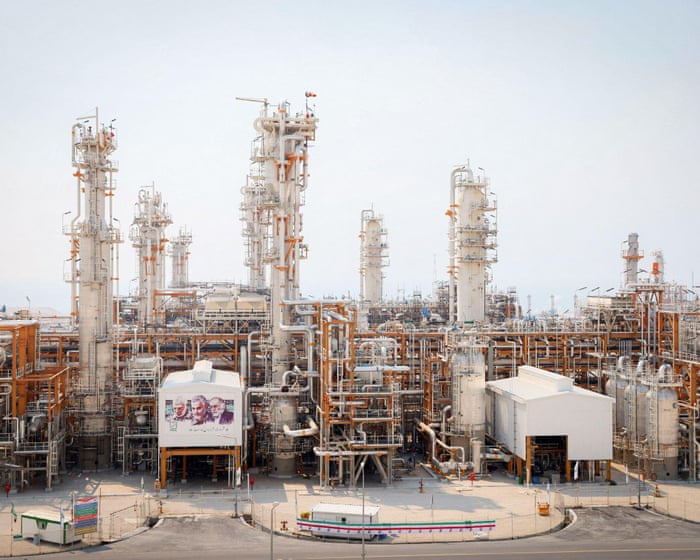
Israel’s decision to target the South Pars gas field on Wednesday marked a major escalation in the war, raising fears of significant disruption to international energy supplies. Iran quickly retaliated with new attacks across the region, including on Qatari liquefied natural gas (LNG) facilities, which angered the U.S. president.
Oil and European natural gas prices rose sharply, with Brent crude—the international oil benchmark—up 6% to $114 a barrel. Gas prices jumped 23%. Major Asian stock markets came under pressure, with Japan’s Nikkei 225 falling 3.4%.
A large fire broke out at the South Pars gas field following the Israeli strike. Trump claimed on social media Wednesday night that the U.S. “knew nothing” of the Israeli attack on South Pars, though U.S. media had earlier reported that the U.S. was aware of it. The Wall Street Journal, citing unnamed U.S. officials, reported that the president approved the attack in an effort to pressure Tehran into reopening the Strait of Hormuz.
Authorities in Abu Dhabi said they were forced to shut down operations at the Habshan gas facility and Bab field due to Iranian attacks, calling it a “dangerous escalation” of the war.
QatarEnergy, the state-run giant, said Ras Laffan in Qatar—the site of the world’s largest LNG hub—had suffered “extensive damage” after strikes by Iran. Early Thursday, QatarEnergy reported “sizeable fires” and significant damage at several LNG facilities at the hub. The Qatari interior ministry later stated that all fires had been contained.
The strike on South Pars was the first targeted attack on Iranian fossil fuel production since the U.S. and Israel began the conflict almost three weeks ago.
Trump said Qatar, which shares the gas field with Iran, “was in no way, shape, or form involved with it [the attack], nor did it have any idea that it was going to happen.” He added that Israel would not attack the gas field again unless Iran targeted Qatari gas facilities again.
If Tehran chose to retaliate, Trump stated: “The United States of America, with or without the help or consent of Israel, will massively blow up the entirety of the South Pars Gas Field with a level of strength and power that Iran has never seen or witnessed before.”
Trump’s efforts to de-escalate attacks on energy infrastructure by threatening to destroy South Pars did not reassure global markets, as concerns grow over the economic impact of the conflict.
Saudi Arabia was also targeted by Iranian ballistic missiles on Wednesday. Its foreign minister said any trust with Tehran had been shattered. “This pressure from Iran will backfire politically and morally, and we certainly reserve the right to take military action if deemed necessary,” Prince Faisal bin Farhan told a news conference.
A spokesperson for the Qatari foreign ministry described the Israeli attack on South Pars as “dangerous” and “irresponsible,” urging all sides not to target energy facilities. The UAE foreign ministry also called the move a “dangerous escalation,” warning: “Targeting energy infrastructure poses a direct threat to global energy security.”
Meanwhile, the Strait of Hormuz, through which about a fifth of the world’s oil supplies and seaborne gas tankers usually pass, remains effectively closed. Trump’s efforts to build a multinational naval force to reopen the key waterway have yet to produce results.
The UK Maritime Trade Operations agency reported a fire on a vessel near the strait after it was hit by a projectile.A ship was struck off the coast of the UAE late on Wednesday. Following the attacks on gas facilities that day, French President Emmanuel Macron spoke with former US President Donald Trump and Qatar’s Emir Sheikh Tamim bin Hamad al-Thani. Macron called for a halt to strikes on civilian infrastructure, stating, “Civilian populations and their essential needs, as well as the security of energy supplies, must be protected from military escalation.”
In another incident of Middle East violence, the Palestinian Red Crescent reported that three Palestinian women were killed in an Iranian missile strike in the occupied West Bank late Wednesday. This marked the first deadly Iranian attack in that area and the first to kill Palestinians since the war began.
Meanwhile, the European Union urged Israel to “cease its operations” in Lebanon, a country that French Foreign Minister Jean-Noel Barrot will visit on Thursday. Lebanon became involved in the conflict earlier this month when Hezbollah fighters fired rockets into Israel. Israel responded with strikes that, according to Lebanese authorities, have killed at least 968 people and displaced over a million.
More than a week has passed since Trump first suggested the war could end “very soon.” With no resolution in sight, some companies are preparing for at least another month of major disruptions. On Thursday, Hong Kong-based Cathay Pacific suspended flights to and from Dubai and Riyadh until the end of April, citing “the developing situation in the Middle East.”
Frequently Asked Questions
Of course Here is a list of FAQs about the reported threat framed in a natural tone with clear direct answers
BeginnerLevel Questions
1 What is the South Pars gas field and why is it important
The South Pars gas field is a massive natural gas field located in the Persian Gulf Its the worlds largest gas field and is shared between Iran and Qatar Its the cornerstone of Irans energy economy providing a major source of revenue and domestic power
2 What exactly did Trump say or threaten
In a reported statement former President Donald Trump said that if Iran were to attack Qatar he would order the US military to destroy Irans entire South Pars gas infrastructure This is not an official policy but a threat he made highlighting his deterrence approach
3 Why would Iran attack Qatar Is that likely
There is currently no indication Iran plans to attack Qatar The threat is a hypothetical scenario Tensions have existed but Qatar and Iran maintain diplomatic and trade relations The threat is more about establishing a red line and a deterrent posture
4 Is this an official US government policy
No This is a statement from a former president and current presidential candidate US foreign policy is set by the sitting administration However it signals the kind of aggressive deterrence strategy a potential future Trump administration might employ
Advanced Strategic Questions
5 What would be the global economic impact of destroying South Pars
It would be catastrophic and immediate Global natural gas prices would skyrocket triggering a severe energy crisis worldwide Europe and Asia which import LNG from Qatar would face massive shortages and economic disruption
6 Isnt Qatar a US ally Why use it in this threat
Yes Qatar is a major nonNATO ally and hosts the largest US military base in the Middle East The threat uses the defense of an ally as the justification for an overwhelming response against Irans most vital economic asset making the deterrent credible and highstakes
7 What are the military and environmental risks of such an action
Militarily it could trigger a fullscale regional war potentially drawing in other powers Environmentally destroying offshore gas platforms would cause an unprecedented