Just over a month ago, Dubai was the clear choice for wealthy Britons seeking a new home. Few cities offer the chance to earn large sums tax-free and spend them in countless luxury hotels, restaurants, and shops.
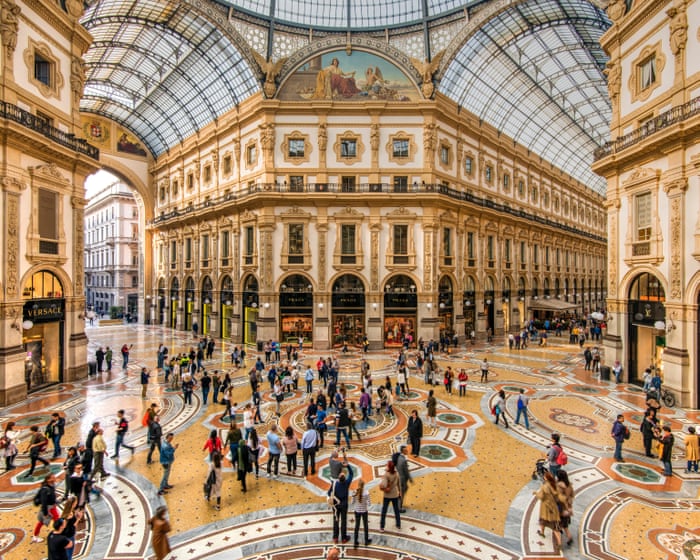
But as the United Arab Emirates faces attacks from Iran, Dubai’s image as a safe haven for the global elite—partly built by expatriate influencers—is fading. Super-rich UK nationals are now looking for a way back to Europe, and Milan, Italy’s financial hub, is rising to the top of their list.
“Italy offers the best benefits: a flat tax and a high quality of life,” says Armand Arton, a consultant who helps multimillionaire and billionaire families relocate through investment citizenship programs. “People leaving the UAE can easily picture themselves living in Rome or Milan as international, metropolitan centers.”
It’s easy to see why Milan, already home to some of Europe’s wealthiest bankers, lawyers, and investors, has become so popular. Under Italy’s flat-tax system, foreign residents can pay €300,000 (£259,620) per year on all overseas income—a small amount for the world’s wealthiest.
“We have always been an international city, but it is changing,” says Diletta Giorgolo, who runs Sotheby’s residential real estate office in Italy’s economic and fashion capital. “We’ve had our special tax regime since 2017, but when the UK ended its non-dom status, we saw a wave of new buyers coming to Milan.”
Now, as another wave of wealthy migrants turns its attention to the city, can Milan become the new home for the ultra-rich?
The ‘Empty London’ Tax Break
The conflict in the Gulf has already triggered an exodus of wealthy UK nationals, though not all are willing to return home. For many Europeans, Italy is the most strategic option. Unlike the UK’s stricter rules, new Italian residents who haven’t paid taxes in the country for at least nine of the past ten years can avoid tax on their foreign income by paying the €300,000 annual flat tax. They are then taxed on their Italian income and capital gains from investments made within five years of choosing the flat tax.
Marc Acheson of financial planner Utmost Wealth Solutions says Italy’s appeal has grown as the UK has become less attractive to the super-rich. The buzz in Milan is so strong that the Italian rule is nicknamed “svuota Londra” or “evacuate London.”
“Even though Italy introduced its flat-tax regime in 2017, initially set at €100,000, it didn’t attract a flood of people,” he says. “The abolition of the non-dom regime is what really sparked interest, and it happened just as Portugal was tightening its rules.”
“The system is simple, and people love it,” Acheson adds. “Italy is a beautiful country, Milan has a strong financial services sector—many of the things that make London attractive, Milan has too.”
Roberto Bonomi, a partner at law firm Withers, notes that Italy has also shed its reputation as a politically unstable destination. Prime Minister Giorgia Meloni, who took office in 2022 with openly far-right policies, appears to have moderated her stance.
“At first, there was some skepticism,” Bonomi says. “But after nine years, we’ve shown it’s a stable system. Clients are no longer afraid of Italy—and recent events show that uncertainty exists everywhere.”
La Dolce Vita—at a Price
So far, about 5,000 people have joined Italy’s flat-tax scheme, according to estimates by Maisto e Associati, an Italian law firm specializing in tax. Initially, many applicants were Italians who had bMarco Cerrato, a partner at the firm based in London, explains that initially, the individuals moving to Italy were typically professionals from banking, insurance, asset management, or hedge funds. They had spent the past decade in the UK and were returning to Italy for personal and tax reasons. However, after the pandemic, there was a significant surge in interest, which grew exponentially, especially following the announcement by the UK’s Conservative Party that they would abolish the non-domiciled tax agreement.
Another wave of interest is now coming from the Gulf region, according to Arton. Italy’s efficient application processing is attracting people leaving the area who wish to relocate to Europe, drawn by the flat tax benefit and the quality of life.
This influx of wealthy newcomers is already driving up property prices in Milan. Over the past five years, prices have risen by 38%, as reported by estate agent Knight Frank. Milan has recently surpassed Venice as Italy’s most expensive city, with an average price of €5,171 per square meter in November 2025, according to the Italian property portal Idealista. The increases are even more pronounced in highly sought-after areas like Sant’Ambrogio, Brera, San Marco, or the Cinque Vie near the Duomo.
Giorgolo estimates that the number of international buyers in the market has increased by 30% to 40% compared to just two years ago. Previously, international buyers were looking for second homes in Milan or Lake Como, but now they are seeking residency in Italy, prioritizing proximity to good international schools and major airports.
Return of the Brains
Other tax incentives include “Il rientro dei cervelli” (Return of the Brains), which allows new or returning residents meeting certain criteria to be taxed on only 50% of their income for five years, with even larger reductions available for some.
However, Bonomi notes that the key question is whether there is a ceiling for Italy’s flat-tax regime. The threshold has risen from €100,000 in 2017 to €200,000 in 2024, and to €300,000 at the start of this year. The Italian government stated that increasing the flat tax aims to build the country’s competitiveness without engaging in unfair competition against other nations.
There are still uncertainties about how far Italy can leverage this advantage. Last year, former French Prime Minister François Bayrou accused Italy of “tax dumping,” claims that Prime Minister Meloni dismissed as completely baseless.
Meanwhile, life in Milan is changing rapidly. Similar to Dubai, galleries, members’ clubs, and hotels are proliferating. The Italian government reduced VAT on sales and imports of artworks from 22% to 5%, one of the lowest rates in Europe, prompting galleries like Thaddaeus Ropac to expand in the city. In 2024, the upscale Via Monte Napoleone overtook New York’s Upper Fifth Avenue as the world’s most expensive shopping street. It lost the top spot to London’s Bond Street last April, but its pedestrianization in May positions it to reclaim the title this year.
Brands are following this new wave of wealth, including new locations for private members’ clubs like Casa Cipriani and Soho House.
Giorgolo adds that similar shifts are occurring in Rome, with a Rosewood hotel and a Four Seasons hotel set to open in 2026 and 2027, respectively.
“The expat community has brought many changes to both Milan and Rome,” she says. “Milan has always been international during major events like fashion week, but now it’s about expats actually living here and reshaping the city year-round.”
The question remains whether Milan will be able to dethrone Dubai as the center.Whether the global elite will continue to favor Dubai remains uncertain. “I’m confident Dubai will recover from the current concerns about security,” says Arton. “It may not meet everyone’s criteria anymore, but certain groups will still find Dubai very appealing. Simply put, there are few other places in the world that offer the same combination of opportunity and quality of life.”
Frequently Asked Questions
FAQs Italy vs Dubai for the UltraWealthy
Beginner General Questions
1 Whats this news about Italy and Dubai
This refers to recent reports that Milan Italy is becoming a serious rival to Dubai UAE as a preferred destination for the worlds ultrawealthy to live invest and establish a base
2 Why would the ultrawealthy choose Milan over Dubai
Italy is offering attractive new incentives like a flat tax for highnetworth individuals who relocate This allows them to pay a fixed annual amount instead of being taxed on their worldwide income which can be a major financial perk
3 What are the main perks Italy is offering
The biggest perk is the flat tax or lumpsum tax regime Other perks include Italys unparalleled lifestyle cultural heritage art food central European location and highquality real estate
4 What makes Dubai attractive to the wealthy
Dubai has long been popular for its zero income tax modern infrastructure luxury real estate businessfriendly environment geopolitical neutrality and sunny climate
Comparison Benefits
5 Is it just about taxes What else does Italy have that Dubai doesnt
Beyond taxes Italy offers a deep centuriesold cultural and artistic landscape a soft power advantage in fashion and design and access to the European Unions single market and passport which Dubai cannot provide
6 What does Dubai have that Italy doesnt
Dubai offers a taxfree environment often simpler bureaucracy a newer and more futuristic cityscape and a strategic location as a global travel hub between East and West
7 Are we only talking about Milan
While Milan is the financial and business hub leading this shift the benefits apply across Italy The wealthy might also establish residences in Lake Como Tuscany or Rome using Milan as their administrative base
Common Problems Practicalities
8 What are the potential downsides of choosing Italy
Challenges can include complex and slow Italian bureaucracy higher costs for certain services compared to Dubai and a need to navigate the Italian tax system carefully even with the flat tax option