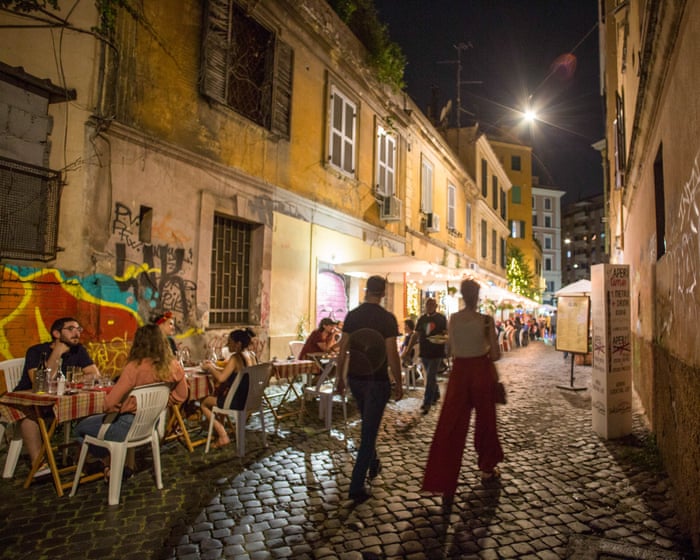
Why go now?
Central Rome, one of Europe’s hottest spots, has started to feel like a tube station at rush hour: stuffy, overcrowded, and claustrophobic. Last year, the Eternal City saw a record number of tourists, partly thanks to the 2025 Vatican Jubilee. A total of 22.9 million visitors stayed in the city—almost ten times the number of residents.
And there’s no sign of the tourist boom slowing down. Local sources suggest 2026 could beat 2025’s numbers.
But while holidaymakers pour out of Rome’s main train station, Termini, and head straight for the Colosseum, the Roman Forum, and Piazza Venezia, few realize that a 20-minute walk in the opposite direction leads to one of Rome’s most overlooked neighborhoods: San Lorenzo.
Built in the late 19th century for the working class, San Lorenzo carries more modern historical weight than many central areas. During Benito Mussolini’s rise to power, both local residents (known as sanlorenzini) and the Arditi del Popolo (AdP)—an anti-fascist military group—took part in acts of resistance.
In the little-known 1922 Battle of San Lorenzo, AdP members fought off fascist squads, forcing them to retreat under gunfire. Five months later, during the March on Rome, barricades were set up to keep the blackshirts out. Although 13 people died in the unrest, fascist forces never fully controlled the area. It became known as the “red zone,” a symbol of its left-wing politics.
Tragedy struck again near the end of World War II, when Allied bombing destroyed large parts of the neighborhood and killed around 1,500 sanlorenzini.
Today, life in this counterculture quarter is far less combative. Students from nearby La Sapienza University mix with artists, creatives, and longtime residents who still hold onto their working-class, left-wing identity. Even with new money coming in—and club chains like Soho House and Social Hub opening up—the neighborhood has kept much of the character that sets it apart from Rome’s increasingly crowded center.
Where to eat and drink
Thankfully, sticky menus with food photos are rare here, as are plates of carbonara costing more than €10. The area’s Pizzeria Formula 1 is a rite of passage for locals. This no-frills spot has been serving Roman-style thin-crust pizza since 1978, focusing on classic toppings like margherita. The interior matches the food: a wood-lined room with white ceilings that looks untouched since it opened. Both young and old come for meals that rarely cost more than €10 per person.
A few minutes away is Osteria da Marcello, a family-run staple since 1961. Before Marcello Santececca and his wife, Alessandrina, opened their doors, the place mainly served fagottari—diners who brought their own food and bought wine from the establishment. Typical Roman dishes like stewed tripe, deep-fried Jewish-style artichokes (carciofi alla giudia), cacio e pepe pasta, and braised oxtail are served on plates placed on paper-covered tables, keeping that indoor picnic feel.
It’s not all cheap eats, though. Nena Mercato e Cucina, run by Italian actor Cristiano Caccamo and his business partner Lorenzo Biancolella, represents a newer side of San Lorenzo: trendy but not pretentious. Tiled tables and plates hung on the walls give it a Spanish vibe, while the menu updates old-school Italian classics with a modern twist, like duck.Fettuccine with Parmesan foam and carbonara with truffles.
View image in fullscreen
Pizzeria Formula 1 is a rite of passage for locals of San Lorenzo.
Those with a sweet tooth can cleanse their palate with authentic gelato from the aptly named Gelato San Lorenzo, which offers flavors ranging from the unusual (avocado, lemon, and pepper) to the classic (strawberry).
Nearby, the 103-year-old chocolate factory SAID dal 1923 serves desserts centered on chocolate. Display cases show off handmade pralines and truffles, and chocolate-making tools hang from the walls, reminding visitors of the area’s industrial past. Come autumn, the chocolatier’s rich hot chocolate is so tempting that even Augustus Gloop would want to dive in.
As dusk falls, Piazza dell’Immacolata becomes the neighborhood’s unofficial living room, where lively university students spill out with beers and plastic cups of wine in hand.
Wine bars are few, but that doesn’t mean they don’t exist. Hidden in plain sight is the tiny Ramnes, a wine bar where regulars and newcomers enjoy conversation over sips of local wine (like the crisp Bellone) and drinks from a bit farther away (such as velvety reds from nearby Abruzzo).
Skip past newsletter promotion
Free newsletter | Twice a week
Sign up to The Traveller
Get travel inspiration, featured trips, and local tips for your next break, plus the latest deals from Guardian Holidays
Enter your email
Sign up
After newsletter promotion
Cultural experiences
View image in fullscreen
Basilica San Lorenzo fuori le mura (Basilica of St Lawrence Outside the Walls). Photograph: Reda/Getty Images
Much like central Rome, faith plays a part in San Lorenzo’s sightseeing. The Basilica of St Lawrence Outside the Walls was built around the tomb of the neighborhood’s namesake. It is one of the Seven Pilgrim Churches of Rome and houses the relics of St Stephen. The original church was destroyed by Allied bombings in 1943, and the current facade was rebuilt from the rubble.
Sticking with the religious theme, the tree-lined Verano Monumental Cemetery (known locally as Il Verano) offers a place for reflection and calm away from the area’s hustle and bustle. This 83-hectare burial ground is divided into Jewish, Catholic, and Protestant sections, with a monument to the victims of World War I. As the final resting place of Italian acting legends Alberto Sordi, Bud Spencer, and Gigi Proietti, it’s Rome’s answer to London’s Highgate Cemetery.
“Where central Rome is defined by frescoes, San Lorenzo is defined by street art.”
Beyond piety, San Lorenzo’s modern side stands out. While central Rome is known for frescoes, San Lorenzo is known for street art. Like any neighborhood, there’s plenty of graffiti, but there are also standout pieces like Marina Biagini and Elisa Caracciolo’s Murale contro il Femminicidio (Mural Against Femicide, 2012-13), where each of the 107 figures represents a victim of femicide from the previous year. Rome-born street artist Alice Pasquini painted a block-long mural called “Welcome to San Lorenzo” along Via dei Sabelli. Street art tours are common.
View image in fullscreen
Elisa Caracciolo’s Murale contro il Femminicidio. Photograph: Andrea Sabbadini/Alamy
San Lorenzo’s creative identity goes beyond the streets. It’s also a key spot for contemporary art in Rome, anchored by the Fondazione Pastificio Cerere, a former pasta factory turned into a cultural center in the 1970s, with frequent exhibitions. Independent galleries and creative spaces also add to the area’s broader artistic scene, including Collettivo noMade and Monti8.
Where to shop
‘Year-round sunshine practically guaranteed’: Le Mourillon is Toulon’s cool, beachy quarter
Read more
With no pristine Gucci bags or sharp suits in sight, alternative and vintage clothing is a top priority for San Lorenzo locals. There are many secondhand clothes shops, like Latini 34, where everything from boldly colored preloved items can be found.You can find everything from trench coats to shoes. At Laboratorio Pellerossa, there are handmade leather goods, and at L’Anatra all’Arancia, you’ll find carefully selected clothes from little-known designers around the world. Music lovers can browse a selection of vinyl records at Ultrasuoni Records Roma.
Don’t miss
In summer, it’s hard to miss Giardino Verano, an open-air space near Il Verano where noise and laughter fill the neighborhood. This four-month summer festival runs every day until October, offering free concerts, an outdoor cinema, and drinks and games until 2am.
Where to stay
There aren’t many fancy hotels in San Lorenzo, but Ateneo Garden Palace (doubles from €188) has a large courtyard and spacious, airy rooms. Down the street, the newly opened Social Hub (doubles from €250) offers everything from on-site restaurants to a rooftop pool with a bar.
Frequently Asked Questions
Here is a list of FAQs about San Lorenzo Romes Rebel Neighborhood covering beginner and advanced aspects
Beginner Questions
1 What exactly is San Lorenzo and why is it called the rebel neighborhood
San Lorenzo is a historic workingclass district in Rome located near the main train station Its called the rebel neighborhood because of its long history of political resistance antifascist activism and its role as a student hub
2 Is San Lorenzo safe for tourists
Yes its generally safe but like any busy urban area in Rome you should watch for pickpockets especially near the university and at night The vibe is lively and bohemian not dangerous
3 Whats the main difference between San Lorenzo and Trastevere
Trastevere is more polished touristy and romantic San Lorenzo is grittier more authentic and dominated by students and locals Its less about picturesque cobblestones and more about street art cheap eats and counterculture
4 What kind of food can I find there
Youll find classic Roman street food affordable trattorias and international studentfriendly spots Its famous for its latenight pizza a portafoglio and cheap wine bars
5 Is San Lorenzo worth visiting for just a few hours
Absolutely Its perfect for a halfday visitgrab lunch walk the murals and have an aperitivo Its a great break from the crowded monuments
Advanced Deeper Questions
6 What are the most important historical events linked to San Lorenzos resistance identity
The neighborhood was heavily bombed by the Allies on July 19 1943 killing over 1500 people This event fueled antifascist sentiment Later it became a stronghold for the 1977 student movement and antiestablishment protests
7 Where can I see the best street art and political murals
Head to Via dei Volsci Via degli Ausoni and the area around the ExMattatoio former slaughterhouse