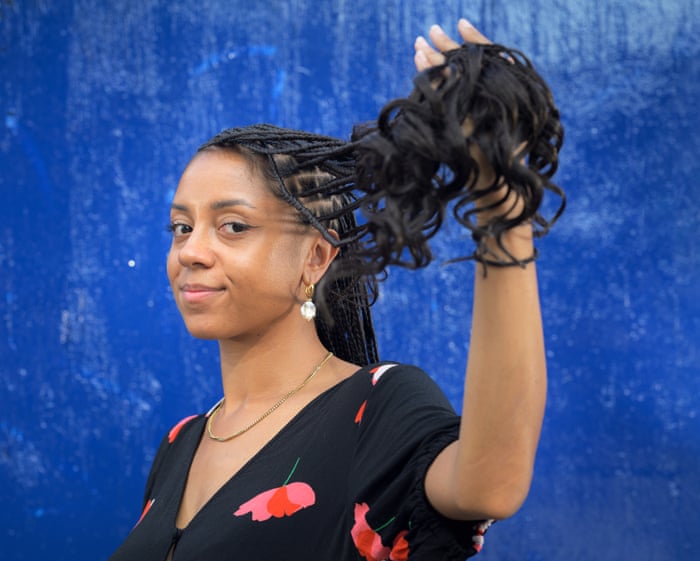
This week, I tried to book a last-minute appointment for knotless braids. I knew I’d be writing about how the simple pleasure of getting box braids is starting to feel more and more complicated, and I thought it would be good to get some photos of the process. Then I found myself getting frustrated as the topic of this newsletter started playing out on a kind of meta-level.
When I decided to get my hair done for this piece, I knew that booking a braiding appointment for the next day would be a nightmare. My usual salon asks you to book about a month in advance. My second option said we’d need a “private room” to bring a photographer, which would push the cost up to £600. While trying to write an immersive report on the challenges of getting braids, I suddenly realized I was living that report.
None of the salons seemed to care about my journalistic project. They don’t need the publicity or have time for it. As one salon told me: “We have a high demand for braids, which is why it’s hard to be very flexible.”
The lack of supply is causing tension. People who love braids often complain about how much power stylists have to keep raising prices. In New York, people can pay around $450 (£339) for knotless braids, a more expensive style that has become the norm there over the past five years or so. In London, I’ll pay between £150 and £250 for the same style. It wasn’t always like this.
Navigating a complicated process
With braiding, you pay for every bit of work—waist-length costs £20 more than bra-length, small braids cost about £40 more than medium, and so on. If your hair isn’t pre-stretched, add another £20. Want your hair washed and blow-dried? That’s an extra £20-35. For boho or goddess braids, a newer trend with wispy strands hanging out of your plaits, that could be, say, £50 more. If you use synthetic hair, it will get matted over the one to two months you wear the style, so it’s better to use human hair bundles. But those can cost upwards of £250. Each of these decisions fills me with a moment of small dread.
When Nesrine Malik, lead writer of The Long Wave, tells me that the Dutch braids she just got in Nairobi cost the equivalent of £2, and that a full head of knotless only costs £20, I get a bit hot and itchy.
Obviously, London has its own economy. But I can’t just opt out of this dizzyingly expensive process. Getting your hair done isn’t really a choice—one in five Black American women aged 25-34 have been sent home from work because of their hair. To make things worse, changing beauty standards have completely normalized (if not required) these boho, knotless, and butt-length styles, which take at least five hours to install.
“Braiding used to be about convenience and low maintenance,” Nesrine tells me. “Marketed as a ‘protective style,’ it felt like something that could free you from the endless cycle of washing, drying, curling, or straightening. Now it’s its own complicated, stressful ordeal.” And even once they’re done, the pressure doesn’t stop. “Many of us are told we’re doing it wrong: not washing them enough, keeping them in too long, getting them braided too tight or too heavy.”
Anna Gifty Opoku-Agyeman, an economist, Harvard PhD student, and author of The Double Tax: How Women of Color Are Overcharged and Underpaid, agrees. “This is a topic that’s significantly understudied,” she tells me. “But we do know that the cost of beauty has gone up over time. That’s partly due to inflation, but also to ever-growing beauty standards.”standards.”
Victimised by similar forces
View image in fullscreen
Ama Hair Salon in South Tottenham. Photograph: Christian Sinibaldi/The Guardian
Still, Opoku-Agyeman believes it’s short-sighted to focus only on the customer’s experience. “Black hair stylists are expected to know how to do everyone’s hair, and you get penalised if you can’t,” she says. “So you might have to buy more products just to handle all the different hair types that come through your door.”
Opoku-Agyeman, who is Ghanaian-American, says you also need to consider rising rents in places like the US, and that shipping synthetic hair from China is no longer as cheap as it used to be. “When tariffs came in, I told people this would hit Black women really hard.”
Other specialised products, like conditioners and gels made by Black-owned businesses, can be more expensive because they struggle to get investment, which leads to low supply. Opoku-Agyeman believes the costs customers complain about aren’t making braiders huge profits. I still feel unsure about the extra charges: I’ve heard stories of customers being charged more for being new, or for having long or thick hair. Opoku-Agyeman gently corrects me on these frustrations. “There are those rare cases who will charge you just for parting your hair, right?” she says. “I think that’s ridiculous, but I don’t know how common it is.”
skip past newsletter promotion
Free newsletter | Weekly
Sign up to The Long Wave
Nesrine Malik, Micha Frazer-Carroll and the team guide you through the biggest Black stories from around the world
Preview latest
Enter your email
Sign up
after newsletter promotion
And I don’t want to undervalue Black women’s labour—not just for a specialised skill, but for an art form. Maybe as consumers, we’re directing our anger at people who are also victims of the same forces. “The people who own the means of production for hair braiding aren’t the ones who typically use braiding services,” Opoku-Agyeman says. Most braiding products don’t come from Black-owned businesses.
“Back in the day, people used to braid outside or in their homes, but now they’re trying to build a business.” They also take care of you for five to eight hours while you’re in the chair, often without a lunch break. Braiders need training, which can be expensive. It’s hard work.
Paying the societal cost
View image in fullscreen
‘People are willing to spend $500 to get their hair done, because if I don’t, I’m not going to get the job,’ says Opoku-Agyeman. Photograph: Christian Sinibaldi/The Guardian
What Opoku-Agyeman, Nesrine, and I agree on is that Black women feel intense pressure to be “presentable,” which comes from both inside and outside Black communities. “There’s a real societal cost, and a literal cost, to not getting your hair done,” Opoku-Agyeman tells me. “People are willing to spend $500 to get their hair done, because if I don’t, I won’t get the job… you could get suspended. You could get expelled.” Maybe when we get angry about extra charges, we’re really feeling anger at a lifetime of having to pay luxury prices for something that feels like a necessity.
This doesn’t just apply to braids. You could say the same for “wash and go” routines, the “straight natural” movement, locs, relaxers, fades, and other Black hairstyles that have faced similar creeping control and commercialisation. No matter what style you choose, the restrictions are tight and only seem to get tighter—with countless steps, products, and services deemed “essential” to keep you looking neat and professional.
The hair discrimination that’s part of this pressure is something we can address in our own schools and workplaces. But it’s also just one symptom of a long, complicated history where Black women’s hair has been both a form of expression and a target of oppression. For many of us, goiGoing to the salon can feel like both of those things at once. So what can we do? As I admire my French curl braids, finished off with sleek scalp-hugging cornrows, all I can think about is where to direct my frustration over these rising prices. After six hours in the chair, it’s not aimed at my braiders. The beauty industry that profits from our social and economic worries? That’s a different story. To get the full version of The Long Wave in your inbox every Wednesday, subscribe here.
Tap in
Can you keep up with the growing stress and cost of braids? Share your experience by emailing us at thelongwave@theguardian.com, and we might include your response in our next issue.
Frequently Asked Questions
Here is a list of FAQs about why braiding has become less affordable and harder to maintain written in a natural tone with clear direct answers
BeginnerLevel Questions
1 Why did braiding used to be so much cheaper
Years ago stylists often worked from home or small shops with low rent The cost of hair was also much lower Now salon overhead licensing and inflation have driven prices up
2 What changed that made braiding so expensive now
Biggest factors higher rent for salon spaces increased demand for custom styles and the rising cost of quality hair extensions Stylists also charge more for their time and skill
3 Is it true that braiding used to be easier to take care of
Yes in part because styles were simpler Classic box braids or cornrows with basic ends were less delicate Todays trendy styles are more prone to frizz and require gentler maintenance
4 Why do stylists charge by the hour now instead of a flat rate
Simple braids used to take 24 hours Now popular styles like small knotless braids or jumbo twists can take 610 hours Hourly pricing ensures the stylist is paid fairly for the time even if the style is simple
5 Are there any affordable braiding options left
Yes Look for
New stylists
Simpler styles
DIY or friend swaps
Intermediate Questions
6 Why are knotless braids more expensive than traditional box braids
Knotless braids take longer and use more hair They also require more skill to avoid visible knots so stylists charge a premium for the technique
7 Why do braids frizz faster now than they used to
Modern hair extensions are often lighter and less coated They also lack the heavy wax or oil used in older hair brands which made them stay sleek longer