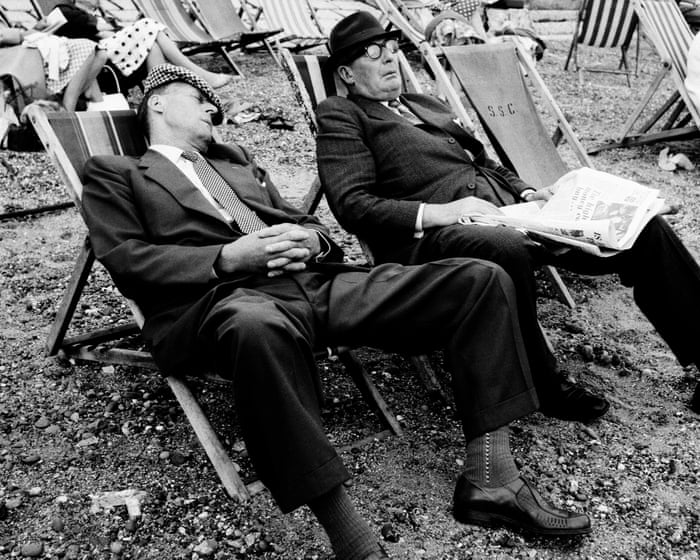
For 11 years, from 1929 to 1940, the Soviet Union had no weekends. Instead, to boost productivity, workers were given a random day off every seven days. Since 80% of the population was working on any given day, factories never had to shut down.
A letter from an unhappy worker to Pravda newspaper, published shortly after the new working calendar was introduced, highlighted the problems: “What is there for us to do at home if our wives are in the factory, our children at school, and nobody can visit us?” the writer asked. “It’s not a holiday if you have to spend it alone.” Parents found themselves at home while their kids were at school, or with children left unsupervised while they were on shift. With no shared day off, family gatherings became impossible. The workforce grew demoralized and sluggish, the expected boost in productivity never happened, and the policy was first adjusted, then dropped entirely.
Eleven years, though. Isn’t that absolutely wild? A world without weekends feels impossible. A world without Saturday Night Fever, without Manic Monday. We may no longer go to church on Sunday, but we still worship the weekend. “The weekend looms large because it represents the triumph of collective time over market time,” says Brad Beaven, professor of social and cultural history at the University of Portsmouth. “It’s not just about rest, but about reclaiming autonomy from the industrial clock.”
View image in fullscreen
‘We romanticise the weekend, even the prosaic bits – like the distant roar of a lawnmower.’ Photograph: Cavan Images/Liz DeGroff/Getty Images/Cavan Images RF
Saturday and Sunday, sacred to the dignity and humanity of working people, are packed with mythology and ceremony. From Cilla Black to Gary Lineker, the main characters of our weekends become cultural giants. We romanticise the weekend, even the ordinary parts – the distant roar of a lawnmower, the crackle of football results on the radio. Everyone knows what a weekend means. The snap of a laptop closing at 4.58pm on a Friday. The clink of the first pint glass and the smell of chips on the way home. The slow pace of a weekend pavement, the shift from rushing to strolling. The rituals have changed with the times, of course, and people-watching at brunch on Saturday is now as much a tradition as cooking a roast at home on Sunday. A weekend changes shape as you move through life stages, but in each version it remains a shared experience between you and your peers.
“The weekend I had when I was 20 was very different from the weekend I have now, at 40 and with kids,” laughs Pedro Gomes, professor of economics at Birkbeck, University of London and author of the book Friday is the New Saturday. “When you’re young, you’re bonding with your friends, and then when you get older, you might be with your family. Eventually, you might be with grandchildren. We move through different versions of the weekend over our lifetimes.”
But these days, it can be hard to pin down where a weekend begins and ends. Laundry gets done on a work-from-home Friday, but emails are answered on Sunday. A shopping splurge is just as likely to be a pick-me-up on your phone after a tough Wednesday as a Saturday outing. The traditional Saturday 3pm football kick-off has been stretched across the TV schedules all the way to Monday evening. The four-day week – first predicted by Richard Nixon, of all people, in 1956 – has become a reality in the Netherlands, where people work an average of 32.1 hours. Friday is quietly breaking away from the working week without anyone signing off the paperwork. It raises the question: what even is “the weekend” in 2026?
Remarkably, the concept of the weekend as we know it is only 100 years old. In 1926, Henry Ford changed the shape of the week, announcing that workers at his factories would now do five eight-hour days instead of six, with no cut in pay. FordHe didn’t invent the weekend — the idea had been building for a century through campaigns by trade unions, religious groups, and progressive employers — but by throwing his industrial weight behind it, the two-day break was born.
“It is high time to rid ourselves of the notion that leisure for workmen is either lost time or a class privilege,” Ford wrote in his company’s Ford News in October 1926. Ford’s move was partly a response to his earlier invention: the assembly line, which had boosted productivity but worn workers out, with absenteeism reaching 10% in factories. In his article, he didn’t hide that there was self-interest involved. “People who have more leisure require more transportation in vehicles,” he continued. The new trend for day trips was a clever way to sell cars. Meanwhile, his factories kept up steady productivity despite the shorter hours. In 1938, facing rising unemployment during the Great Depression, the five-day week was officially adopted across the US.
View image in fullscreen
The weekend used to start after work at around 5pm on a Friday … Photograph: fotoVoyager/Getty Images
On this side of the Atlantic, Boots the Chemist led the way. In 1933, the company opened a new factory in Nottingham, which proved so efficient that stock soon piled up. Unwilling to lay off staff with unemployment at 25%, John Boot ended the Saturday morning shift, cutting hours for the 5,000-strong workforce without reducing pay. It worked commercially, leading to lower absenteeism, and became Boots policy in 1934. A government inquiry led by Richard Redmayne — great-grandfather, fun fact, of actor Eddie — published a “review of the experimental working of the five days week,” which noted “an improvement in stamina and animation of the employees arising from the physiological and psychological effects of a long weekend’s rest and relaxation.” Slowly, the weekend gained ground. In the UK, “the early 20th-century version of the weekend was generally recognised as a half-day Saturday and Sunday off,” says Beaven. “The full two-day weekend only really became widely adopted after the second world war.”
Before industrialisation, there was little idea of having several days off in a row, because animals and crops couldn’t be left unattended for that long. Work was shaped by weather and seasons, with the sun mattering more than the clock. Factories, with their whistles and watches, changed how time worked. A mechanical rhythm of shifts and paydays drowned out the old patterns of seasons and saints’ days.
As work became more rigidly organised, the possibility emerged that leisure could be too. Time off wasn’t just a concession to workers, but also a driver of consumer capitalism. People with weekends would go to sports stadiums, buy picnic baskets and new clothes, and need cinema tickets. By the late 20th century, with cheap flights arriving, this evolved into the minibreak: a short holiday designed to fit into a weekend. Leisure time, once the opposite of the economy, became part of it.
For generations, the British weekend revolved around one fixed appointment: the 3pm Saturday kick-off. “The weekend is about rest, but it is also about passion,” says Gomes. “Most of us are not lucky enough to be passionate about our jobs, but at the weekend we can follow our passions.” The link between football and the best day of the week is central to the nation’s love affair with the sport. It’s probably partly because football symbolised the best part of the weekend that we ended up so obsessed with it.
Morals — and the lack of them — have always been a theme of the weekend. When Sunday, a time of worship, was the only day off, skilled workers developed a habit of stretching their free time into “Saint Monday,” by not showing up for work after a particulIt was an early, enthusiastic day of drinking. Employers gave workers Saturday afternoons off—and eventually the whole day—partly hoping to move the hangovers earlier in the week. Victorian reformers, worried about drunkenness, thought free Saturdays would encourage healthy pastimes like organized sports, gardening, and family trips. Ford, a strong supporter of Prohibition, believed that banning alcohol made his shift to a two-day weekend safe. He said, “A day off is no longer a day drunk.”
But reality has never been that simple. Weekends mix both mischief and virtue—bad behavior and Sunday best. These are days for shopping sprees, drinking binges, and casual hookups, but also for making amends, whether through parkrun, DIY projects, or actual prayer. Though maybe less so the prayer part: around one in three Britons went to church regularly in 1900, according to the National Centre for Social Research; now, it’s about one in twenty. Two key moments stand out in how Sunday lost its special role as a day—if not for worship, then for higher purpose. In 1994, the Sunday Trading Act let large shops in England and Wales open on Sundays. Then, twenty-five years later, pandemic lockdowns weakened the already fragile ties between churches and their communities, leaving many older members wary of gathering in poorly ventilated churches that might harm their health, even if they were good for the soul.
The late, great Maggie Smith had the best line, as she often did. “What is a weekend?” she asked in Downton Abbey, with the entitled confusion of a dowager countess whose income came from silver spoon-fed at birth, not handed over in a brown envelope on a Friday night. The weekend is time carved out from, and in conflict with, someone else’s control over your time. Not to mention that for aristocrats, who had servants for everything from lighting fires to buttoning dresses, every day was a day of leisure. The weekend feels like a cornerstone of civilization and democracy because it matters most to those who spend most of the week following orders rather than giving them.
These days, the divide between upstairs and downstairs is between hybrid workers and those whose jobs can’t be done remotely. An old split between shift work and the relative flexibility of white-collar jobs has deepened. Thinkers like Liselotte Lyngsø, founding partner of the Copenhagen-based consultancy Future Navigator, argue that the workforce is splitting into “time owners”—knowledge workers who increasingly choose where and when they work—and “time slaves,” whose jobs, like healthcare, manual shift work, or gig economy roles such as Amazon or Deliveroo driving, remain firmly tied to the clock.
For the “time owners,” Friday is quickly becoming the modern Saint Monday. It’s an increasingly open secret that the last day of the workweek has turned into an unofficial half shift for remote workers: the calendar looks open, but both brain and laptop are mostly on standby. When Gomes ran a six-month trial of a four-day workweek in Portugal in 2023, involving more than 41 public and private firms, “organizations that can’t reduce hours—like a nursery—worked in shifts with a different day off each week. Other firms chose to cut out Friday. Whenever their weekday off was, we found that many employees approached that day a bit differently, using it to handle ‘life admin’ so they could keep their Saturdays and Sundays free. The weekend isn’t just about the number of days off.”For hours, it also serves as a way for communities to come together and connect.
‘Cruel hoax’ or ‘work-life balance nirvana’: whatever happened to the four-day work week? Read more
Just like the old tradition of Saint Monday, “Skiveday Friday” has quietly but firmly stuck in the UK. In 2024, Transport for London ran a three-month trial that removed peak fares on Fridays, hoping to bring commuters back into central London. It didn’t work—Fridays stayed quiet, even with the discount. For office workers, the meaning of Friday has clearly changed. Several major rail companies, including LNER and Avanti, have now made Fridays fully off-peak, just like Saturday and Sunday, acknowledging that for many people, the weekend now starts earlier.
That said, for those same workers, Saturday and Sunday are constantly under pressure from work emails and the expectation to be reachable outside working hours in the age of smartphones. “These are two sides of the same coin,” says Gomes. Work gets more intense, and the weekend stretches to absorb the strain. “The speed of communication means we now live with constant interruptions, and it’s hard to find space for deep work or real rest. Yet we still structure the work week much the same way we did 100 years ago. It’s no surprise that this isn’t working.”
That’s why a three-day weekend is being suggested as a way to balance things out. But is it all just “woke” nonsense? A pipe dream from a lazy workforce that’s forgotten what hard work means? The Green party supports a “move towards” a four-day week, but other politicians are cautious. In 2025, the Liberal Democrat-led South Cambridgeshire council, which had been running a four-day week for two years, came under fire from the then local government secretary, Steve Reed. He said local governments “should not be paying full-time wages for part-time work.” In April this year, James Cleverly announced that a future Conservative government would look to ban four-day weeks for council staff, calling the “push from the left of centre in British politics” towards a four-day week “completely wrong.”
The 4 Day Week Foundation, which is leading the push for change in Britain, says that 56 out of the 61 companies that joined their four-day week pilot decided to keep it after the trial ended. They report an average revenue increase of 35% and a 57% drop in staff leaving during the trial. Now, 260 companies in the UK are officially signed up to the four-day week.
View image in fullscreen
‘While Fridays have become an unofficial half shift, the weekend is under siege from work emails and calls.’ Photograph: Getty Images /iStockphoto
The divide—between those who have time to share and those who are tied to time, between people working five-day weeks, four-day weeks, or more irregular shift work that doesn’t fit the weekend—is a problem because the weekend is meant to be shared. It’s where British culture learned to come together, a shared experience. Every generation has its own rituals. Boomers love a Saturday night movie, generation X is obsessed with Sunday lunch, millennials flock to farmers’ markets, and gen Z, for some reason, gets excited about queuing for baked goods that have gone viral on TikTok. Even the Sunday scaries are easier to handle when you know everyone else feels the same. As the gap widens—between those who own their time and those who don’t, between inherited wealth and the increasingly thin salary pipeline—the weekend starts to feel less like a real experience and more like a nostalgic memory.
It’s funny to think that technology once expanded our horizons. Railways gave ordinary people access to the coast; mass production made bicycles and cars affordable. It’s only recently that technology has turned into the energy vampire it is today, draining the life out of the weekend.
Only in the last dIn the last decade, sharing your life online has become everyone’s unpaid side job, so your friends have already seen your holiday photos before you meet up for brunch. It’s a very modern thing that our friendships have moved online—this week’s relationship drama or family argument is already talked through in texts and voice notes, without needing to meet at the pub. Add to that the post-pandemic norm of “soft commitments,” where making plans and canceling them are just two parts of the same social routine, and “I’ll see how I feel” is now an acceptable reply. As a result, we’ve gotten worse at a key part of the weekend: actually seeing other people in person.
Maybe we shouldn’t worry too much. Ever since we created the weekend, we’ve been nervously checking on it. The Victorians worried that workers would waste their free days drinking. Mid-century Britain feared that TV would keep families indoors. Today, the concern is that we spend Saturday scrolling Instagram and Sunday answering emails. The rituals change, but the feeling that the weekend is being ruined stays the same. Yet the weekend survives, maybe because it never needed to be perfect. Sleeping in and staying up late are both valid ways to push back. Its most sacred traditions—the greasy fry-up, the football terrace, the shiny Saturday night TV—are wonderfully unpolished. The weekend is where having a good time still beats having good taste.
The Soviets found that a day off isn’t much use unless everyone else has it too; Ford understood that workers needed time to feel like themselves again, even if he hoped they’d spend it buying cars. At 100 years old, the two-day weekend is starting to fray, spilling into Friday and getting eaten away by Sunday night emails. The weekend will keep changing because work keeps changing. But it will always be the best thing work ever came up with.
Frequently Asked Questions
Here is a list of FAQs based on the topic ranging from beginner to advanced
General Definitions
1 What does skiveday Friday actually mean
Its a slang term for a Friday where employees do the bare minimum or check out early effectively skiving off Its the modern equivalent of the old casual Friday but with the added expectation that youre working from home and not really at your desk
2 Why is the weekend considered a century old
The concept of a twoday weekend became standardized in the early 20th century as a result of labor movements fighting for an 8hour workday and a 5day work week So the idea of the modern weekend is roughly 100 years old
3 How has hybrid working changed the traditional weekend
Hybrid work has blurred the lines Instead of a hard stop on Friday at 5 PM work can spill into the weekend and weekend chores can be done during downtime on a Wednesday It has also made the weekend less of a physical escape and more of a mental negotiation
The Ruined Debate
4 Has hybrid working actually ruined the weekend or just changed it
Its changed it more than ruined it For many it has made Mondays easier but made Fridays and Sundays more stressful because the boundary between work mode and home mode is harder to switch off Its a tradeoff
5 Why do people say Skiveday Fridays are ruining things for everyone
Critics argue that if everyone is doing minimal work on Fridays it creates a bottleneck Work that isnt done on Friday gets pushed to Monday making Monday busier Also if managers notice a lack of productivity on Fridays they might force everyone back into the office fulltime ruining the flexibility for those who do work
6 Is it fair to say the weekend is dying
Not necessarily dying but it is fragmenting Instead of a solid twoday block of rest people are taking microbreaks throughout the week The weekend is no longer the only time to do laundry or go to the doctor