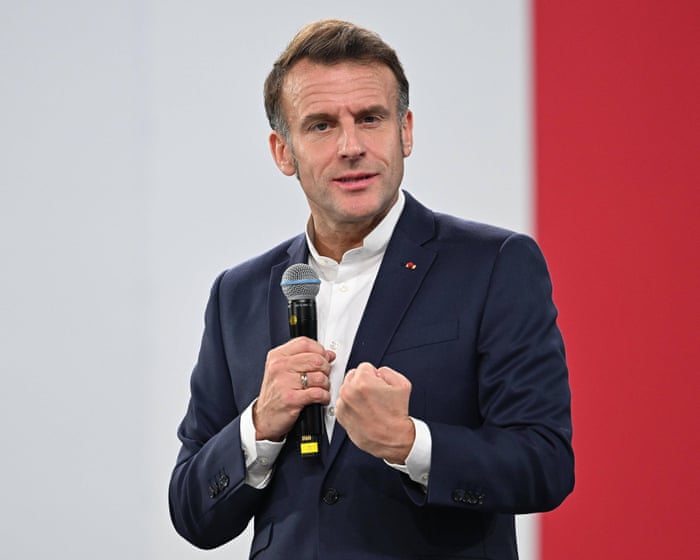
Emmanuel Macron has stated there is “no mistrust” between Europe and the US, a day after a report claimed the French president privately warned that Washington could betray Ukraine.
“Unity between Americans and Europeans on the Ukrainian issue is essential. And I say it again and again, we need to work together,” Macron told reporters during a visit to China. “We welcome and support the peace efforts being made by the United States of America. The United States of America needs Europeans to lead these peace efforts.”
The German magazine Der Spiegel reported on Thursday, citing a leaked summary of a confidential call between several European leaders, that Macron and German Chancellor Friedrich Merz expressed fundamental doubts about US efforts to mediate between Ukraine and Russia.
The transcript quoted Macron as warning Ukrainian President Volodymyr Zelenskyy that “there is a chance that the US will betray Ukraine on territory, without clarity on security guarantees.”
The alleged leak risked angering Donald Trump, whom European leaders have been careful to flatter, knowing he is key to any mediation efforts with Moscow. It also came as European leaders rushed to salvage a sorely needed financing plan for cash-strapped Ukraine. Merz held emergency talks on Friday with European Commission President Ursula von der Leyen and Belgian Prime Minister Bart De Wever.
When asked about the Spiegel report on Friday, Macron responded: “I deny everything.”
Der Spiegel said it obtained the English summary of Monday’s call, featuring what it described as direct quotations from heads of government. In the transcript, Macron described the current tense phase of negotiations as harboring “a big danger” for Zelenskyy. Merz reportedly added that he needed to be “very careful.”
“They are playing games with both you and us,” Merz was reported as telling Zelenskyy—a remark believed to refer to a diplomatic mission to Moscow this week by Trump’s envoy Steve Witkoff and the US president’s son-in-law Jared Kushner.
Washington presented a 28-point proposal last month to halt the war in Ukraine, drafted without input from Ukraine’s European allies and criticized as too closely reflecting Moscow’s maximalist demands.
US and Ukrainian negotiators have since held talks before Witkoff and Kushner headed to Moscow on Tuesday. The pair spent five hours in talks with Vladimir Putin at the Kremlin, and Witkoff then met Ukraine’s national security council chief, Rustem Umerov, in Miami on Thursday. There was no official readout of the Miami meeting.
Moscow and Kyiv have continued fighting, seeking stronger negotiating positions. Russian drones struck a house in central Ukraine on Thursday night, killing a 12-year-old boy, officials said, while long-range Ukrainian strikes reportedly targeted a Russian port and oil refinery.
Merz will dine in private on Friday with von der Leyen and De Wever, who has expressed opposition to a scheme to fund Ukraine that involves the unprecedented use of frozen Russian assets.
With Russia’s attacks intensifying, Kyiv is running out of money. The EU has pledged to keep Ukraine afloat next year and intends…The EU needs to raise €90 billion (£80 billion) to cover roughly two-thirds of its funding requirements for 2026 and 2027. Ursula von der Leyen has outlined two main proposals to secure these funds. One option is for the bloc to borrow against its shared budget on international markets. The other is to issue a loan backed by frozen Russian assets—most of which are held in Belgium—which Ukraine would repay using future Russian war reparations.
However, Belgian Prime Minister Alexander De Wever expressed opposition this week to seizing frozen Russian assets, calling it “a nice idea, stealing from the bad guy to give to the good guy.” He added, “But stealing the frozen assets of another country has never been done. Even during the Second World War, we did not confiscate Germany’s money.”
In a Thursday op-ed for the Frankfurter Allgemeine newspaper, German opposition leader Friedrich Merz warned fellow EU leaders that the decisions made in the coming days would “decide the question of European independence.”
Frequently Asked Questions
Of course Here is a list of FAQs about President Macrons statement regarding trust between Europe and the US on Ukraine designed to be clear and conversational
FAQs Macrons Statement on EuropeUS Trust Over Ukraine
Beginner Definition Questions
1 What exactly did President Macron say
He stated that there is no mistrust between Europe and the United States regarding their shared support for Ukraine against Russias invasion He emphasized their unity and common strategic goals
2 Why is this statement news Was there mistrust before
Its news because there have been public disagreements and concerns Some European leaders have worried about the sustainability of US support especially with upcoming elections while some in the US have questioned Europes level of military and financial commitment Macrons statement is a strong public denial of those underlying tensions
3 Who is he trying to reassure with this message
He is likely trying to reassure multiple audiences the Ukrainian government and people European citizens and allies worldwide that the transatlantic partnership remains solid Its also a message to Russia signaling that attempts to divide the West have not succeeded
Advanced Contextual Questions
4 But havent there been real disagreements How can he say theres no mistrust
Yes there have been policy disagreements Macrons statement is less about denying those debates and more about asserting that they happen within a framework of fundamental strategic trust and shared objectives Its a diplomatic affirmation of alliance strength
5 What specific issues could have caused mistrust
Key issues include
US Politics Concerns over future aid if there is a change in administration
America First Policies Memories of the previous administrations skepticism of NATO
European Defense US frustrations that Europe isnt spending enough on its own military capabilities
Diplomatic Outreach Macrons own past calls for Europe not to be a follower and to have strategic autonomy raised eyebrows in Washington
6 Does this statement reflect the view of all European leaders
While most European leaders share the goal of supporting Ukraine Macron positions himself as a leading voice for Europe Not all may agree with the absolute wording of no mistrust but the sentiment of preserving unity is a common and public priority for the EU and NATO