This week, the President of the United States threatened to commit genocide against Iran. As Israel continues its bombing campaign in Lebanon, killing over 200 people in one day, this threat must not be forgotten, especially since it could easily be repeated. But as we move closer to disaster, we need to understand how we reached this point.
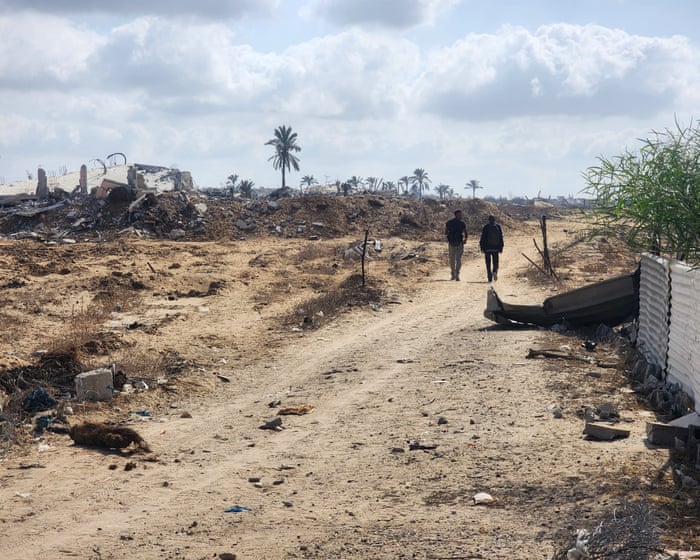
“A whole civilization will die tonight, never to be brought back again,” Donald Trump wrote on Tuesday. Just over a year ago, he stated, “A civilization has been wiped out in Gaza.” The link is clear. Trump knew Gaza had been destroyed by Israel, calling it “not a place for people to be living.” When he joined forces with the perpetrator of that genocide in an illegal war against Iran, the devastation in Gaza became a model for what could follow.
For two and a half years, Western politicians and media normalized Israel’s widespread violations of international law. Those who opposed the genocide in Gaza warned it would lead to unchecked violence. They were right.
The U.S.-Israeli war on Iran began with the mass killing of 175 people, mostly schoolgirls, in the city of Minab. When it happened, there was little front-page outrage or strong condemnation from Western leaders. But what did we expect? The West had already normalized the killing of more than 20,000 Palestinian children. According to Western doctors who served in Gaza, many were burned in their beds, while others were deliberately shot in the head, chest, or genitals. Now, 763 Iranian schools are reportedly damaged or destroyed—but didn’t the West allow nearly every school in Gaza to suffer the same fate?
The Iranian Red Crescent reports that 316 medical centers have also been severely damaged or destroyed, but didn’t the West normalize Israel’s attacks on every hospital in Gaza and the killing of at least 1,722 healthcare workers?
Trump threatened to destroy Iran’s power stations. Recall how Israel’s then-Defense Minister, Yoav Gallant, announced “no electricity, no food, no water” for Gaza just days after the assault began, justifying it by saying Israel was fighting “human animals.” When Trump was challenged that attacking Iran’s critical infrastructure would be a war crime, his response was strikingly similar: “They’re animals.”
Many who now express horror at Trump’s genocidal rhetoric were silent when Israeli leaders made similar statements. Leaders like Israeli President Isaac Herzog, who declared “an entire nation out there that is responsible,” or the Israeli general who openly called “the citizens of Gaza” “human beasts” to be “dealt with accordingly,” including sending them to “hell.” There was no outrage then, so why be surprised when Trump threatens that Iran will be “living in hell”?
Trump openly defies international law—but that law was already in ruins. Israel committed war crimes in Gaza using Western-supplied weapons. Since the International Criminal Court issued arrest warrants for Israeli leaders, many Western states have refused to honor them. Its judges were sanctioned by the U.S. and abandoned by their own European governments.
Most Western leaders ignored Israel’s genocidal intent altogether. Many Western media outlets gave it little or no coverage and failed to name it. And when that intent became reality, it too was normalized.
How did Western politicians and media bring us here? For politicians, there are many explanations. Some believe Israel serves Western strategic interests. “If there were not an Israel, we’d have to invent one,” as Joe Biden said in 1986. Then there’s the power of lobbying: in the U.S., for example, the American Israel Public Affairs Committee has spent $221 million since December 2021, including large donations to political campaigns.
Most of our…Western media outlets have long repeated official foreign policy positions from Western governments. But why did so few commentators in the West raise their voices? Did they not see Palestinian lives as equally valuable? Perhaps that’s why no atrocity, no matter how horrific, stirred the emotional reaction I believe would have followed if the victims were people they identified with—whether it was the killing of starving civilians seeking aid, terrified children torn apart by tanks, or detainees reporting sexual abuse.
Much of this silence came from cowardice. Journalists have told me they feared speaking out would endanger their careers. They might lose their jobs. Freelancers could lose commissions. Broadcasters might stop inviting them onto panels. They could be falsely smeared as antisemitic or supporters of terrorism.
These fears were rational—this has happened. From the beginning, few mainstream journalists spoke up. I know many of those who did, in Europe and the U.S., understood they were risking their careers. But what is the cost of such cowardice? What is the price of putting careers and reputations above the lives of countless Palestinians as they are bombed, shot, and starved?
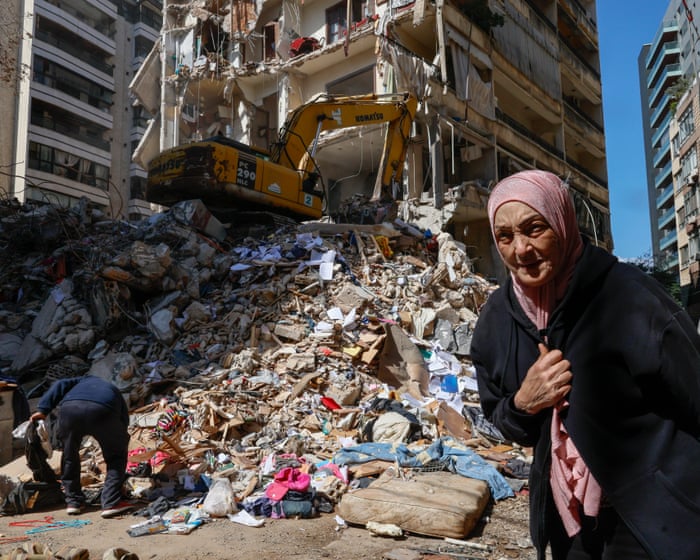
The price of what Western politicians and media have done—and failed to do—is now being paid by Lebanese civilians. This week, Israel launched 100 airstrikes in just 10 minutes across Lebanon, destroying homes and civilian infrastructure, confident that no meaningful consequences would follow.
And the price will continue to be paid—in years of slaughter and devastation to come. When barbarism is normalized so completely, when the line between the acceptable and the unthinkable is erased, it cannot simply be redrawn. What was once unsayable becomes routine; what was once unthinkable becomes policy. There is no clean return from that. The horrors ahead will not be confined to the Middle East. And when the same politicians and media voices eventually express their outrage, remember: they helped create this world.
Owen Jones is a Guardian columnist.
Frequently Asked Questions
FAQs Understanding Reactions to the USIsrael Alliance and the Conflict in Gaza
BeginnerLevel Questions
1 What do people mean when they say the world has allowed this
This phrase suggests that through repeated diplomatic support substantial military aid and limited concrete consequences for actions major global powersprimarily the United Stateshave created an environment where certain military strategies are seen as permissible or without significant international cost
2 Why is the US so strongly allied with Israel
The alliance is based on a mix of shared democratic values strong historical ties since Israels founding strategic interests in a stable Middle East influential domestic political support in the US and shared intelligence cooperation
3 What is happening in Gaza
Gaza is a densely populated Palestinian territory It has been under a blockade by Israel and Egypt since 2007 governed by the group Hamas The current conflict involves intense Israeli military operations following Hamass attacks on October 7 2023 leading to widespread casualties displacement and a humanitarian crisis
4 Why are some people not surprised by the latest escalation
Many observers point to a longstanding pattern cycles of violence failed peace processes and the continuation of the blockade and occupation They see the current war as another severe episode in a persistent unresolved conflict not an unexpected outlier
Advanced Analytical Questions
5 How does US military aid specifically influence Israels actions
The US provides Israel with billions annually in foreign military financing advanced weaponry and technology Critics argue this unconditional aid reduces the perceived economic and diplomatic cost of prolonged military campaigns effectively underwriting Israels defense capabilities regardless of specific policy choices
6 What are the rulesbased international order and double standards people refer to
The rulesbased order refers to systems like the UN and international law designed to protect sovereignty and human rights The charge of a double standard arises when critics believe these rules are enforced selectivelyfor example condemning invasions by some countries while providing diplomatic cover for allies like Israel during similar military operations affecting civilians
7 Has international law or diplomacy changed anything on the ground
While UN resolutions and international courts have frequently criticized Israeli policies the lack of enforcement mechanisms and US diplomatic protection have limited their practical impact leading to cynicism about their effectiveness