Streaming services are notoriously bad at offering movies from before the 1990s, or even the year 2000 in some cases. Even big-screen nostalgia events are starting to feature films from the 21st century—movies that, for some of us, don’t feel old enough for a major anniversary. (Can you believe Batman Begins is already 20? Is Mean Girls really old enough to drink?) That’s why it’s so surprising that one of the biggest hits in recent years is The Wizard of Oz, a film much closer to its 100th birthday than its 25th.
Of course, The Wizard of Oz as a piece of intellectual property predates the beloved 1939 MGM musical. L. Frank Baum first published The Wonderful Wizard of Oz in 1900. He went on to write 13 increasingly quirky sequels, seemingly with some reluctance, until his death in 1919. His final Oz book was released after he passed away, and the series continued without him.
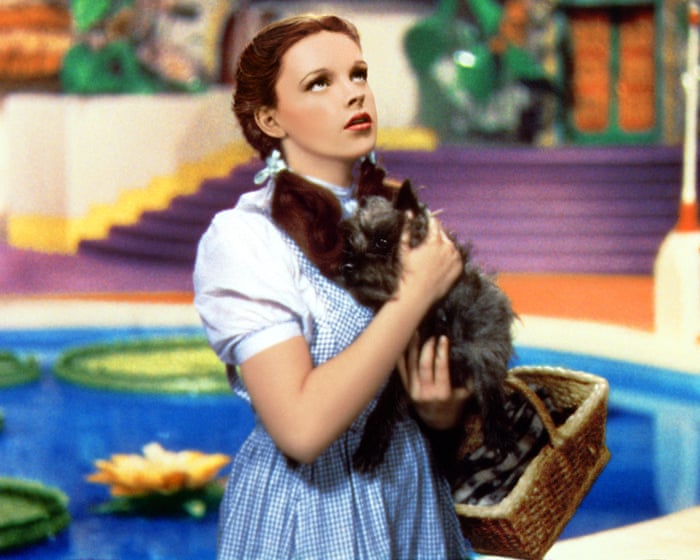
But when people talk about The Wizard of Oz, they’re almost always referring to the 1939 movie, not the books. Apart from a few unusual adaptations and Disney’s partly scary, partly dull Return to Oz, most of Baum’s material has been overlooked by film and TV. The Judy Garland film, directed by Victor Fleming, feels bigger than ever—especially now that it’s been featured at the Sphere in Las Vegas. For this immersive venue, the movie was shortened by 25 minutes and expanded using AI to fit the massive digital screen. Despite some controversy over the changes, the experience has been a huge success, reportedly earning around $2 million a day. With higher ticket prices than a standard film, it could easily outperform most movies released in 2025 if it runs for just a few months. A full year could put it in the same league as James Cameron’s blockbusters.
That would also bring it close to the global earnings expected for the Wicked movie. Wicked isn’t a direct adaptation of Oz; it’s based on a Broadway musical that reimagines the story from the Wicked Witch of the West’s perspective. Still, it’s set in the magical land of Oz, and the new film Wicked: For Good ties more directly into the original movie than the book did. With the sequel’s success all but guaranteed, there’s already talk of extending this version of Oz into a third installment. (Maybe they’ll finally introduce characters like Tik-Tok and the Patchwork Girl!)
Even if a third Wicked movie doesn’t happen, other Oz projects are in development. Another musical, The Wiz, is touring nationally after a Broadway revival. Since the original characters are in the public domain, a low-budget horror movie is almost certainly on the way. Amazon is also working on a modern young adult series called Dorothy, produced by Gwen Stefani and Blake Shelton. And if you’re a fan of the 1939 film, you could always try to buy the Wicked Witch’s actual hat in an upcoming auction—Oz memorabilia has a history of selling for more than expected.
Part of the 1939 movie’s lasting appeal comes from its stunning visuals. The transition from Dorothy’s sepia-toned Kansas to the vibrant Technicolor world of Oz remains one of the most unforgettable moments in cinema. Yet, many other iconic films haven’t maintained the same level of popularity nearly a century later—not even the beloved Gone with the Wind.Another 1939 film that Fleming worked on, based on a popular novel, hasn’t endured in the same way. While one might attribute this to its inherent racism, for some viewers, that could be seen as a draw rather than a flaw.
Cynthia Erivo and Ariana Grande in Wicked: For Good. Photograph: Universal Pictures/AP
Wicked appears to build on the allegorical strength of Dorothy’s journey from a stifling, repressive Kansas to a vibrant, fantastical world—an element more prominent in the film than in Baum’s original book. Yet it also caters to more traditional audience members, as Dorothy ultimately chooses to return home despite the friendships she forms in Oz. This is underscored by the fact that the same actors play both her Kansas acquaintances and the Scarecrow, Tin Man, and Cowardly Lion, subtly reinforcing that ordinary farm life is just as meaningful as a magical kingdom. It’s easy to picture, for instance, a gay teenager and their less accepting parents both finding validation in the story.
The books, however, are less straightforward. Dorothy eventually moves to Oz permanently, and her journeys there become increasingly mundane compared to being swept away by a tornado or falling from a ship. The film Return to Oz, drawing from later novels, even begins with Dorothy facing shock therapy for her obsession with Oz, a scene that chillingly parallels conversion therapy. Wicked also tackles themes of racism and homophobia, as Elphaba (Cynthia Erivo) is marginalized and blamed by the deceitful Wizard, a con artist who maintains an illusion of authority—a dynamic that feels all too familiar.
Much of the allegory in Wicked feels heavy-handed, especially in the extended For Good, which stretches the play’s weaker second act. Yet its connection to the original film’s legacy of offering comfort to those who feel out of place remains potent. This tradition continued with The Wiz, both on Broadway and in film, where an all-Black cast reinterpreted Oz, highlighting the story’s appeal to marginalized communities.
It’s noteworthy that works centered on the Wizard himself, like the 2013 prequel film or some of Baum’s sequels, haven’t resonated as deeply as those focusing on female characters. Even the fantastical elements often take a backseat to emotional depth. This might explain why there hasn’t been a major Oz-themed amusement park yet—though one will likely emerge eventually. It’s a rare fantasy franchise that doesn’t demand complete immersion, instead leaving audiences suspended between wondrous dreams and poignant reality.
Frequently Asked Questions
Of course Here is a list of helpful and clear FAQs about the lasting appeal of The Wizard of Oz
General Beginner Questions
Q Why is The Wizard of Oz still so popular after all these years
A It combines timeless themes like friendship courage and the idea that theres no place like home with groundbreaking Technicolor memorable music and a magical adventurous story that appeals to all ages
Q What is the main message of the movie
A The core message is that you already have within you everything you needlike courage a brain and a heart You dont need to look to external figures to validate you
Q Was the movie always a classic
A Not exactly While it was nominated for awards it wasnt a massive boxoffice hit in its initial 1939 release It became the beloved classic we know today through annual television broadcasts starting in the 1950s which introduced it to new generations
Q Are the ruby slippers really ruby
A No they are not made of real rubies In the original book they were silver For the Technicolor film they were changed to red and made from sequins bugle beads and red leather to stand out vibrantly against the Yellow Brick Road
Deeper Advanced Questions
Q What are some of the darker theories or interpretations of the story
A Some popular theories suggest the story is an allegory for the political Populist movement of the 1890s or that Dorothy was in a comainduced dream While intriguing these are fan interpretations and not the authors stated intent
Q How did the films use of color impact its success
A The transition from the sepiatoned Kansas to the vibrant Technicolor of Oz was revolutionary It was one of the first major films to use color so dramatically to represent a shift from a dull reality to a magical fantasy making the world of Oz feel truly wondrous
Q What is Wicked Forever referring to
A While Wicked Forever isnt an official title it poetically refers to the enduring legacy and cultural impact of the Wicked Witch of the West Her character and