France has announced that a suspected Russian oil tanker has been detained in the Atlantic Ocean. This is the latest seizure aimed at cracking down on Moscow’s “shadow fleet” of ships that are violating international sanctions.
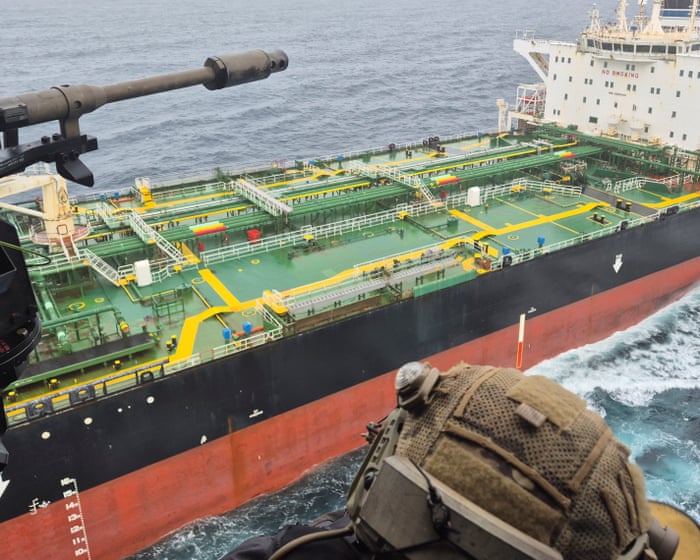
The vessel, named the Tagor, was detained on Sunday morning in international waters, more than 400 nautical miles (740 km) west of Brittany, with help from the UK and other partners, according to French President Emmanuel Macron.
French authorities said the ship was on its way from Murmansk in northwestern Russia when it was seized.
Macron stated that the French navy boarded an oil tanker that was subject to international sanctions and sailing from Russia. He shared a video of the operation, which showed commandos descending from a helicopter onto the ship.
Writing on X, Macron said: “This operation took place in the Atlantic Ocean, on the high seas, with the support of several partners, including the United Kingdom, in strict compliance with the law of the sea.”
He added: “It is unacceptable for ships to bypass international sanctions, violate the law of the sea, and fund the war that Russia has been waging against Ukraine for more than four years.”
Kremlin spokesperson Dmitry Peskov called the seizure illegal, saying: “We consider these acts as illegal, they border on international piracy … Russia is taking measures to ensure the safety of its cargo.”
A spokesperson for the French maritime prefecture told Agence France-Presse that the ship was falsely flying a Cameroonian flag and was heading to Limbe, a coastal city in western Cameroon.
The Atlantic maritime prefecture said: “This operation was aimed at checking the nationality of a vessel suspected of flying a false flag. After the inspection team boarded the ship, a review of the documents confirmed suspicions about the irregular flag. In line with international law and at the request of the public prosecutor, the vessel was diverted.”
The ship, which had 23 crew members, was “being escorted by the French navy to an anchorage point for further checks,” the prefecture added.
Guillaume Le Rasle, a spokesperson for the prefecture, said the tanker was under EU and US sanctions. “It is a vessel that was known and tracked,” he told AFP.
“The decision to divert it was made Sunday evening. The goal is to verify the validity of its flag,” Le Rasle said, adding that the tanker, which has frequently changed flags, was “almost empty” when it was boarded.
Russia’s embassy in Paris said on Monday it had asked French authorities for information about any Russian citizens on board the Tagor, according to state news agency Tass. The embassy said the captain is believed to be a Russian citizen.
France and the UK have pledged to stop ships linked to Russia’s sanctioned “shadow fleet” from passing through their waters. In March, British Prime Minister Keir Starmer announced that he had authorized the UK military to board ships belonging to the shadow fleet.
However, shipping data shows that dozens of ships linked to Russia and subject to sanctions continue to cross UK waters.
Shadow fleet ships often change the flags they fly—a practice known as flag-hopping—or use invalid registrations to avoid being tracked. Since September, France has boarded three other ships believed to be part of Russia’s shadow fleet. Those vessels were allowed to continue after their owners paid fines.
In September, the French navy boarded the Boracay, which claimed to be flagged in Benin. Its Chinese captain was tried in absentia, and a French court issued an arrest warrant and a one-year sentence in March.A jail sentence was handed down against him. In January, French authorities seized another suspected Russian tanker, the Grinch, and in March, the Deyna—which had sailed from Murmansk under a Mozambican flag—was detained in Marseille. In April, France announced plans to double penalties for ships that fail to fly a flag or refuse to comply. Several Western countries have imposed sanctions on hundreds of vessels in Russia’s shadow fleet following its 2022 invasion of Ukraine. Nearly 600 ships believed to be part of that fleet are now subject to EU sanctions. Agence France-Presse and Reuters contributed to this report.
Frequently Asked Questions
Here is a list of FAQs about the French navy seizing an oil tanker linked to Russia in the Atlantic written in a natural clear tone
BeginnerLevel Questions
1 What exactly happened with the French navy and the oil tanker
The French navy stopped and seized an oil tanker in the Atlantic Ocean They believed the ship was breaking international sanctions against Russia by carrying Russian oil
2 Why did France seize this tanker
France along with other countries in the European Union has put sanctions on Russia because of the war in Ukraine These sanctions make it illegal to import or transport Russian oil The French navy seized the tanker to enforce these rules
3 Where in the Atlantic did this happen
The seizure happened in the Atlantic Ocean about 150 nautical miles off the coast of France
4 Was the tanker actually carrying Russian oil
Yes French authorities said the tanker was carrying Russian oil which is exactly what the sanctions are meant to stop
5 What will happen to the ship and its crew now
The ship is being taken to a French port The crew will be questioned and the cargo has been confiscated The company that owns the ship could face heavy fines
Intermediate Questions
6 How did the French navy actually seize the tanker
The French navy first located and monitored the tanker They then sent a boarding team to take control of the vessel The crew was told they were being detained and the ship was ordered to sail to a French port
7 This is a huge ship How does a navy board it safely
Navy teams are highly trained for this They often use fast boats to approach the tanker then use ladders or special platforms to climb aboard They work quickly to secure the bridge and engine room to take control
8 What sanctions was this tanker violating
The tanker was likely violating the European Unions ban on the import of Russian crude oil and petroleum products as well as the G7 price cap which makes it illegal for Western companies to transport Russian oil sold above a certain price
9 Is this a common thing for navies to do
Its becoming more common Since the war in Ukraine started navies from the EU