For the tourism industry, 2026 has been a tough year, with war, EU border delays, climate issues, and economic struggles all taking a toll on holiday plans. But while much of Britain is seeing fewer visitors from the Middle East and other regions, one area is doing well.
Scotland is attracting more and more visitors, with strong yearly growth and a 15% rise in flight bookings to Scottish airports for June and July, compared to a drop in bookings to London and the rest of England in recent months, according to VisitBritain figures.
With heatwaves hitting much of Europe, the appeal of cooler weather further north may have boosted Scotland’s attractiveness—though tourism officials say that dashing Highland warriors and kilted football fans might have more to do with it.
Long-term plans to increase direct flights from North America have paid off in the last two years, strengthening the traditional US-led foreign tourist base.
A rise in visitors from continental Europe, possibly looking to escape the heat, has added to the mix. And more Britons have chosen to holiday at home rather than deal with the border confusion and delays under the EU’s entry-exit system.
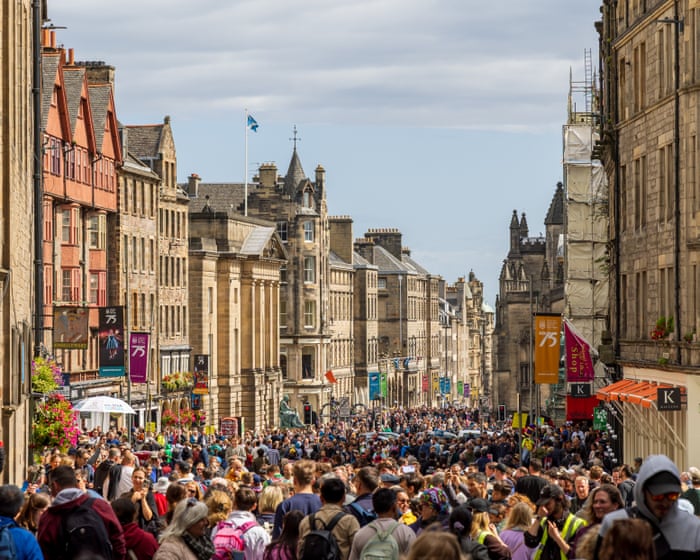
In Edinburgh, where August has long been the busiest time of the year, Princes Street was especially crowded with tourists this week, gathered around bagpipers and being handed leaflets by cheerful fringe promoters.
Festival sales are up 30%, according to Marc Crothall, the chief executive of the Scottish Tourism Alliance. “Edinburgh is buzzing, which is great. And that’s a huge draw for international visitors,” he said.
Not everyone was there for the world’s biggest arts festival: Zanet Garcia, from Mexico City and on her second day in the country, had no idea it was happening. “I was really confused by it all. I had never heard of the fringe and I didn’t know what it was,” she said with a laugh. “But everyone has been so friendly.”
Garcia chose Scotland because of her interest in Scottish mythology, sparked by books and TV shows that were big UK exports, like Harry Potter and Outlander, and she had visited places linked to them. She was also taking in traditional national attractions, fresh from the Johnnie Walker Experience—”I don’t even drink whisky”—and with tickets to the military tattoo.
The majority of tourists are from the UK. But it’s the big-spending foreigners who are more likely to stay longer, visit the attractions, and pack in the experiences. An average overseas visitor to Scotland spent just over £900 in a week in 2024, compared to just over £300 for three nights for a British holidaymaker.
According to data from the Moffat Centre for travel and tourism at Glasgow Caledonian University, the biggest jump this year has been in visitors touring by campervan rather than staying in hotels.
Numbers are up, but spending per person is down, Crothall said, describing the overall picture as “healthy but by no means booming.”
The holidaying Briton is more likely, he said, to be seeking free visits to museums and walking in the countryside, with the cost of living still a big issue. “Instead of the three-course meal, it’s the one. The 5% VAT and free travel helps, but it’s not magic,” Crothall said.
Although Scotland has had its own heatwaves and devastating wildfires in the Cairngorms, it remains cooler than the southern UK. “We hope and suspect that we’ll see more European visitors given the climate conditions,” Crothall added.
Conclusive data linking the heat to changing tourism habits is not yetVicki Miller, the chief executive of VisitScotland, said, “But certainly we’ve seen strong demand this year from Europe, including Spain and Italy, which could be linked to the climate.” She added that the research highlights how many visits, like Garcia’s, were driven by what people saw on screen. Online searches surged after the reality TV show The Traitors became a hit, even though Ardross Castle—the main filming location for both the UK and US versions—isn’t open to the public. Castles featured in Outlander, a long-running favorite in the US and parts of Europe, have also become major attractions.
Miller noted, “We know that 36%-37% of international visitors are inspired by film or TV. And people’s memories are long: they remember Braveheart or Local Hero as well.” Sports have also drawn visitors, from this year’s Commonwealth Games in Glasgow to major golf tournaments, along with the positive attention from Scottish football fans traveling abroad. Interest from Germany grew after it hosted Euro 2024, where the Tartan Army were voted the best supporters at the tournament. Miller described them as a mix of “friendliness, banter, and donations to local charities—they capture hearts, they’ve been fantastic ambassadors.”
At this year’s World Cup, when Scotland played in the US, VisitScotland “painted Boston tartan” to take advantage of the moment, which doubled local online searches for Scottish holidays. While Scotland is aiming for long-term growth through strategies like adding more direct flights—100,000 extra seats annually from the US alone—and promoting year-round visits, many are still feeling the strain of tighter budgets.
On the streets of Edinburgh, Dexter, a tour guide with Edinburgh Bus Tours originally from Nevada, expressed disappointment. “I’ve been here seven years and the crowd is going down. Tips have gone, big time. I used to be able to go on vacation just on my tips, now that’s not the case,” he said. He mentioned that the tourist tax—a 5% levy on Edinburgh accommodation introduced in July—”has hurt,” adding to the cost of living pressures: “People have got no money.”
Leon Thompson, executive director of the trade body UKHospitality Scotland, agreed. “People are in their cost of living crisis and that is a challenge,” he said. Thompson added that businesses are feeling the impact of business rates, national insurance contributions, and VAT, and are anxiously waiting to see if other Scottish local authorities follow Edinburgh in introducing tourist levies. “Scotland will always be a popular destination, but we can’t be complacent. We can’t allow ourselves to be priced out of what is the global visitor market,” he warned.
Frequently Asked Questions
Here is a list of FAQs based on the article title and theme covering everything from the basics to practical travel tips
BeginnerLevel Questions
1 What is the article about
Its about Scotland positioning itself as a cool summer getaway While Southern Europe is facing extreme heatwaves Scotland is promoting its milder rainy weather and outdoor activities as a refreshing alternative
2 Why does the article mention whisky
The title is a play on the classic Scottish stereotype It suggests that you dont have to be a whisky drinker to enjoy Scotland the main draw right now is the escape from the sweltering heat not just the distilleries
3 Is Scotland actually cold in the summer
Not freezing but its definitely cooler than Southern Europe Summer temperatures usually range from 15C to 20C Its perfect for hiking and sightseeing without breaking a sweat
4 What kind of weather should I expect
Expect a mix of sunshine clouds and rainoften all in the same day The phrase four seasons in one day is very accurate so you need to be prepared for quick changes
5 Why would I go to Scotland instead of Spain or Italy
If you dont like extreme heat Scotland offers a comfortable climate for outdoor adventures You can walk for miles visit castles and enjoy the scenery without the risk of heatstroke or needing to hide indoors during the hottest part of the day
Intermediate Questions
6 Is this a new tourism campaign or just a news story
Its a combination of both The news story highlights a growing trend but tourism boards are actively capitalizing on this by marketing cooler breaks to travelers who are tired of heatwaves
7 What are the best activities if I dont care about whisky
Plenty You can hike in the Highlands explore Edinburghs historical sites visit the Isle of Skye enjoy worldclass seafood go golfing or take scenic train rides like the Jacobite Steam Train
8 What is the midge problem I keep hearing about
Midges are tiny biting flies that swarm in the Highlands during the summer months especially at dawn and dusk They are the main downside to