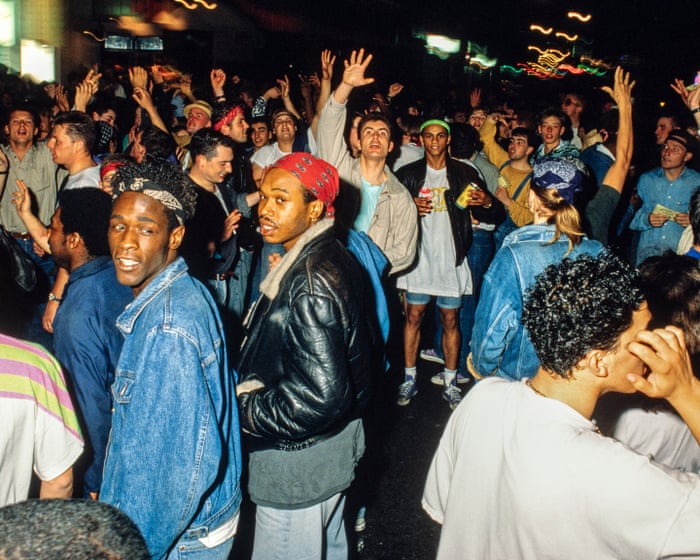
Улиците, по които се лутах като дете.
AJ Tracey: Пет момичета на карнавала в Нотинг Хил от Джони Питс (2010)
Тази снимка перфектно улавя духа на карнавала. Усеща се енергията на деня и усилията, които са вложили, за да се подготвят да празнуват нашата култура. Израснах в Лadbroke Grove в западен Лондон и съм на 32 години, така че съм бил на поне 25 карнавала. Имам тринидадски корени, така че това означава много за мен. Това е част от нашата култура, която съществува тук. Обичам сока, но също така обичам да слушам Vybz Kartel или стария Боб Марли – всичко, което ме поставя в положително настроение. Всяка година чуваш широк спектър от карибска музика и тя винаги оказва влияние върху мен. Поне половината от новите ми песни, които излизат, вероятно са родени от карнавала – денсхол, реге и рага.
Винаги съм ходил до звуковата система Rampage, където са най-енергичните участници в партито. Видях So Solid Crew там и в крайна сметка, когато станах артист, бях поканен да изпълнявам и аз. Първият път беше с Toddla T и Annie Mac, и видях всичките си приятели и семейство в тълпата. Да изпълняваш в собствения си квартал, по улиците, по които се лутах като дете, е напълно различно от изпълнение навсякъде другаде. Беше сюрреалистично.
'Да спечелим това беше голяма работа'
Стела, Рене и Джорджа от Flo: Трофеят на Brit awards, проектиран от Slawn (2022)
Стела: Това беше първият ни Brit, всъщност първият ни истински трофей, така че беше голяма работа. Фактът, че Slawn е нигерийски артист, имаше толкова много смисъл, имайки предвид ролята, която други страни – особено черните нации – са изиграли във формирането на Великобритания.
Рене: Беше невероятно, че неговото наследство беше подчертано. Не просто "Този човек направи награда", а "Оттук е той. Това е влиянието." Усещането беше толкова конкретно за нашето поколение. Никога не искаме да преследваме награди, но признанието е едно от най-важните неща. Да виждаш хора като теб, които правят невероятни неща, може да бъде толкова вдъхновяващо.
Джорджа: Хора от толкова много различни общности ни казват, че се свързват с емоцията и суровостта на това, което правим. Но всеки път, когато приемаме награда, го правим от името на всички момичешки групи, които бяха преди нас – особено тези с черни британски членове, като Little Mix и Sugababes. Те направиха възможно нашето съществуване.
Музиката е черна: Британска история отваря врати в музей V&A East в Лондон на 18 април.
Често задавани въпроси
Разбира се, ето списък с често задавани въпроси по темата, формулирани така, сякаш някой пита за статията или документалния филм. Тълпа от хора без горнище. Голди, Естел, Кортни Пайн, Flo и други споделят любимите си моменти в черната британска музика.
Общи въпроси за начинаещи
В: За какво е тази статия или документален филм?
О: Това е колекция от лични истории и любими спомени на икони в черната британска музика, размишляващи за историята и въздействието на музикалната сцена.
В: Кои са представените хора?
О: Включва артисти като Голди, Естел, Кортни Пайн, Flo и други значими фигури в черната британска музика.
В: Какво означава заглавието "Тълпа от хора без горнище"?
О: Това е цитат от един от участниците, описващ конкретен еуфоричен момент на концерт или фестивал, символизиращ суровата енергия и свобода на музикалната сцена.
В: Става ли дума за конкретен музикален жанр?
О: Не, обхваща широк спектър – от соул, фънк и джаз до хип-хоп, драм енд бейс, гараж и грайм – всички част от гоблена на черната британска музика.
В: Къде мога да гледам или чета това?
О: Вероятно е било материал в издание като The Guardian или част от документален филм на BBC. Търсенето на точното заглавие онлайн трябва да ви насочи към източника.
По-задълбочени въпроси
В: Каква е основната тема или извод от тези споделени моменти?
О: Темата е за културна идентичност, устойчивост на общността и преобразяващата сила на музиката. Тя подчертава как тези артисти създадоха уникален британски звук срещу социални и индустриални предизвикателства.
В: Защо е важно да се документират тези любими моменти?
О: Това запазва устна история от самите артисти, надхвърляйки класациите и продажбите, за да улови емоционалния и културен пулс на сцената, който често се пренебрегва в основната музикална история.
В: Коя ера от черната британска музика обхваща предимно това?
О: Въз основа на артистите, тя вероятно обхваща от 70-те и 80-те години на XX век през 90-те до 200-те и след това, включително грайма.