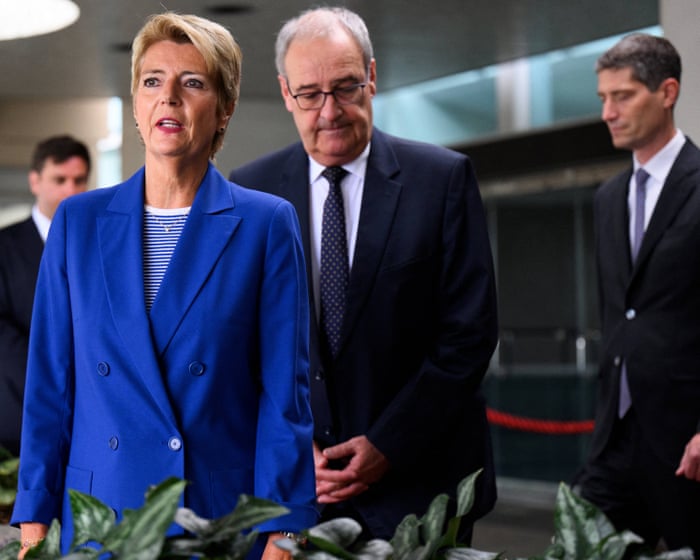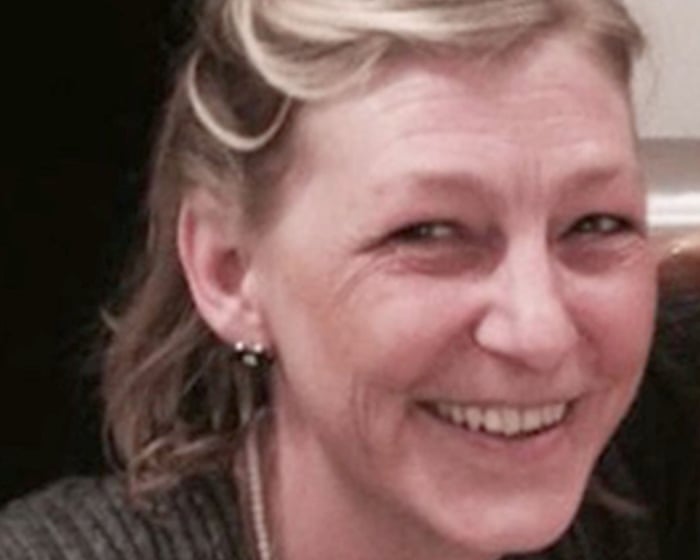
An inquiry has concluded that Vladimir Putin is “morally responsible” for the death of a British woman who was killed after spraying herself with a nerve agent. The nerve agent had been smuggled into the UK by Russian agents to assassinate a former spy.
Lord Hughes, who chaired the inquiry, stated that the assassination attempt on former spy Sergei Skripal in Salisbury in March 2018 must have been authorized by the Russian president. He said he was certain that Russian operatives brought the fake perfume bottle containing the novichok nerve agent—which killed Dawn Sturgess—to Wiltshire and left it in Salisbury after the failed attempt on Skripal’s life. Hughes described this as “an astonishingly reckless act.”
He called the evidence of a Russian state attack “overwhelming,” characterizing it as a “public demonstration of Russian state power for both international and domestic impact.” Hughes identified Alexander Petrov, Ruslan Boshirov, and Sergey Fedotov (all aliases) as members of an operational team within the GRU, Russia’s military intelligence agency responsible for foreign intelligence gathering.
Introducing the report, Hughes said Sturgess was “the entirely innocent victim of the cruel and cynical acts of others.” He praised her family for responding to her death “with dignity and clarity of purpose,” adding that they were determined to uncover the full facts and had greatly assisted the inquiry.
Hughes addressed claims by Moscow that the novichok may have originated from British authorities and been used to falsely blame Russia. He stated there was “overwhelming evidence” that the nerve agent was brought to Salisbury by intelligence officers from Russia’s GRU agency.
He concluded: “I am sure that in conducting their attack on Sergei Skripal, they were acting on instructions. I have concluded that the operation to assassinate Sergei Skripal must have been authorised at the highest level, by President Putin.
“I conclude that all those involved in the assassination attempt—not only Petrov, Boshirov and Fedotov but also those who sent them, and anyone else giving authorisation or knowing assistance in Russia or elsewhere—were morally responsible for Dawn Sturgess’s death.
“Deploying a highly toxic nerve agent in a busy city was an astonishingly reckless act. The risk that others beyond the intended target might be killed or injured was entirely foreseeable. The risk was dramatically magnified by leaving in the city a bottle of novichok disguised as perfume.”
On March 4, 2018, Skripal and his daughter Yulia were poisoned by novichok at his home in Salisbury, where he had settled after a spy exchange. They fell seriously ill but survived.
Sturgess, 44, died after spraying novichok from a fake perfume bottle over herself at her boyfriend Charlie Rowley’s home in Amesbury, Wiltshire, seven miles north of Salisbury, on June 30, 2018.
Hughes said the three Russian operatives arrived in London from Moscow on Friday, March 2, with the intention of killing Skripal. On Sunday, March 4, Petrov and Boshirov placed novichok on the handle of Skripal’s front door.
Hughes stated: “I am sure Petrov and Boshirov brought with them to Salisbury the ‘Nina Ricci’ bottle containing novichok made in Russia that was subsequently responsible for Dawn Sturgess’s death. It was probably this bottle that they used to apply poison to the door handle of Sergei Skripal’s house.
“They recklessly discarded this bottle somewhere public or semi-public before leaving Salisbury. They can have had no regard for the hazard thus created, of the death of, or serious injury to, an unaccountable number of innocent people.”
Rowley has said he found the bottle in a bin shortly before giving it to Sturgess, but Hughes said it was “likely” he had come across it elsewhere.I came across the bottle “within a few days” of it being abandoned on March 4th.
The chair stated: “There is a clear causative link between the use and discarding of the novichok by Petrov and Boshirov and the death of Dawn Sturgess.”
Hughes said he had considered whether the British state should have taken steps that could have prevented the Wiltshire poisonings. He concluded there were failings in how Skripal was managed as an exchanged prisoner. “In particular, sufficient, regular written assessments were not conducted,” he said. However, he stated that the state’s assessment that Skripal was not at significant risk of assassination could not be judged as unreasonable.
He also said he did not believe the attack on Skripal could have been avoided by putting additional security measures in place. “The only such measures which could have avoided the attack would have been to hide him completely with a new identity.”
Hughes said that after the Salisbury attack, extra training for emergency services on recognizing symptoms of nerve agent exposure should have been more widely shared. Additionally, he criticized Wiltshire police for wrongly characterizing Sturgess as a drug user after she was poisoned.
The chair concluded it was reasonable that public health officials had not advised the public against picking up items, because at that stage it was not known where the Russian agents had been.
Hughes said he was satisfied that Sturgess received “entirely appropriate medical care” from the ambulance staff who attended to her and from hospital doctors.
He said: “It is absolutely clear that her condition was in fact unsurvivable from a very early stage – before the ambulance crew arrived to treat her. This was a result of the very serious brain injury that was itself the consequence of her heart stopping for an extended period of about 30 minutes immediately after she was poisoned.”
Public hearings took place in Salisbury and London between October 14th and December 2nd, 2024. A series of hearings were held behind closed doors earlier this year so that highly sensitive information could be presented to the chair. The inquiry has cost £8.3 million.
Frequently Asked Questions
Of course Here is a list of FAQs about the inquirys conclusion regarding Vladimir Putin and the death of Dawn Sturgess written in a clear and natural tone
BeginnerLevel Questions
1 What is this about in simple terms
A UK public inquiry has officially concluded that Russian President Vladimir Putin is morally responsible for the death of Dawn Sturgess a British woman who was poisoned by a Russianmade nerve agent called Novichok in 2018
2 Who was Dawn Sturgess
Dawn Sturgess was a 44yearold British woman from Amesbury England She had no connection to espionage She accidentally came into contact with a small bottle containing the Novichok nerve agent which she believed was perfume
3 What is Novichok
Novichok is a highly toxic militarygrade nerve agent developed by the Soviet Union and later Russia It is a chemical weapon that attacks the nervous system and is banned under international law
4 Why does the inquiry say Putin is responsible
The inquiry found that the Novichok used in the attack was produced by and under the control of the Russian state It concluded that President Putin as the head of that state and the commander of its security services ultimately bears moral responsibility for approving an operation that used such a dangerous weapon on foreign soil
5 What does moral responsibility mean Is it a legal charge
Moral responsibility is a statement of ethical and political accountability not a formal legal charge It means the inquiry holds Putin ultimately to blame for creating and authorizing a system that carried out this reckless act It is not the same as a criminal conviction from a court
Advanced Contextual Questions
6 How is this linked to the earlier poisoning of Sergei and Yulia Skripal
The Novichok that killed Dawn Sturgess came from the same batch used in the attempted assassination of former Russian spy Sergei Skripal and his daughter Yulia in Salisbury just months earlier The police believe the Sturgess poisoning was a tragic accident caused by the attackers carelessly discarding the perfume bottle used to transport the agent
7 What evidence did the inquiry rely on
The inquiry was a judgeled public process that heard classified intelligence forensic evidence and expert testimony While some evidence remains secret the conclusion was based on