In 2017, Sally Bridges-Winslet passed away from cancer at the age of 71. Her youngest daughter described the loss as “like the north star just dropped out of the sky.” Today, Kate Winslet reflects that it would have been even more difficult had the family not come together. “I do have tremendous peace and acceptance around what happened because of how we were able to care for her,” she says.
At the time, Winslet’s eldest son, Joe, was 13. “For him as a child, seeing that love poured into that moment was huge. Later, through conversations with friends, he realized that’s so rarely the case.”
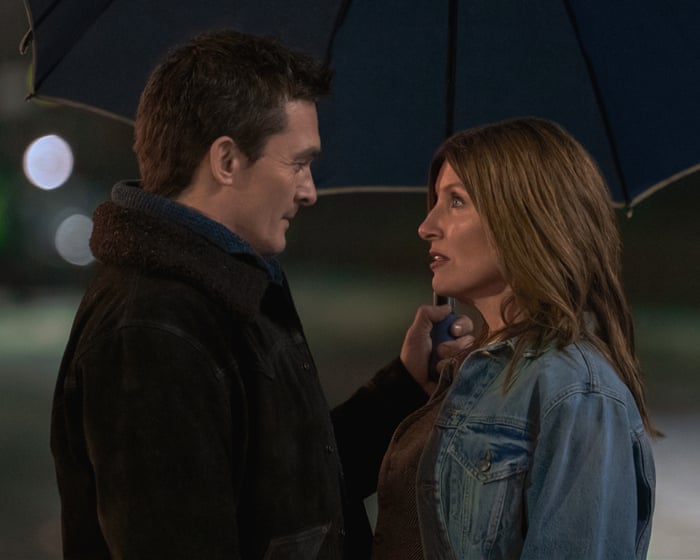
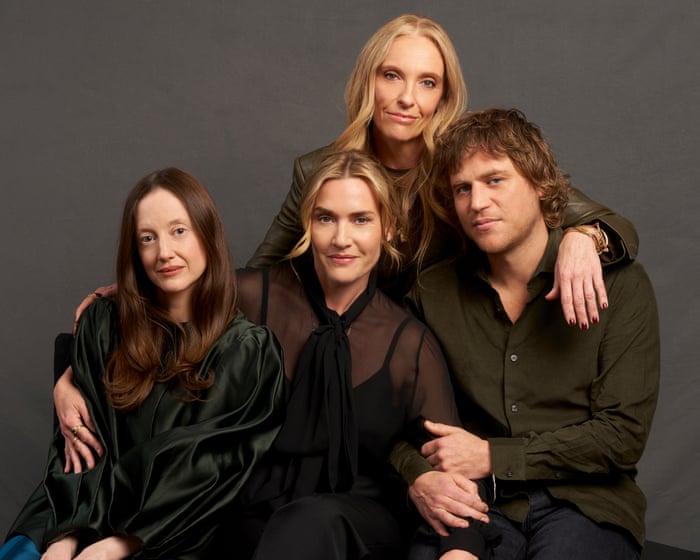
Six years later, in 2023, Joe decided to turn the experience into a screenplay. After several drafts and significant casting efforts, it became a film. Helen Mirren stars as June, the dying matriarch, with Timothy Spall as her cheerful husband, Bernie. Their children are played by Toni Collette as a flighty hippie, Andrea Riseborough as an “organic fascist,” and Johnny Flynn as the oversensitive sibling. Winslet portrays the fourth child, a stressed executive, and the film also marks her directorial debut.
“However much I tried to separate my own personal experience from what we were portraying as this fictional family,” she says, “it was almost impossible. At times, I felt like I was reliving moments from my own mother’s passing that I never witnessed. Directing actors tenderly without breaking down in the corner was definitely part of the challenge.”
That challenge was heightened by her commitment to authenticity. Overhead boom microphones were banned, and crew members were dismissed once filming began, allowing the actors to focus without distraction. “That certainly made it all come flooding back. It felt very present—even the shape of the hospital room, the noises… oh God, that beep. When you’ve been through it, it gets to you. That sense of monotony, the corridors, knowing it’s C17 for a Snickers in the vending machine.”
She smiles, clear-eyed and composed—friendly, professional, and deeply invested in ensuring the film (which she also produced) is not misunderstood. Does cinema have a duty to portray death realistically? “It matters to me,” she says. “This is very much not the movie version of someone slipping away from cancer. That was hard for Helen Mirren—not because she’s vain, but because it’s emotionally difficult to be that broken-down and vulnerable.”
As Timothy Spall notes, “There are no atheists in a foxhole. If you’re about to die, you’re praying to something.”
Goodbye June is a curious and winning blend of uplifting and unsparing moments—60% Love Actually, 40% Michael Haneke’s Amour. Mirren convincingly portrays illness, confined to bed and struggling on the toilet (the tumor has blocked her bowel). Spall wears strikingly realistic prosthetic legs, as Bernie is also in poor health. Everyone looks like an actual, flawed human being—an unusual sight in a Netflix Christmas movie.
In one tense scene with Riseborough, a blotch spreads across Winslet’s neck. “I really appreciate that you noticed that,” she says, “because when I get overwhelmed and stressed, my neck does go red.” The makeup artist pointed it out, and Winslet insisted, “Yeah, we’re totally leaving that in”—just as she did when someone noted a bit of tummy bulge in her 2023 Lee Miller biopic.
“I’m infinitely more comfortable playing characters who don’t look perfect all the time because I don’t understand that as a conceit. I want audiences to see something of themselves, of their reality, in the stories playing out in front of them.”
The complexity lies in the fact that Goodbye June could be seen as an example of palliative best practices. Despite its scrupulous accuracy regarding June’s condition—medical experts meticulously reviewed theEverything feels completely genuine—her decline takes place in a wonderfully unhurried and compassionate hospital, where June is taken after a fall and allowed to stay as long as she wishes. Her family, so devoted that they schedule their visits on a rotation, fill her en suite room with plants, tinsel, furniture, and a fridge. She has morphine readily available and a dedicated healthcare worker, Nurse Angel (Fisayo Akinade), who goes above and beyond.
Toni Collette reflects, “I think the soul does live forever and this is a transient experience. None of us know, and that’s why it’s marvelous.”
“My first thought was: could this be far-fetched?” says Akinade over the phone a few days later. But two palliative nurses—and his own mother, a caregiver—confirmed it wasn’t. “Not at all. One said, ‘The other week, we had a party in one room; I just put the family in there and closed the door.'”
Setting the film in Cheltenham instead of London was a strategic choice, explains Winslet, to prevent the drama from being overshadowed by chaos or overcrowding. “Everyone’s experience is going to be very different. But I truly found the endless warmth and outpouring of support from the palliative care team overwhelming.”
Later, Spall notes that the film doesn’t specify whether June’s care is fully NHS or partially private—”whether it’s a mix of both, you don’t know”—though the lack of that discussion led me, at least, to assume the former.
Winslet recently shared that her mother’s condition required moving her to a private ward at the very end of her life, something the whole family felt “horribly conflicted” about. Spall says he has used both systems: “It’s a bit of a lottery, which is the fault of the system. Some places are really organized, and some are really struggling. If you’re lucky, you end up in a place like this one.”
“It was important,” Winslet emphasizes, “to maintain June’s dignity and sense of pride as a woman.” At one point, her children discover June has already drawn up a care plan. “She had made her choices. Sticking to that mattered enormously. It felt very necessary not to deviate from honoring the agency she had in her own decline.”
There is some uncertainty among June’s children about when their mother realizes she is never going home. Not for Winslet. “I think she knows exactly what’s happening. She knows that it’s coming, and in those quiet moments when she’s alone, she is fearful.”
If Winslet the director has a proxy in Goodbye June, it’s not the character she plays, but June herself: the woman in the middle, orchestrating everyone while trying not to look too worried. “I wanted to let everyone be free to make mistakes,” she says about being on set, “and never let on if I was feeling the pressure of the time crunch. Because if you’ve only got 35 days, and Helen Mirren for 16 of those days, and seven children, you have to make your days count.”
She managed this by being “very, very good at being able to see everyone and assess what they need. I’d be talking to Tim one minute and then just revolving my body and engaging with Helen in a completely different way about the exact same scene. I found that really fascinating—knowing how to flip and adapt, and being open to how different and sometimes odd people can be in the greatest of ways.
“I can count on the fingers of one hand—or fewer, frankly—the tricky experiences I’ve had with actors across 33 years. You have to be totally non-judgmental and embrace whatever that person brings into the room.”
We’re not encouraged to ask questions in the face of death. It’s not in the interests of the pThe powers that be make us reflect on our purpose on Earth, as Johnny Flynn notes. Spall supports this view. He first collaborated with Winslet in 1996 and always believed she would excel as a director. Still, the atmosphere on the set of “Goodbye June” was remarkable. “Considering the lineup, you might think, ‘Okay, wow, this could go either way.’ But there was an immediate sense of warmth and kindness. She’s worked with some of the world’s top directors, had both good and bad experiences, and is incredibly intelligent and open.”
This was especially evident with the children, whose scenes feel natural and charming. “Many directors are uneasy around kids and leave it to handlers,” says Spall. Winslet, however, would set up shots with a baby on one arm, a toddler beside her, playing with another, all while chatting with actors. “She’s a mother, you know; she has three kids of her own. She knows what she’s doing.”
I ask Winslet if it’s too simplistic to suggest female directors approach things differently. “No,” she replies. “Female directors do operate differently. I truly believe that, due to our sensibility. Often, female directors are mothers, and the nurturing we do in our lives naturally carries over because we want to care for everyone. It’s instinctive. This isn’t to say women are better than men—I would never say that—but it is different.”
I speak with Winslet alone in a Soho hotel room. Shortly after she leaves, Riseborough and Collette come in to praise her and discuss death. Among the cast, Collette seems most willing to engage with the film’s potential role in the assisted dying debate.
“I think society generally likes to manipulate and control,” she says, straightforward and cheerful. “And if you can’t allow someone the dignity to end their earthly experience with grace and space, then that’s really awful, isn’t it? To let them do it in their own way.”
She continues, “I’m a Scorpio. I have a vibrant, passionate spiritual life, and I believe humanity’s problem is feeling disconnected—not just from people, but from nature. We are nature. I think the soul lives forever, and this life is a temporary experience. None of us know for sure, and that’s what makes it wonderful.”
Riseborough agrees. The two women are aligned; one just expresses it more openly. “I used to be very angry that our existence is a mystery,” says Collette. “It took time to work through that. Now I find it beautiful.”
After a screening the previous night, Collette says she cried thinking about people spending Christmas alone: “It breaks my heart a little.” She pauses, then slaps her knee with mock cheer: “But if they have Netflix, they have us!”
“It’s very healing to see people come together over death,” says Riseborough. “It might sound morbid…”
“It’s not morbid!” Collette interjects. “It’s part of life. And it can be a celebration.”
I also speak with Spall in the same room, alongside tea and Johnny Flynn. Spall cheerfully recalls nearly dying from leukemia at 39, so he’s had “a peek over the edge” and has a “vested interest” in demystifying death.
“Shitting, sex, and death: all are taboo, yet they happen constantly, and we rarely talk about them honestly,” he says. “When someone dies, life goes on—the doorbell rings, the milkman wants his money. That’s what happened when my dad died.”
Both men readily discuss the film’s more obvious religious references: scenes in a chapel and God’s-eye camera angles.The nurse called for Angel just as things reached a critical point in the nativity play. Dying, they agree, makes such reflection unavoidable.
“There’s an old saying,” says Spall. “‘There are no atheists in a foxhole.’ If you’re at war and about to die, you’re praying to something.” He personally reads and thinks constantly about life’s ultimate questions, citing figures like Meister Eckhart, Rumi, and Richard Rohr. In 2023, he held an exhibition of his paintings depicting angels in anguish.
Flynn listens sympathetically. While Spall paints, Flynn writes and records music rooted in English folklore and rural mysticism. “In Christian liturgy, there’s a service I love called compline,” he says, “which is essentially about preparing for bed. It’s very short, but it gives a sense of moving from one point to another.”
“Female directors operate differently,” says Winslet. “The amount of nurturing we do transfers automatically, and you want to look after everyone. It’s an instinct.”
Contemplation is always helpful, no matter how final the event it marks. “And it always surprises me, the lack of meaningful spiritual conversation around Christmas. So it’s really nice to have a small sense of that energy and reflection. In today’s society, we’re not encouraged to ask questions in the face of death, because it’s not in the interest of those in power for us to deeply consider our purpose on the planet.”
In the film, June hopes to be reincarnated as snow or to live on through stories told by others. Flynn’s father died when he was 18; he now sings his father’s lullaby to his own children. “So, in a way, my dad is still singing my kids to sleep, even though they never met him. And they have a really strong sense of him.”
Spall is moved and heartened. “Whenever you are in a stream of memory, you are immortal, because you’re still living in other people.” He believes there’s something deeper, even eerie: “Just at the moment my daughter was born, I saw the faces of everyone in my family flash past hers, like a kaleidoscope.”
Goodbye June is born from a similar impulse: to keep the departed alive by sharing their memory, hoping it helps others—to welcome ghosts, not banish them.
“You learn to live with the changing shape of grief,” says Winslet. “And whether you like it or not, you might see signs of that person in places and even feel their physical presence. Especially at times of year when you would all come together, like Christmas. In those moments, I certainly feel my mum is still very much around.”
Goodbye June is in cinemas from December 12 and on Netflix from December 24.
Frequently Asked Questions
FAQs Kate Winslet on Grief Her Mother and Goodbye June
Q1 What did Kate Winslet mean by experiencing moments from her mothers passing she never witnessed
A She described having vivid almost realfeeling memories or sensations of her mothers final moments even though she wasnt physically present for them Its a profound intuitive form of grief where the mind and heart create a connection that transcends physical presence
Q2 Why is Kate Winslet talking about this now
A Shes promoting her new film Goodbye June which deals directly with themes of grief and loss Discussing her personal experience helps explain her deep connection to the films subject matter and her motivation for making it
Q3 What is the film Goodbye June about
A Goodbye June is a film where Winslet plays a bereavement counselor grappling with her own loss The story explores how people process grief and the unexpected ways it can manifest mirroring some of her personal reflections
Q4 How did her mothers passing influence her role in Goodbye June
A Her personal grief gave her authentic insight into her characters emotional journey She could draw from her own feelings of loss memory and connection to portray the role with raw honesty and depth
Q5 What does changing her hair color have to do with grief
A For Winslet drastically changing her hair after her mothers death was an act of reclaiming control and expressing an internal shift It was a visible external change that marked an internal process of coping and transformation
Q6 Is it common to have memories of events you werent present for
A Yes especially in grief Psychologists note that the brain can construct detailed sensory experiencesfeeling a presence hearing a voice or seeing an eventas it tries to process loss and find closure Its a form of emotional and psychological processing
Q7 What is a beginners takeaway from her story about grief