I witnessed firsthand the slow erosion of the rule of law in Hungary. It didn’t start with a single shocking act, but with quiet legal changes that narrowed the space for dissent. Each step was justified as reasonable or necessary, until suddenly, democracy itself felt like a performance rather than a reality. Watching current developments in the UK, it’s impossible not to feel an uneasy sense of déjà vu.
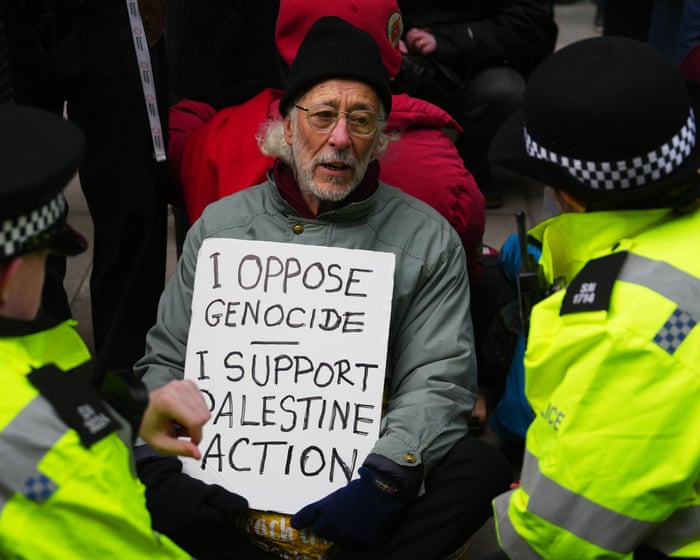
Over the past few years, Britain has introduced laws that drastically curtail the right to protest. The Police, Crime, Sentencing and Courts Act 2022 and the Public Order Act 2023 grant police sweeping powers to restrict demonstrations, criminalize peaceful tactics, and arrest people on vague grounds of potentially causing serious disruption or unease. Hundreds of arrests have followed, including for slow marching, linking arms, or carrying protest equipment. Many of those arrested have faced prosecution, with courts handing down fines and, in some cases, lengthy imprisonment for peaceful protest activities, reinforcing the chilling effect of these laws.
Officials say these measures are about balance and public order. But the balance has tipped toward control. Protesters and legal observers describe confusion about what is lawful, inconsistent police instructions, and arbitrary arrests, even when organizers have coordinated with police in advance. Activists are jailed for actions that only a few years ago would have resulted in a discharge, a fine, or a suspended sentence. The result is growing uncertainty and hesitation that discourages people from speaking out or taking to the streets.
This pattern is all too familiar. In Viktor Orbán’s Hungary, authoritarianism has taken root through the steady consolidation of government power. Under the guise of preserving “order” and “safety,” the government has restricted public gatherings and silenced critical voices. Independent institutions, from the judiciary and media regulators to universities and cultural bodies, have been systematically undermined or taken over, ensuring that state power extends into nearly every corner of public life.
Hungary’s experience shows how fragile democracy becomes when legal safeguards erode, and how quickly laws written in neutral language can become instruments of repression. That trajectory should serve as a stark warning to the UK, where shrinking space for protest and dissent threatens democracy. The rule of law depends on legal limits that bind the state itself. When those limits weaken, and vague legislation hands discretion to the executive or the police, the door opens to abuse.
That danger became clear last year in the UK when the high court ruled that the then Home Secretary, Suella Braverman, had acted unlawfully by lowering the protest threshold from “serious” to “more than minor” disruption—an attempt to make it easier for police to shut down protests altogether. The Labour government’s decision to defend those same unlawful regulations in court, rather than repeal them, was a troubling signal that, across party lines, the instinct to control dissent runs deep.
This creeping expansion of state power has extended far beyond the streets. The proscription of the group Palestine Action as a terrorist organization marked an alarming new phase, with civil disobedience itself conflated with extremism. UN experts warned that such actions blur the line between legitimate activism and terrorism, echoing authoritarian tactics to stifle opposition under the guise of security.
The UK is not Hungary, but the direction it is taking is alarmingly familiar. Make no mistake, this new authority in the UK may not be wielded by those who promise to use it responsibly. Laws outlast governments. Today’s “anti-disruption” powers could tomorrow be used to suppress strikes, silence journalists, or target minority communities.
The lesson from Hungary is how quickly governments canGovernments can manipulate the law for political purposes, and such actions are difficult to reverse. Laws that restrict rights are rarely left unused—they are often adopted, expanded, and turned into tools by those who find them advantageous.
Authorities in the UK, including central and local governments, the police, and the judiciary, still have an opportunity to change direction. This requires repealing or amending the most repressive parts of recent protest legislation, ending the use of stop and search without suspicion, and committing to full transparency and accountability in how police powers are applied. Most importantly, it means acknowledging that dissent, however disruptive or unsettling, is not a danger to democracy but rather its essential safeguard.
Freedom of assembly is not a privilege granted by governments to their citizens; it is a right that protects citizens from their governments. Consider the example of Hungary. Britain should not have to learn this lesson through painful experience.
Lydia Gall is a senior Europe researcher at Human Rights Watch.
Do you have an opinion on the issues raised in this article? If you would like to submit a response of up to 300 words by email for possible publication in our letters section, please click here.
Frequently Asked Questions
Of course Here is a list of FAQs about the topic Slowly but surely a state can suppress its people Why is the UK starting to resemble Viktor Orbáns Hungary designed in a natural conversational tone
BeginnerLevel Questions
1 What does it mean to say a state is suppressing its people
It means a government is gradually using laws policies and rhetoric to reduce the freedoms of its citizenslike limiting protest controlling media weakening courts and targeting minority groupsso it can hold onto power more easily
2 Who is Viktor Orbán and why is Hungary used as a comparison
Viktor Orbán is the Prime Minister of Hungary Since 2010 his government has systematically changed laws to centralize power control the media and judiciary and promote a nationalist agenda leading the EU to label Hungary as no longer a full democracy
3 What are the most obvious similarities people are pointing out between the UK and Hungary
The main comparisons are around new laws that restrict the right to protest plans to change how human rights are applied rhetoric against activist lawyers and civil society and a strong focus on national sovereignty and controlling borders
4 Isnt the UK a strong democracy How could this happen here
Yes the UK has deep democratic traditions The concern isnt about a sudden coup but a gradual salamislicingpassing individual laws that each chip away at checks and balances which over time can significantly change how democracy functions
Intermediate Advanced Questions
5 What specific UK laws are being compared to Orbáns policies
The Public Order Act 2023 Grants police broad powers to shut down protests deemed disruptive before they even happen
The Nationality and Borders Act 2022 Illegal Migration Act 2023 Contain measures to limit asylum claims and expand detention with rhetoric often targeting migrants and their advocates
The Bill of Rights Bill Aims to replace the Human Rights Act with a UKspecific framework which critics say would weaken individual rights protections
6 Is the UKs media becoming like Hungarys which is largely governmentcontrolled
Not directly The UK media is still pluralistic However critics point to governmentfriendly ownership of some major outlets attacks on the BBC