Oil prices continued to climb on Monday, sparking a sharp sell-off in major global stock markets. Investors are increasingly worried that the U.S.-Israel conflict with Iran could trigger a worldwide economic crisis.
The Middle East conflict has created an energy supply crunch, which economists warn could push inflation and interest rates higher. Growth is expected to slow even as prices rise, raising fears of stagflation—a combination of stagnant economic activity and rising inflation.
Here’s what you need to know.
Why have stock markets fallen?
Key oil benchmarks had already posted their biggest weekly gains in six years by the time markets opened on Monday. Prices then jumped above $115 a barrel, crossing the $100 mark for the first time since Russia’s 2022 invasion of Ukraine. The U.S. benchmark, West Texas Intermediate, has nearly doubled since January, when it was around $60 a barrel.
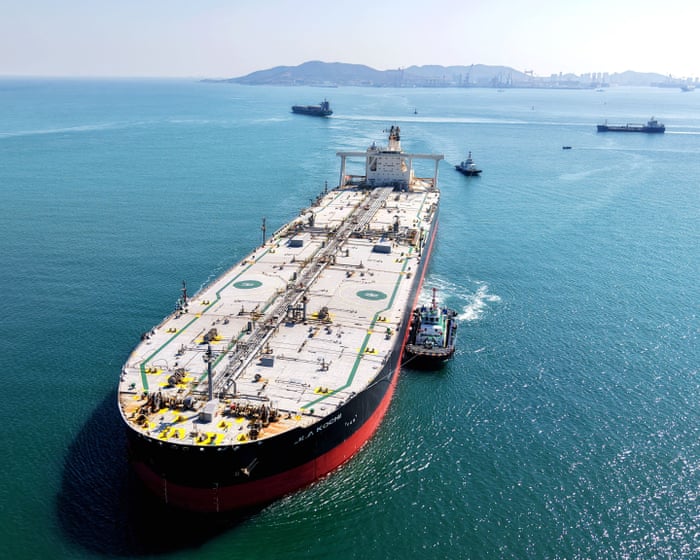
Oil prices surged in the first week of the U.S.-Israel war with Iran after Iran effectively closed the Strait of Hormuz. About one-fifth of the world’s oil and seaborne gas shipments pass through this strait, making it a critical global trade route.
Recent oil production cuts across the Middle East have heightened concerns about shortages. Warren Hogan, an economic adviser at Judo Bank, said the prolonged conflict has reduced the chance of prices returning to previous levels. “There’s a good chance we’re seeing one of the most sudden increases in the cost of oil to the global economy ever,” he said.
Disruptions to gas and fertilizer supplies are also driving up costs and raising the risk of a major spike in global energy prices, which would fuel inflation and slow economic activity.
While former President Donald Trump has dismissed this as a “short-term” effect of the conflict, investors remain unconvinced. Asian shares fell sharply on Monday, with European and U.S. markets expected to follow. Japan’s Nikkei dropped more than 6%, and South Korea’s Kospi fell over 7%.
How are oil prices lifting inflation?
The conflict is widely expected to boost inflation worldwide, as sustained higher oil prices ripple through the economy.
According to Royal Bank of Canada economists, U.S. inflation could rise to 3.7% if oil stays around $100 a barrel.
American drivers are already feeling the impact: U.S. fuel prices rose 25 cents last week and another 25 cents over the weekend, reaching an average of $3.44 a gallon by Sunday night, according to Gas Buddy.
Higher fuel costs strain household budgets and increase business expenses, pushing up prices for everything from food to furniture.
Inflation is also set to rise in the UK and eurozone if oil prices remain high, Oxford Economics reports. Europe, which imports most of its oil and gas, saw natural gas prices jump nearly 67% in the first week of the war, according to ANZ Bank analysts.
ANZ also projects that China’s producer prices could rise 0.4 percentage points if oil stays expensive. In Australia, inflation is expected to approach 5%—almost 1 percentage point higher than pre-war forecasts. Westpac economists warn petrol prices could rise by a dollar per liter, with costs already 20 cents higher than in February.
“There’s going to be a severe and sudden short-term impact on Australian consumers’ cost of living, and their perceptions of their cost of living—that is, their inflation expectations,” Hogan said.
Are we in stagflation?
Oil price spikes are “stagflationary”: they slow economic activity, raising the risk of recession, while also boosting inflation.
The International Monetary Fund estimates that a 10% increase in energy prices would slow global growth from about 3.2% to 3%. If the conflict continues, economists predict the UK and euro area would each grow by just 1% or less.
Asian economies have enjoyed relatively strong growth in recent years, but they too are vulnerable to higher energy costs and supply chain disruptions. The combination of slowing growth and rising prices could push several regions toward stagflation, especially if the conflict drags on.Industrial production has seen strong growth, fueled by the global tech boom, but an energy shock could derail that momentum and risk stagflation, Oxford Economics warns. In the U.S., oil prices at $125 a barrel could reduce GDP by 0.8% while pushing inflation above 4%, according to consulting firm RSM.
David Bassanese, chief economist at BetaShares, notes that the current oil shock resembles those of the 1970s, when Middle East conflict sent prices soaring and plunged advanced economies into prolonged slumps. “If oil remains above $100 a barrel and the disruption continues, we could face a stagflationary moment in the first half of the year—weak growth with central banks unable to act due to high inflation,” he said.
Will interest rates rise?
Economists say interest rates are less likely to fall if the war persists, and central banks poised to hike will act sooner. Before the conflict, the European Central Bank and Bank of Canada were expected to hold rates steady until 2026; now both are anticipated to raise rates at least once in the coming year. The U.S. Federal Reserve—under pressure from Trump to cut rates—and the Bank of England were previously forecast to cut twice in 2026. Now the Fed is expected to cut only in September, and the Bank of England to hold steady all year. Australia, which had priced in one rate hike before the conflict, now faces two this year.
How much worse can it get?
Even if Trump ends the war, the world will likely see slower growth and higher prices because oil prices won’t return to January lows, Bassanese said. Traders will add a risk premium due to the threat of renewed “on-again, off-again” conflict.
Asian countries, heavily reliant on Middle East oil, are already taking steps to cushion the price surge. Bangladesh is closing universities early for Eid al-Fitr to save electricity, while South Korean President Lee Jae Myung announced the country’s first domestic fuel price cap in nearly 30 years.
A swift de-escalation would help avoid an inflation spiral by stabilizing oil prices, said Sally Auld, chief economist at National Australia Bank. While she doubts the conflict will last another month, if it does, there would be a “material risk of global recession” with oil prices staying near $120 a barrel.
Goldman Sachs estimates a month-long disruption could push prices past the all-time high of $145 a barrel, and Westpac economists warn that three months of disruption could drive prices to $185 a barrel, with severe consequences for the global economy.
Frequently Asked Questions
FAQs Iran Conflict Oil Prices and Stagflation Concerns
BeginnerLevel Questions
1 What is stagflation
Stagflation is a rare and difficult economic situation where high inflation occurs at the same time as high unemployment and stagnant economic growth
2 Why does a conflict with Iran affect the global economy
Iran is a major oil producer Conflicts or sanctions that disrupt its oil exports can reduce global supply causing oil prices to spike Since oil is fundamental to transport and manufacturing this drives up costs for almost everything
3 How do higher oil prices lead to inflation
Oil is a key input for transportation plastics and energy When it gets more expensive the cost of producing and shipping goods rises Businesses often pass these higher costs on to consumers leading to overall price increases
4 Could this really cause a global recession
Its a significant risk If oil prices rise sharply and stay high it acts like a tax on consumers and businesses slowing spending and investment Combined with existing inflation this could tip some economies into recession
IntermediateLevel Questions
5 Whats the connection between oil prices and supply chains
Modern supply chains are highly dependent on affordable fuel for shipping and air freight Higher oil prices increase logistics costs at every stage from raw materials to finished products on store shelves creating bottlenecks and delays
6 Besides oil what other economic impacts could an Iran conflict have
It could disrupt vital shipping lanes like the Strait of Hormuz increase geopolitical risk premiums in financial markets and trigger sanctions that disrupt trade networks beyond just oil
7 How do central banks typically respond to stagflation
It creates a policy dilemma To fight inflation they should raise interest rates To help growth and jobs they should lower them This makes stagflation very hard to manage as actions to fix one problem can worsen the other
8 Are some countries more vulnerable than others
Yes Countries that are major oil importers are more vulnerable to price shocks Emerging economies with weaker currencies can be hit especially hard as they pay for oil in dollars
Advanced Practical Questions
9 What are the signs that stagflation might be taking hold
Look for a persistent combination