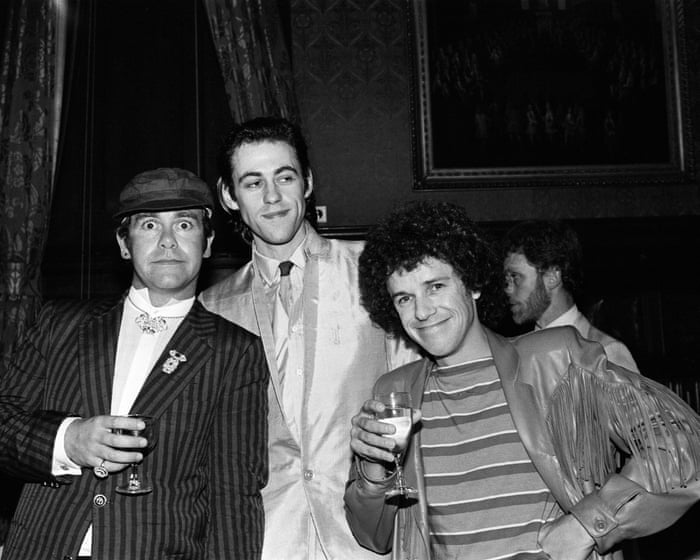
Leo Sayer has stories—and plenty of them. Muhammad Ali? He’s got stories. Keith Moon? Stories. Elvis Presley? Stories. I’ve never met anyone with so many tales to tell. We’re speaking by video link from Australia, where he now lives. At 77, the pint-sized pop star with a mop of curly hair is still as bouncy as a Superball.
Back in the 70s, he was famous for his turbo-charged energy. For his first Top of the Pops appearance, performing his breakthrough hit “The Show Must Go On,” he dressed as a pierrot. If you go looking for that footage, you won’t find it. Paedophile presenter Jimmy Savile played such a prominent role in the segment that the video was pulled. “He was creepy,” Sayer recalls. “He wouldn’t get off the fucking stage, so they can never show my first performance. I’m sure he fancied me.”
Half a century ago, Sayer was at his peak. In 1976 and 1977, he scored two consecutive number-one singles in the US with “You Make Me Feel Like Dancing” and “When I Need You.” “You Make Me Feel Like Dancing,” a falsetto blend of pop, disco, and R&B, could easily serve as a theme tune for the 1970s. “When I Need You” is pure, unadulterated schmaltz. He had plenty of other hits too—“Moonlighting,” “Long Tall Glasses (I Can Dance),” “Thunder In My Heart,” “One Man Band,” “Orchard Road.” Sayer was a lyricist at heart, with Bob Dylan as his hero. While he was no Dylan, he knew how to craft a song that told a story.
In the corner of the video screen, I notice the name Gerard Sayer. Leo was his “pop” name, inspired by his lion-like mane. He greets me with the cheerful energy of a children’s TV presenter. “He-llooooo! Can you see me? Hello, Simon, how are you?” His cheeks are a little fuller, his hair grayer, but he’s instantly recognizable.
I ask whether he thinks of himself as Leo or Gerard. “Good question,” he says. “I spend so much time being the custodian of Leo Sayer that I think I need an escape valve. On my passport, my driving licence—I’m Gerard. And I like that.”
Sayer grew up in Shoreham-by-Sea, Sussex. His mother was a Northern Irish nurse, and his father an engineer with a handlebar moustache and social ambitions. In the 1960s, he moved to London to work as a graphic artist, designing album covers—including Bob Marley’s Catch a Fire—doing copywriting, and even creating a couple of typefaces. A skilled harmonica player, he performed alongside folk greats like Donovan and Bert Jansch in Ladbroke Grove pubs.
He was signed by pop star turned manager Adam Faith, who made him—and then nearly broke him. “Adam was an incredible mentor, it must be said,” Sayer reflects. “I can’t forgive him for the things he did later, but in the early days he was incredible. He knew everybody; he could open doors. Guys like the Beatles and the Rolling Stones, everybody looked up to him.”
Sayer was in his early twenties and already married to his first wife, Janice, when Faith signed him. “God, did Adam curse me for that,” he remembers. “‘All these birds in the world and you go and marry that one.’ She was a lovely girl—a librarian in Shoreham. Gorgeous, but very straight. He thought if I was single, more girls would come to the shows. I always wanted to be an artist, and he wanted me to be a pop star.”
Sayer was incredibly naive. While it was common for pop stars to be taken advantage of by their managers, few were swindled quite like him. “I signed power of attorney over to Adam Faith at the beginning of my career,” he admits, which meant Faith could do pretty much whatever he wanted with Sayer’s money. “When he picked me up, he said, ‘Right, we’ve got to make this legal, so sign this—otherwise we’re not going to get started.’ It was very gangster.”
Years later, Sayer realized he’d been conned. There were reports that he had to sell his £2 million house, but that’s not true—he never got to buy the house in the first place.”I said to Adam and my accountant: ‘There must be enough money to buy this house,’ and they said, ‘No, you’ve spent it all. There is none.'” Again, that wasn’t true. “They’d taken it.” Well, you were young, I say, so it’s not surprising that you were naive. “No,” he says. “I wasn’t that young. I was old enough to know better, but I didn’t want to stop the moving train.”
Things came to a head when he got himself a lawyer, Oscar Beuselinck, father of another popular 1970s singer and actor, Paul Nicholas. “Oscar rang Adam and said: ‘I think you’ve been a very naughty boy. There’s a young chap called Leo Sayer I’m talking to, and I think you’ve stolen a lot of money from him.’ I had signed a renewal of my contract with Chrysalis records. I signed a piece of paper.” Again, he didn’t read it. “It said: ‘Chrysalis records paid £650,000 to Leo Sayer to renew the contract.’ But the money didn’t go to Leo Sayer—it went to his managers, and they never told me about it.” Sayer often talks about Leo in the third person. “So that’s why I say Adam was a robber.” They settled out of court for £650,000.
When Faith died in 2003, Sayer was one of his pallbearers. I assume they had made up. But they hadn’t—he was just asked to help carry the coffin, and he agreed. By then, Sayer had long fallen out of fashion. He hadn’t had a hit since 1983. “The last time I saw him he was with the agent Colin Berlin in a restaurant. They said I should go into a musical and revitalize your career. I went: fuck that, I’m not a theatrical song and dance man. I turned the table over and stormed out, and all the food landed on them.” Had he ever done that before? “Good lord no! I just saw red and went bang. So this very quiet guy, measured guy, suddenly goes maaaaad.”
To be fair, Leo, I say, it’s not the only time I have seen you go mad before. “Well, Big Brother, yeah. But that was because a guy manhandled me. I came out of that with bruises. I said everything I could to get them off me.” Sayer lost it in 2007’s Celebrity Big Brother after having his underpants confiscated. He broke out of the house, was shoved by security, and fired a volley of “fuck offs” at them.
Again, he admits he was naive to go on Big Brother. So why did he? “There was a guy who said: ‘We can get you a new record deal.’ There’s always a carrot, isn’t there?”
Why did they confiscate his underpants? “Oh God, where do you start? I hate digging up all this again. I’d arrived with 20 pairs, Calvin Kleins. They took them away and gave me three in return.” Why? “Because. They. Wanted. To. Set. Me. Up. They brought out a mangle and wanted me to wash my smalls in the front room, with the angle that you, you big jumped-up pop star, would never wash your own underpants.” Was he surprised by how much it got to him? “Yes, I was being mentally affected. It was claustrophobia. That’s probably why I went to war.”
Did Big Brother change you? “I’m an unchanged person. I’m very normal. I’m the same curious person I was in 1973. But it’s a fight, Simon. You have to fight your own temptations.” He laughs at a distant memory. “I was standing on a corner in LA, shouting at everybody because I didn’t get the pink limo. I wanted the pink one! I didn’t want the black one. And two hours later you’re slapping yourself: did I really say that?!”
You certainly succumbed to the vanities of fame then, I say. “For that brief moment!” he concedes. Did he have groupies? “I never thought I…”I never thought of myself as handsome. I have a crooked face and always felt like the odd one out—too short and all that. I never considered myself a sex symbol. And the groupies? Amazingly, yes, as time went on. I pushed them all aside because I was with Janice. He pauses and admits he didn’t push all of them aside. There’s the famous straying on Orchard Road, of course. I wrote a song about an affair I had with a young girl who happened to jump on a train while I was on tour, and the rest is history, I suppose. The girl was 16, and I was in my late 20s. I moved Janice out of our house. I told her, ‘I’ve found this girl and I think I’m getting serious.’ She said, ‘Right, well, get me a flat and I’ll move.’ And I did. She moved to a flat on Churchfield Road in Acton, but ‘Orchard Road’ sang a little better. I moved the girl in the same day.
How long did their relationship last? Oh, it was only a night! As soon as the girl was in the house, I thought: what the hell have I done? Because it just wasn’t right. So I sent her home. I drove her to the station and then went back to see Janice. The song is about me putting coins in a phone box and trying to be forgiven.
Hold on a second, I say. I’ve heard this story before. Didn’t her father chase you with an axe? Ah, Sayer says. That’s kind of mythological. Hahaha! So it’s not true? It’s not quite right, no. Haha. I embellished that story when I was trying to make the song more of a hit. Hahaha! Should we correct the record? Oh, please do.
Which reminds me, I say. There’s another story—you got a phone call from Elvis, just before he died, asking to meet up with you. Absolutely true, Sayer says. As with many of his anecdotes, there’s a long lead-up. In short, he’d fallen off a stage in the US and was massaged by a celebrated former American footballer named Michael, who was now working for a famous person he wouldn’t name. Then one day, Michael handed me the phone, and the person on the other end said (in an Elvis voice): ‘This is Elvis Aaron Presley, and you make me feel like dancing.’
You know the photographer Terry O’Neill? He was a great friend of mine and a brilliant mimic. I said, ‘Is this Terry?’ And he said, ‘No sir, this is Elvis Aaron Presley.’ And I’m going, ‘Okay.’ And he says, ‘Well, Michael tells me you’re a great guy, and I’m going through a bit of a rough patch myself. Things aren’t so good, and I’ve just got me and my girlfriend here. I’d like you to come to Graceland and hang out. Let’s see what we can do together because I love your songs, man. I think you could be a good source of energy for me.’
Blimey, I say. We chatted for about 25 minutes. He was very humble and very sweet. You could tell he was a good Christian. And he was really enthusiastic about getting some of my energy. I’m kind of known for that energy. So the next day comes, and I had this foreboding feeling. Then, on the radio, I heard: ‘The singer Elvis Presley has been brought into Memphis Baptist Hospital dead on arrival.’ Sayer says he has rarely told the full story because he doesn’t think people would believe him. I told Janice, and she said, ‘Don’t tell anybody—they’ll think you’re a crank or just name-dropping.’ So I started to think it didn’t happen, that I’d made it up.
But seven years later, in 1984, he received a call from the producer David Foster inviting him out for dinner. By then, Sayer didn’t have a record deal, and he convinced himself Foster was going to offer him a contract. Sitting beside David at this dinner was a beautiful woman, Ginger Alden…Who was Elvis’s girlfriend at the time he died? David told me: “Look, the reason you’re here, Leo, is Ginger—who is terrified of flying—managed to get the courage to come with me to London because she said, ‘I’ve got to meet Leo Sayer.'” She’d been holding back this story for all those years. Ginger told me the last thing Elvis said before she found him dead in the morning. She said: “He was singing your song and saying he was going to meet Leo, and couldn’t wait!” Sayer looks at me intensely, almost unable to believe his own story. “So is that something to carry?”
Wow! I heard you were also great friends with Keith Moon, the legendary Who drummer, famous for driving Rolls Royces into swimming pools. Well, here’s another strange thing, Sayer says. “I was with him the last evening of his life. With Paul and Linda McCartney and some others.” Now I’m beginning to get the willies. What was he like that final night? “Completely changed. Really relaxed. I don’t think he was taking drugs at the time. I remember talking to Macca and saying: ‘Look at Keith—he’s just normal, isn’t he?’ And Paul said: ‘Yeah, it’s a beautiful thing to see.’ And Keith was running around to everybody saying: ‘I love you, I love you.’ He came up to me and said: ‘You’ve always been a great friend and support.’ And I was thinking, ‘Oh, Keith, be normal! Be yourself.’ But he was emotional, and I don’t know what happened that night. They say he managed to get some drugs, and the next day he was gone. Overdose!”
Why does he think Moon was like that on the last night? “I’ve always wondered that.” Do you think he knew something? “I don’t know. But it was very strange. Look at another friend I had, Ayrton Senna. And look at that last race he was in. And the way he acted the day before he was killed. He was so caring for all the other drivers. He was so emotional. Everyone said they saw a different person. I think people know when the game is up.”
Sayer’s spooking me now. So I change the subject. To Muhammad Ali. I once saw a brief mention of the time Ali asked Leo to go jogging with him. Surely that’s apocryphal? Nope, he says. Another story, another runway of a buildup. Fast forward a few years, and Sayer’s now living in LA. At the time, British Airways gave him first class tickets in exchange for commercials he did for them. This time around, he’d just turned up at Heathrow without booking, and there was a problem. “They say [cue posh voice]: ‘Mr. Sayer, I’m so sorry, a gentleman has booked up all of first class and we can’t put you in there. We can put you in coach, but down the back of the plane is not very nice.'” So, Sayer comes over all pink limo. “I said, look, tell him who I am. I thought I’d pull a bit of rank. And they tell his manager, ‘It’s Leo Sayer!’ The answer comes back: ‘Mr. Sayer, you’re going to be sitting in first class with the gentleman.’ I went, OK! Score! So I get on the plane and there he is in bandages two seats over. My fucking hero! My God! So I sit down and he starts singing ‘You Make Me Feel Like Dancing’ to me in this broken, croaky voice! He’d just been in an exhibition match where he got the pulp beaten out of him. We talked the entire trip. It was the best thing ever. Just glorious. Every now and then his trainer and manager would come into the cabin and he’d say: ‘I’m talking to Leo!'”
There’s more. At the end of the flight, Ali invited Sayer to stay with him and his wife in Santa Barbara. They sent a limo for him, and he spent two days running…I was jogging and chatting with Ali. Again, he says he’s found it hard to talk about it. “I could never really tell anybody because, number one, they’d never believe me, and number two, it was very private.”
Big fan … Cassius Clay, also known as Muhammad Ali, in 1962. Photograph: The Stanley Weston Archive/Getty Images
Fast forward another few years, and I was invited to perform for Ali at his 60th birthday party in London. Well, how could I say no? “Ali was very much in the grip of Parkinson’s by then. His movement was very restricted, and he didn’t really say anything. So I did the show, and he just glued his eyes on me. The way he’d look at you—you couldn’t look away. Then his wife came out and said, ‘He wants to see you backstage.’ So I went into the dressing room, and he gave me the biggest hug and said, ‘I love you, man!’ That’s one of the most emotional moments in my life.” His bottom lip quivers. “I always get emotional when I think about it.” He pauses. “It was one of those moments. He just liked me. There was something chemical.”
Ali, Ayrton, Moon, Elvis—what does he think they all saw in him? “I’m one of those guys who’s an eternal good luck charm. I’m very charming. I’m friendly with everybody.” As soon as he gets on a plane, he’s chatting away to his neighbor. Do people know who he is when he starts conversations? “Oh yeah, I’m very well known. The only frustration is that people don’t often link the songs with me. So maybe there’s still some work to be done.”
What a life! There’s so much more to write about, and so little space. It’s getting late down under, and Sayer says it’s well past his bedtime. These days, he’s living comfortably with his second wife, Donna (they’ve been together for 40 years), earning a nice income from streaming, downloads, and even the occasional record sale. He’s preparing for his grand tour of the UK and is still fizzing with energy and hope. When I ask if he’s always been an optimist, he starts singing Monty Python’s “Always Look on the Bright Side of Life.” “I see positivity in everything. This optimism I have can be blinding. It’s always a bright and sunny day.”
Still dancing … Sayer performs at Rewind South in Henley-on-Thames, 2016. Photograph: Lorne Thomson/Redferns
For example, he has always believed that a big comeback is just around the corner. He says his voice is as good as ever and reminds me of the time he went to America to work with producer Richard Perry. “He said, ‘Your voice is unique. You’re Smokey Robinson. You’ve got that thing that Otis Redding had, the way you sell a song.’ He was quite right, really.” Does he compare himself with Robinson and Redding? “Well, I bumped into Smokey a while ago in LA, and I love him to death, but no, I wouldn’t make that comparison. I don’t think I’m completely like anybody else.” Okay, does he think he’s up there with them quality-wise? “If you say so! Somebody told me once to be humble, and I’m trying to be humble.”
I recently read that, as well as the new tour, he’s preparing to publish his memoir, headline Glastonbury, and release a new album. Is that the blinding optimism talking, or is it a reality? “Yeah, yeah, yeah! There are people who are trying to engineer things like that for me. It could happen. It might happen. But it’s not confirmed, put it like that. All my fans keep shouting for it, and there are people lobbying for me. There are even people in the business who keep talking about it.” He looks at his phone. “God, it’s 11:08 p.m., past my bedtime.”
“Look forward to seeing you at Glasto,” I say. “OK! I’ll be there. You can come on stage!” Leo Sayer’s Can’t Stop Loving You tour starts on 7 October. This article was amended on 12 March.An earlier version incorrectly referred to the song “Long Tall Glasses (I Can Dance)” as “Tall Long Glasses.”
Frequently Asked Questions
Of course Here is a list of FAQs about the incredible life and career of Leo Sayer designed to answer questions from new fans to longtime followers
About Leo Sayer His Music
Q Who is Leo Sayer
A Leo Sayer is a British singersongwriter who became a global superstar in the 1970s and 80s known for his energetic stage presence distinctive voice and a string of catchy pop and rock hits
Q What are Leo Sayers most famous songs
A His biggest hits include You Make Me Feel Like Dancing When I Need You Long Tall Glasses More Than I Can Say Thunder in My Heart and The Show Must Go On
Q Did he write his own songs
A Yes especially early in his career He cowrote many of his early hits like The Show Must Go On with his manager David Courtney Later he also had huge success with songs written by others like When I Need You
Q What was his signature look
A In the mid70s he was famous for his colorful oversized Pierrot clown costume complete with a hat and face paint He later moved to a more conventional sharpdressed style
His Personal Life Relationships
Q Was Leo Sayer married
A Yes He was married to his first wife Janice from 1973 to 1985 He has been married to his second wife Donatella Piccinetti an Italian artist since 1995
Q What were his wild romances
A During the peak of his fame Sayer was linked to several highprofile figures most notably with actress and singer Lynsey de Paul Their passionate but tumultuous relationship in the 70s was widely covered by the press
The Controversies Challenges
Q How was Leo Sayer cheated out of his fortune