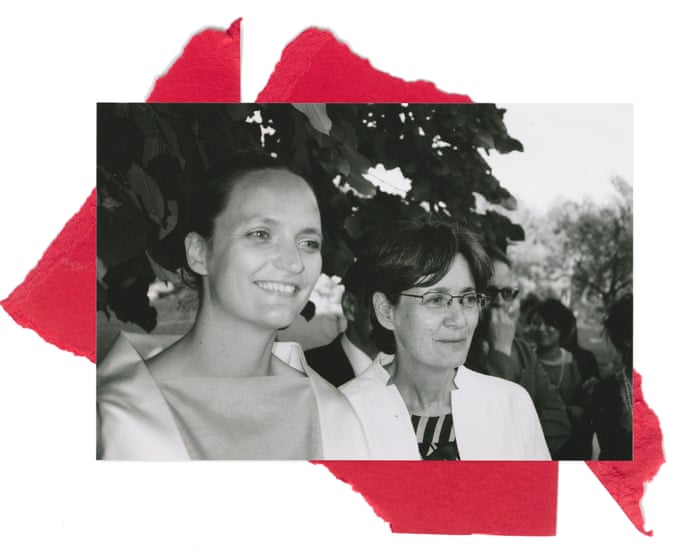
My favorite photograph of my mother, Linda, and me was taken at my wedding. I don’t think we even realized we were being photographed. Two artist friends were walking around with film cameras, capturing the kinds of moments they knew my husband, Hiraki, and I would cherish. In the photo, my mother and I are standing shoulder to shoulder beneath a young tree. I love how the shapes of our necklines mirror each other like a sartorial call and response, how peaceful our smiles are, and how we’re both looking outward.
This picture isn’t about capturing a specific moment. Instead, it reflects a timeless quality in my mother’s love—a love that isn’t tied to circumstance or context. She has always loved my sister and me in this same way: gently, generously, and right beside us.
Having lived in a different country from her for longer than we lived together, her voice on the phone and the way she speaks have become a huge part of how I’ve experienced her love as an adult. She has certain phrases she returns to, like facets of a well-polished gem. She tells me to “keep short accounts”—meaning, forgive easily. If I’m feeling low (and she always knows before I tell her), she reminds me it’s just a temporary loss of perspective. She often insists I buy myself flowers and “smell the daisies.”
In different ways, I think she’s reminding me to breathe. To quiet my thoughts or my heart, and remember that I am loved with a weight that balances whatever heartbreak, stress, or exhaustion I’m carrying. Her love, and my father’s, along with their faith, are unshakable. So when she tells me to breathe, she’s also reminding me to pray—and that prayer will feel like coming home. There’s something deeply spiritual in her words. Eternity truly has been set in her heart, and it has shaped how she has shown the world to me.
Of course, being told to breathe when I’m angry or desperate can be frustrating. But when I look at this photo, I understand why, in the end, the heart of her advice rings clear and true, like a glass bell. It’s because she has always been there for me. My father, too. With the steady presence child psychologists say children need most, they have always stood by my side—even from across continents—encouraging me to live outwardly, in love.
This week I read these lines by the Polish poet Aleksander Wat, from a poem called Songs of a Wanderer:
“So beautiful the lungs / are breathless. The hand remembers: / I was a wing.”
I loved how they echo my mother’s words. Take a pause, she says. Breathe. Remember who you are. You’ll feel the wind on your face, even when what you’re going through makes flying seem impossible.
Frequently Asked Questions
FAQs About Keeping Short Accounts
Beginner Questions
1 What does keep short accounts actually mean
It means not letting hurts offenses or misunderstandings build up over time You address issues quickly forgive promptly and clear the emotional debt so it doesnt damage the relationship
2 Is this just about saying I forgive you
Not exactly Its about the internal act of letting go of resentment and choosing not to hold the offense against the person Saying the words can help but the real work is in your heart and actions
3 Whats the main benefit of doing this
It prevents small issues from turning into big relationshipbreaking resentments It frees you from carrying around anger and bitterness leading to greater peace and healthier connections
4 Does keeping short accounts mean Im a doormat
No its not about ignoring bad behavior Its about addressing issues clearly and then choosing to forgive You can still set boundaries Forgiveness doesnt always mean restoring trust instantly or allowing the same hurtful behavior to continue
Common Problems Scenarios
5 What if the other person isnt sorry or doesnt even know they hurt me
You can still keep a short account for yourself You process the hurt choose to release your grip on it and decide how to move forward The goal is to free yourself from the poison of holding on
6 How do I handle repeated offenses from the same person
This is where keeping short accounts meets setting boundaries You forgive the past offense to free yourself but you also have a clear conversation about the pattern For example I forgive what happened but for this to work we need to find a new way to handle this situation
7 Is it possible to forgive too quickly
Sometimes Quickly doesnt mean bypassing your feelings Its healthy to acknowledge youre hurt before you choose to forgive Forgiving instantly without processing can sometimes be a way of avoiding the real issue The advice is to not let it fester for weeks or years
8 Whats a simple example of this in daily life
Your roommate leaves dirty dishes in the sink again Instead of silently seething for days and building