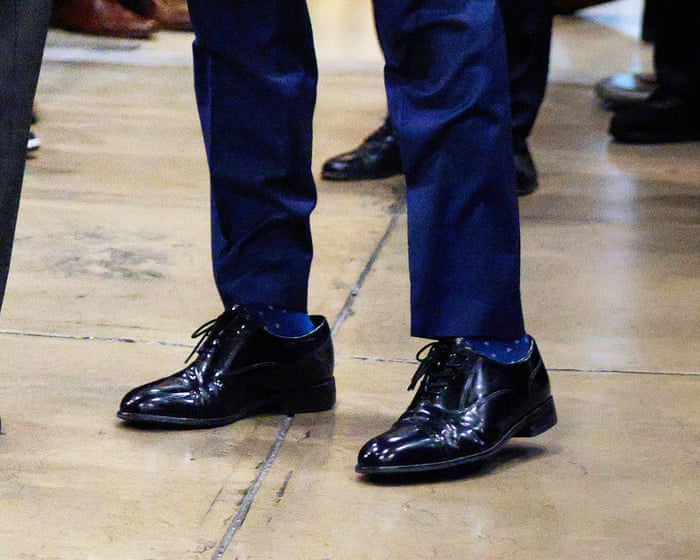
The U.S. Secretary of State is awkwardly shuffling around in oversized shoes given to him by the president. Why? Perhaps as a subtle, satirical jab about masculinity, or maybe because Marco Rubio once inflated his shoe size, assuming it would fuel presidential speculation about his anatomy.
According to Vice President JD Vance, Donald Trump gifts a specific brand of shoes to his inner circle, either guessing their size or having them reveal it. “The president leans back in his chair,” Vance explained recently, “and says, ‘You can tell a lot about a man by his shoe size.’” A bold statement, especially from a president known for his small hands. Vance casually mentioned he wears a size 13.
Vance, Rubio, and Defense Secretary Pete Hegseth all have a pair—of shoes, that is. I won’t speculate on the other, but they’re about as likely to stand up to Trump as they are to quit politics and become champion ice dancers. They’d prefer you ignore the obvious: there’s nothing emasculating about your boss buying your shoes, even if they don’t fit and make you look foolish. As one White House official told the Wall Street Journal, “It’s hysterical because everybody’s afraid not to wear them.” So everyone plays along.
All three are quietly positioning themselves for a future presidential bid. They might believe that if the shoe fits, they could win the MAGA movement’s favor once Trump, nearing 80, exits the stage. But instead of an ugly stepsister forcing her foot into a tiny slipper, we have a Secretary of State struggling to fill comically large, affordable black Oxfords. It’s hard not to think of Rubio’s predecessors—John Quincy Adams, George Marshall, George Shultz, James Baker—and the phrase “big shoes to fill.” Rubio looks like a child playing dress-up in his father’s closet.
Aesthetically, it’s a disaster. Many of Trump’s ideological predecessors at least understood the importance of sharp tailoring. But this highlights the unique blend of vanity and humiliation required of a Trump loyalist: you must take immense pride in yourself while enduring regular degradation.
Consider Hegseth. Even his name sounds like a stubborn mispronunciation. The Defense Secretary has embraced an unapologetically absurd style: suits straining over tattoos, hair resembling a latex mask from Point Break. And, of course, The Shoes. Yet his machismo is fragile. This week, Hegseth banned press photographers from the Pentagon briefing room over “unflattering” photos. Now, only official Pentagon photographers will capture images, likely under orders to avoid his feet. Meanwhile, thanks to diligent reporting—particularly by the New York Times—we’ve learned the U.S. was responsible for a Tomahawk missile strike on an Iranian elementary school on the first day of fighting.So what does it mean to be a defense secretary who’s always on the ground? In the Trump era, that requires lacking both the decency and honor to admit this devastating mistake.
Yet, in this story of three loyalists, the one in the most precarious position is Vance. We’ve all had to get used to understanding the Trump administration by its general feel. Given his clearly tepid support for the war with Iran—unsurprising for someone who campaigned against “stupid wars”—how would you describe the current atmosphere around Vance? There’s a clear sense that he’s merely an extra in this conflict, even sidelined from his role as the top online provocateur now that White House social media accounts handle the embarrassing war memes. Some even suspect Vance might soon face what Anthony Scaramucci calls the “woodchipper”—the inevitable fate of all Trump loyalists in the end.
In fact, the war and his lack of involvement have revealed both Vance’s limitations as a political operator and how his past stances have trapped him. His real skill lies in adapting to whoever he sees as the most powerful elite at any moment. Vance has always focused on pleasing those above him, not those below. He isn’t for the ordinary person; he’s for the influential. Ultimately, he’s a creature of the boss who pays his way. So maybe he does wear size 13 shoes—but all things considered, they’re starting to look like a dead man’s shoes.
Marina Hyde is a Guardian columnist.
Frequently Asked Questions
Of course Here is a list of FAQs about the topic framed around the metaphor of forcing allies to wear shoes that are way too big
FAQs Trumps Influence Over Allies
Beginner Definition Questions
1 What does it mean that Trump forces allies to wear shoes that are way too big
Its a metaphor It means Trump often pressures political allies to publicly support positions defend statements or adopt a style that is awkward uncomfortable or goes against their own previous beliefs or political identityjust like shoes that dont fit force you to walk unnaturally
2 Who is an example of an ally who has had to do this
Senator Marco Rubio is a prime example Once a sharp critic who called Trump a con artist Rubio later became a staunch public supporter often defending Trumps controversial statements and policies that he might have previously opposed
3 Why would an ally like Rubio agree to wear these uncomfortable shoes
Primarily for political survival Aligning with Trump provides access to his powerful voter base helps in primary elections and avoids becoming a target of Trumps public attacks which can be politically devastating within the Republican Party
Advanced Strategic Questions
4 Whats the benefit to Trump in using this tactic
It demonstrates dominance and loyalty By making respected figures contort themselves to his will he proves his control over the party It also creates a unified front where even skeptical voices are mobilized to defend his agenda amplifying his message
5 Isnt this just normal politics What makes Trumps approach different
While all leaders expect loyalty Trumps approach is notable for its public highpressure nature and the scale of the reversal he demands The shoes are often dramatically too bigrequiring allies to defend personal insults false claims or normshattering actions they would have condemned before
6 What are the common problems or risks for the ally in this situation
Credibility Loss They can appear hypocritical or weak to moderates and independents
Personal Brand Erosion Their own political identity gets swallowed by Trumps
LongTerm Vulnerability If Trumps influence fades they may be left without a coherent platform of their own