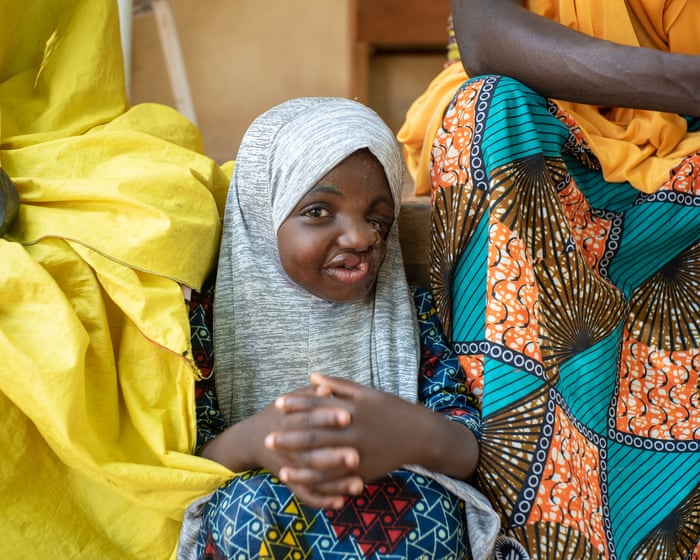
Researchers say the “astonishing” discovery of a new bacteria could lead to better ways to prevent, detect, and treat a deadly and disfiguring childhood disease.
Noma is fatal in 90% of cases if left untreated. It starts as a sore on the gums and then destroys the tissues of the mouth and face.
The disease mainly affects young, poor, and malnourished children. It has been called the “face of poverty.” Survivors are left with permanent scarring and disfigurement. Data on noma is incomplete, but experts estimate there are tens of thousands of cases each year. Most are reported in Africa’s Sahel region, but the disease also occurs in other parts of the world.
Noma can be successfully treated with broad-spectrum antibiotics, which points to a bacterial cause. However, the exact cause of noma—classified as a neglected tropical disease—has never been confirmed.
Researchers led by the Liverpool School of Tropical Medicine studied the bacteria living in the mouths of noma patients. They used samples from 19 children in Nigeria.
Modern genetic analysis showed an unbalanced community of microbes. Levels of normal, healthy bacteria were low, while other strains were much higher. Further analysis revealed a previously unknown species of Treponema bacteria in most of the noma patient samples.
When PhD student Angus O’Ferrall presented the results—after putting the data together and finding the species in the samples—Prof. Adam Roberts, a senior author on the study, called it “a great reveal.” He said, “I was astonished.”
The scientists then reanalyzed older samples from other noma patients and found the same Treponema bacteria—currently called Treponema A—in those samples too.
“We don’t know causality,” Roberts stressed. “We don’t know if it can colonize a noma wound because of the wound’s structure and environment, or if it actually causes the wound.”
The team is now trying to answer that question with a larger study. They will use samples from more noma patients and healthy people in the same communities across several countries.
According to Roberts, once noma reaches its tissue-destroying stage, patients have only two outcomes. Either they are treated quickly with antibiotics—”and you usually get a good recovery, but with major disfigurement, and that brings lifelong stigma and social exclusion—or death. We want to stop it from reaching that point.”
Roberts hopes that in the future, a test for children with gingivitis that detects Treponema A could save them from either fate.
“Right now, the only thing we have is a clinical diagnosis based on symptoms. That can be a foul smell or holes in the skin and tissues,” he said. “But if we know that Treponema A, for example, is always or 99% linked to the development of noma at the gingivitis stage, then we could detect it and treat it early with antibiotics to stop it from progressing.”
Roberts added that the current treatment for noma uses broad-spectrum antibiotics, which risks increasing antimicrobial resistance. A targeted treatment aimed at a specific bacteria could reduce that threat.
He also noted that the drop in healthy bacteria seen in noma patients raises the possibility of “a potential preventive intervention” using probiotics.
The study was published in PLOS Neglected Tropical Diseases. It also included researchers from the University of Liverpool, Médecins Sans Frontières, and the Noma Children’s Hospital in Sokoto, Nigeria.
Dr. Michael Head, a senior research fellow in global health at the University of Southampton who was not involved in the study, said the findings are a useful first step toward understanding a devastating disease.”Currently, this is a mysterious condition.” “A different version of the Treponema bacteria causes syphilis, which is known as a sexually transmitted infection, but it can also cause sores and ulcers in the mouth.”
Professor Philippe Guérin, director of the Infectious Diseases Data Observatory at the University of Oxford, agreed that the study is “a valuable starting point and should help spark more interest from both researchers and funders.”
Frequently Asked Questions
Here is a list of FAQs based on the topic An astonishing discovery could help save children from a deadly disfiguring condition
BeginnerLevel Questions
1 What is this astonishing discovery about
Its a new medical breakthrough that could prevent or treat a rare severe condition that kills or disfigures children The discovery likely involves a new drug gene therapy or early detection method
2 What is the condition its trying to save kids from
The condition is likely a genetic or birth defect that causes severe physical deformity and can be fatal if not treated early Examples might include certain types of craniofacial disorders or rare metabolic diseases
3 How does this discovery help children
It may stop the condition from progressing reverse some damage or allow doctors to catch it before it causes permanent harm The goal is to save lives and prevent the disfigurement
4 Is this treatment available now
Probably not yet for the general public Most astonishing discoveries are in early research or clinical trials It could be years before it becomes a standard treatment
5 Why is this considered astonishing
Because the condition was previously thought to be untreatable or always fatal The discovery offers a real chance to change that outcome
IntermediateLevel Questions
6 Is this discovery a new drug a surgery or a genetic fix
It could be any of these but many astonishing breakthroughs involve gene therapy or a new drug that targets the root cause of the disease Some might be a new surgical technique
7 How does this discovery actually work
It likely targets the specific biological process that causes the disfigurement and death For example it might block a toxic protein repair a missing enzyme or correct a gene mutation before birth
8 What are the biggest challenges to making this widely available
Safety testing longterm side effects manufacturing costs and getting approval from health agencies Also finding children early enough to treat them
9 Can this help children who already have the disfigurement
Possibly if the discovery can reverse damage or stop it from getting worse For children already affected it might improve quality of life or prevent further harm