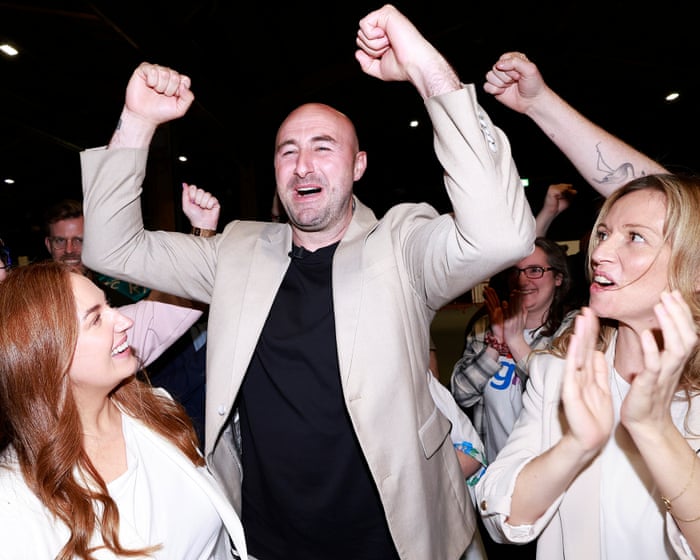
Gerry “the Monk” Hutch, a well-known figure in Irish organized crime, failed to win a seat in a Dublin byelection. The 63-year-old came in fourth place, while Daniel Ennis of the Social Democrats won the contest—a win for progressive politics in a campaign focused on the cost of living and immigration.
Hutch, who has been identified in court as the leader of a criminal gang and was jailed for robbery as a young man, ran as an independent candidate. He called for “illegal immigrants” to be held in camps and specifically targeted people from Somalia.
In the Dublin Central constituency, Hutch received 2,817 first-preference votes—11.3% of the total—which rose to 4,466 after votes from eliminated candidates were redistributed. He finished behind Ennis, who got 12,050 votes in the final count, Sinn Féin’s Janice Boylan with 7,787, and the Green Party’s Janet Horner with 5,452.
The election took place on Friday, with results announced on Saturday. Ennis promised to bring “deep humanity” to the Dáil and said he would do his best to represent everyone in the Dublin Central constituency.
Hutch’s defeat was a relief for establishment candidates, who feared his fame and notoriety, along with public anger at the government, might lead to a surprising result. However, Hutch and another anti-immigration candidate, independent councillor Malachy Steenson, increased their share of first-preference votes compared to Ireland’s 2024 general election, in which both also ran.
During the campaign, former Fianna Fáil Taoiseach Bertie Ahern was secretly recorded telling a voter he was worried about Muslims and people arriving from Africa. “We can’t be taking in people from the Congo and all these places,” he said. Current Taoiseach Micheál Martin distanced his party and the government from those remarks.
The byelection was held to fill the seat left by Paschal Donohoe, a finance minister from the ruling Fine Gael party, who left the Dáil for a job at the World Bank.
With government coffers boosted by corporate tax revenues, the centrist Fianna Fáil and Fine Gael coalition has increased public spending. But rising prices and a housing shortage have sparked protests and resentment.
The Social Democrat victory raised questions about Mary Lou McDonald’s leadership of Sinn Féin, the main opposition party, which also failed to win a seat in a Galway byelection. McDonald told reporters she felt “no pressure” and that the party would keep building. “I would humbly suggest to you that when a general election comes, when a general election lands, watch and see how we perform.”
Vote counting in Galway resumed on Sunday, with Noel Thomas of the group Independent Ireland holding a narrow lead over Fine Gael’s Seán Kyne.
Hutch has been a notorious figure for decades. A court named him as the leader of an organized crime group, and he has admitted to committing crimes. “Some of them I got away with,” he told RTÉ in 2008.
Frequently Asked Questions
Here is a list of FAQs about the Irish gangland figure who failed to win a seat in a Dublin byelection
BeginnerLevel Questions
Q Who is the gangland figure who ran for parliament
A He is a wellknown criminal with a history of gangrelated activity in Dublin
Q Did he win the election
A No he failed to win a seat He received a significant number of votes but finished well behind the winning candidates
Q Why was someone with a criminal record allowed to run
A In Ireland anyone over 18 can run for a Dáil seat as long as they meet basic legal requirements A criminal record does not legally disqualify someone from being a candidate
Q What is a byelection
A Its a special election held between general elections to fill a single seat that has become vacant
Q How many votes did he get
A He received a significant number of firstpreference votes often in the thousands but not enough to be elected He was eliminated on later counts
AdvancedLevel Questions
Q What does this result say about the relationship between organized crime and local communities
A It shows that some gang figures can gain a level of support often by offering community services or by exploiting local grievances However the failure to win suggests that most voters still reject criminal influence in politics
Q Could his campaign be considered a form of criminal infiltration of politics
A Experts see it as an attempt to gain legitimacy and protection While not a direct infiltration of a major party it shows how criminals try to use democratic processes to clean up their image and gain influence
Q How did mainstream politicians react to his candidacy
A They universally condemned it Major parties urged voters not to support him and some called for a review of election laws to prevent similar candidates in the future
Q What legal changes might come from this event