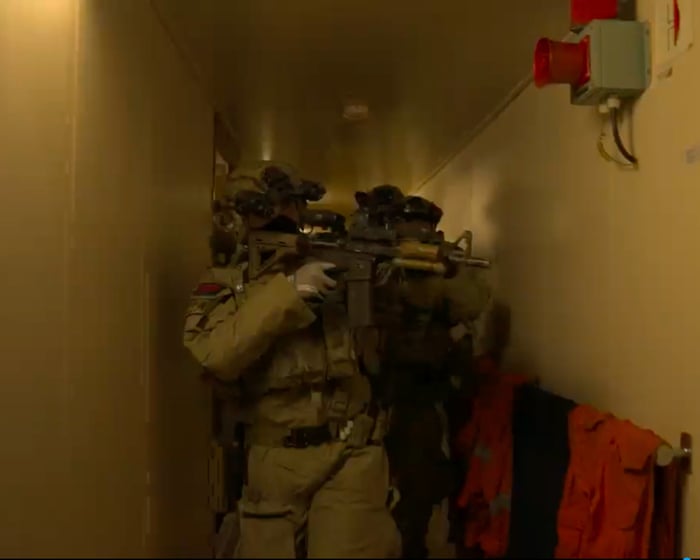
British armed forces intercepted and boarded a Russian shadow fleet oil tanker in the English Channel early on Sunday, Keir Starmer has confirmed. In a six-hour operation—the first of its kind led by the UK—Royal Marine commandos and officers from the National Crime Agency boarded and took control of the vessel, the Smyrtos, which was sailing under a Cameroonian flag.
According to the tracking website Marine Traffic, the ship is now anchored off the coast of Dorset, near Weymouth. Authorities said it would be monitored for any environmental or safety concerns.
British officials say the Smyrtos is one of 700 vessels in a shadow fleet that carries 75% of Russia’s oil exports, which are under international sanctions. Analysts say this fleet provides Russia with a critical lifeline, allowing it to sell oil and generate funds to continue its war against Ukraine.
The operation on Sunday morning was the first time the UK had led such an effort, having previously supported the French military when it carried out a similar operation in the Atlantic.
Writing on X, Starmer said he had directed UK armed forces to intercept the oil tanker as it tried to sail into the Channel. “This successful operation delivers yet another blow to Russia and reminds those fuelling [Vladimir] Putin’s war in Ukraine that we will not let them hide,” the prime minister said. “I want to thank those involved, including our armed forces and law enforcement officers who keep this country safe 24 hours a day, 365 days a year.”
Dan Jarvis, who became defence secretary on Thursday after John Healey resigned, said: “Operations like this require skill, professionalism and courage. I pay tribute to our armed forces personnel and all those involved. Russia relies on its shadow fleet to fund their conflict in Ukraine, and our interdiction delivers a blow to Putin’s illegal war.”
The Ministry of Defence said the military operation had been supported by aircraft from the Maritime Air Group (chinooks, Merlin Mk4 and Wildcat), an RAF P-8 aircraft, as well as the navy vessels HMS Sutherland and HMS Ledbury. Calling it a “blow to Putin’s war chest,” the MoD said the operation had been “conducted in close cooperation with the French.” It said the UK was a leader in tackling the shadow fleet, having already placed sanctions on more than 500 vessels. “These sanctions are working,” the ministry said, with Russia’s oil and gas revenues falling by 24% year-on-year in 2025.
Starmer announced in March that he had granted permission for the British military to board ships under sanctions that were passing through UK waters.
Writing on LinkedIn, the attorney general, Richard Hermer, said: “This government made clear that we would pursue Russia’s shadow fleet under the full force of international law. Russia relies on their shadow fleet tankers to fund their conflict in Ukraine, and this expertly delivered interdiction strikes another blow at Putin’s war machine. I pay tribute to the extraordinary courage and professionalism of our armed forces personnel, and everyone else involved.”
Speaking to the BBC, Al Carns, who resigned as armed forces minister on Thursday night, said: “While we were sleeping safely last night, there were marines and navy and air force personnel boarding helicopters, flying low level over the sea, rearing up before the ship, fast roping on to the ship, securing it, and then taking it into our territorial waters. An amazing operation, excellently prosecuted by our Royal Marines and others.”
Asked why action like this had not been taken before, Carns said there had previously been a Russian frigate in the Channel protecting the fleet.Some of those ships were coming through. “It was about getting the right conditions so that everything—from legal issues to the cargo—met the requirements for boarding,” he said.
“We’ve actually helped lots of other countries carry out these boardings—America, France, and others. And I think now that the first one has happened, we’ll probably see more, if the opportunity comes up.”
Frequently Asked Questions
Here is a list of FAQs about the British armed forces stopping a Russian shadow fleet oil tanker in the English Channel written in a natural clear tone
BeginnerLevel Questions
Q What actually happened with the oil tanker in the English Channel
A British armed forces stopped and boarded a Russian oil tanker in the English Channel This was part of an effort to enforce sanctions against Russia
Q What is a shadow fleet
A Its a group of old often poorly maintained oil tankers that Russia uses to secretly transport oil They do this to avoid Western sanctions and price caps on Russian oil
Q Why did the UK stop this specific tanker
A The UK suspected the tanker was part of the shadow fleet violating international sanctions Stopping and inspecting it is a way to enforce the law and disrupt Russias ability to fund its war in Ukraine
Q Was this a military attack or a fight
A No It was a law enforcement action The armed forces boarded the ship to inspect its cargo and documents not to engage in combat Its like a police traffic stop but at sea
Q Is this a common thing for the British navy to do
A Its becoming more common Since the war in Ukraine started the UK and its allies have stepped up patrols to catch ships breaking sanctions Stopping a shadow fleet tanker is a highprofile example
IntermediateLevel Questions
Q What specific laws or sanctions was the tanker breaking
A The tanker was likely violating the G7 price cap on Russian oil and EUUK sanctions that ban the transport of Russian crude oil using Western services By using a shadow fleet Russia tries to sell oil above the cap
Q How did the UK know this tanker was part of the shadow fleet
A They use intelligence from satellites ship tracking data and reports from allies Shadow fleet ships often turn off their tracking change their names or transfer cargo at sea to hide their movements
Q What happens to the tanker and its crew after its stopped