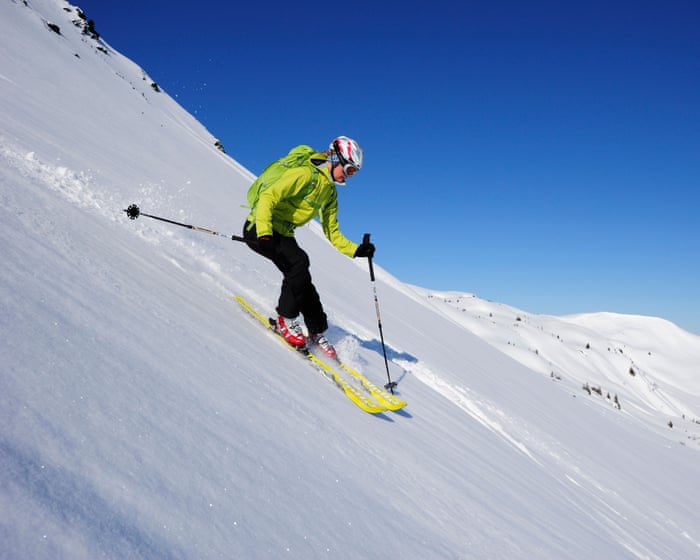
Many avalanche accidents happen right after a storm, when the sky clears and people head into the backcountry to enjoy fresh powder. These accidents occur every year, even though warnings are given to those heading into the snow. It’s easy to call some behavior reckless, and sometimes it is—but it’s also just human nature, and it’s nothing new.
I’ve been there too; I’ve made mistakes and been lucky. When I was about 18, I was freeriding with my brother. We suddenly changed direction toward a beautiful, untouched powder field. It felt magical, until we realized we were heading straight for a 100-meter cliff. We turned back just in time, and moments later, a huge avalanche released exactly where we had been and went over the edge.
This winter in the Alps has seen a very high number of deadly avalanche accidents, leading to headlines about “unstoppable walls of snow” and a widespread search for answers. As of now, the death toll for the season, starting from October 1, is 146. This isn’t unheard of, but it’s clearly above average—and more than double the number in some recent years.
This season has shown that even very experienced people, like mountain guides, ski patrollers, and professional riders, can end up in dangerous situations. So what went wrong?
The snowpack was especially tricky. The season started early, with snowfall in November. Then came a long dry spell, with very little precipitation but extremely cold temperatures and many sunny days. This is the perfect setup for what we call “persistent weak layers”: snow crystals turn into large, fragile grains that don’t bond well.
Then, when snowfall finally returned in January, it came in relatively large amounts. Usually, with new powdery snow, we recommend being patient and waiting a few days before heading into backcountry terrain, so the snow has time to bond with the rest of the snowpack and become more stable.
But this year, the situation was more complicated. The new snow became denser and stuck together, forming what we call a “snow slab” that covered the weak layer from earlier in the season. Basically, the snow slab was resting on a very fragile house of cards, always at risk of collapsing.
This season’s avalanche accidents show how hard these weak layers are to manage and predict: an avalanche can be triggered from a locally thin or weak part of the snowpack, or after a sharp, high-pressure turn or a fall by a skier on top of it. While these unstable conditions aren’t visible on the snow’s surface, they’re usually well described in the daily avalanche bulletin. Most of the time, the relevant safety information is out there.
In fact, given how tricky this winter’s snowpack was, the number of fatalities isn’t notably high everywhere. In Switzerland, we’ve had 18 fatalities so far, while the 20-year average is about 21 per year. So is it luck? Or have we provided better avalanche bulletins, improved rescue operations, and educated more people? Probably a bit of everything.
We shouldn’t ignore the human side of the problem. After long dry periods, frustration can build up. So when the snow finally returns, some skiers want to take advantage right away, chasing those first tracks or the perfect powder turn to share on social media. We saw some striking scenes this year. In Verbier in February, for example, dozens of people were skiing the same steep slope together, despite clear warnings of high avalanche risk. They ultimately triggered an avalanche that buried several people. Luckily, everyone was rescued.
Again, this behavior isn’t entirely new—what may be changing is the scale. There are more people in the mountains, more accessibility, more equipment, and more tourism.This also increases overall exposure.
Then there’s the climate factor. What we saw this season—long, dry, very cold periods followed by heavy snowfall—matches what we expect from climate change: more variability, more extremes, longer dry spells, and short, intense snow events. We might see more seasons with these persistent weak layers, leading to more complex and dangerous avalanche conditions.
Education is still key to reducing deaths in the future. In recent years, there’s been a big push to improve avalanche awareness in Europe through courses, outreach, academic teaching, and role models who promote cautious decision-making on social media.
But there’s still a gap in public understanding. I think we need to focus more on consequences: not just the chance of triggering an avalanche, but how much snow could be released, how to avoid risky terrain, and how to plan a safe tour. The White Risk app is a great example of a tool that gives the detailed information people need.
For anyone heading out with skis or a snowboard, the message is simple: carry avalanche safety gear and practice using it regularly. Terrain choice is always crucial, especially when there’s a persistent weak layer. That means avoiding slopes steeper than about 30 degrees, and staying away from areas where avalanches from above could reach you. It also means paying attention to warning signs: recent avalanches, collapsing snowpacks, and the classic “whumpf” sound that tells you a weak layer is failing beneath you. If you hear a whumpf as you approach a slope, that’s a clear sign—it’s time to go home.
Managing avalanche risk effectively isn’t always popular. It requires patience, and sometimes accepting that you shouldn’t ski the best lines. In avalanche terrain, the goal isn’t to win the day—it’s to keep playing the game.
Johan Gaume is an ex-pro snowboarder and a professor of alpine mass movements at ETH Zürich and SLF Davos.
Do you have an opinion on the issues raised in this article? If you’d like to submit a response of up to 300 words by email for possible publication in our letters section, please click here.
Frequently Asked Questions
Here is a list of FAQs about the recent spike in avalanche deaths in the Alps written in a natural tone with clear direct answers
BeginnerLevel Questions
1 Why are avalanche deaths suddenly so high in the Alps this season
The main reason is a very unstable snowpack We had a long dry spell followed by heavy snowfall and strong winds This created a weak sugary layer of snow at the bottom with a heavy slab of new snow on topa perfect recipe for large deadly avalanches
2 What exactly is a snowpack and why does it matter
Think of a snowpack as a stack of different snow layers built up over the winter If those layers are bonded weakly the whole stack can slide off a mountain slope A stable snowpack means the layers are bonded well
3 Are these avalanches just bad luck or is there a clear cause
Its not just bad luck The cause is very clear a dangerously weak layer deep in the snowpack This makes the mountains extremely sensitive Even a single skier or snowshoer can trigger a massive slide from a distance which is unusual
4 Im a beginner skier Should I avoid the Alps entirely this season
You dont need to avoid them but you must be extra cautious Stick to groomed open ski runs that are avalanchecontrolled Never go offpiste without a professional guide and proper training
5 Whats the difference between an avalanche that releases naturally and one that is triggered by a person
A natural avalanche happens on its own A humantriggered avalanche is set off by a skier snowboarder snowmobiler or hiker stepping on the weak layer This season most of the deadly slides have been triggered by peopleoften from a distance
AdvancedLevel Questions
6 What is a persistent weak layer and why is it so dangerous this year
A persistent weak layer is a fragile snow layer that stays unstable for weeks or even months This year its a layer of faceted snow or depth hoar