MikeFest happens every year over the August bank holiday weekend, in a big leafy garden on the Cornish coast. The birthday boy, Michael, has his closest friends and family show up in their sparkliest outfits, as the invitation asks, with tents tucked under their arms. Masks with his face on them are handed out, along with handheld fans and sippy cups that have each guest’s name on them. There’s organized fun, including a talent show that everyone has to take part in. Michael always wins first place with his interpretive dance routine.
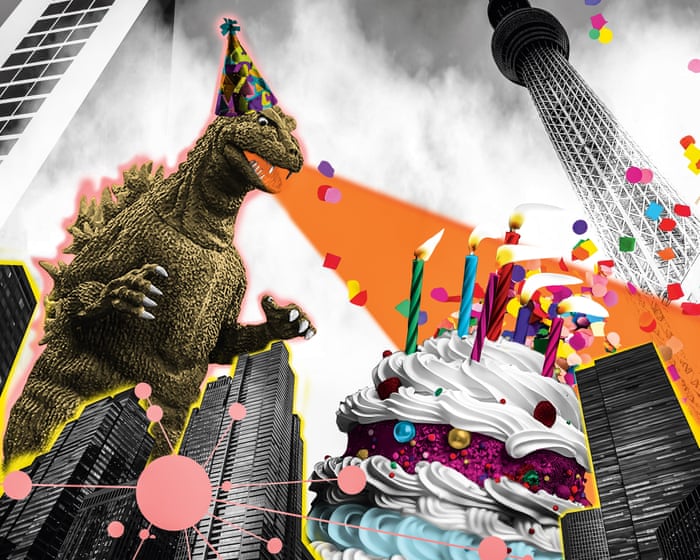
Michael isn’t turning 10; he’s about to be 44. And he’s fine with being called a “birthdayzilla,” admitting he’s guilt-tripped friends who couldn’t make it and banned anyone who misses two festivals in a row from coming to future ones. But he’s quick to defend other people who are just as obsessed with their birthdays. “It doesn’t feel like there’s much to celebrate these days, and it’s harder than ever to get people together. So yes, I’m strict about my birthday,” he says. “I just think: I’ve managed to build a life I like and a group of people I love, so why not make a big deal out of it? I don’t think asking them to show up for me once a year is too much.”
You might still be waiting for a ticket to MikeFest, but I’m sure you’ve noticed how birthday culture has blown up. Maybe you’ve been added to a group chat you didn’t ask for, with a title full of cake emojis. Or maybe a save-the-date arrived on fancy cream-colored card with just one name in cursive writing. Adult birthday parties are getting bigger, flashier, and more meaningful, now competing with weddings for the top spot in our social plans. When did they become such a big deal?
Where a slice of cake used to be enough to mark a new age, now it’s common to throw a fully catered party, get your friends involved in a bunch of activities, or plan a group trip abroad. Lauren, a 29-year-old from Edinburgh, has already used up all her annual leave. “I’ve been to eight 30th birthdays this year, and the most low-key one was a dinner in a private room that still cost me £100,” she says. “I’ve been to a castle in Scotland for a murder mystery weekend; a house party where we all did a quiz about the birthday girl; a weekend of live music in Marseille; and a night out with a salsa lesson and karaoke. It’s draining my bank account, but once you say yes to one friend’s birthday, it feels really awkward to say no to another. And you start to think you deserve the same back, so you plan your own huge event and become part of the problem.”
Oyinda’s 30th birthday sippy cups, with each guest’s name and ‘Mykonos 2024’ on them. Photograph: courtesy of Oyinda
Lauren has seen firsthand how quickly a birthday can turn someone into a tyrant. One of her friendships is barely hanging on after an old schoolmate got angry at her for announcing she was pregnant during their “birthday month.” “There’s something about the main-character energy of my generation – we’re all the stars of our social media profiles, and we all like a bit of attention – but I think we’re going overboard,” she says. “Not all these big birthdays are about appearances, but a lot of them are, and that’s when the time and money you have to spend as a guest starts to get annoying.”
Birthdays are very emotional because they act like mirrors. As American historian Howard P Chudacoff wrote in his 1989 book How Old Are You?, they “provide a milestone by which individuals can compare their status, accomplishment and appearance with other people who are the same age. It’s kind of like a train: are you ahead of time, on time or behind time?” For some, they’re a day to get through as quietly as possible, while others see them as a life-affirming moment to bring all their loved ones together. There seems to be a gender difference: according to a YouGov poll, women are twice as likely as men to see a big birthday as aA chance to celebrate. Michael (of MikeFest fame) wonders if this comes down to “the outdated idea that throwing a party or openly asking for what you need” – namely, some company on your special day – “is somehow unmanly.” But the clearest divide is generational, with people in their 20s, 30s, and 40s far more likely to treat their birthday as a big deal.
For this generation, the traditional milestones that used to mark this stage of life have become harder to reach – and in some cases, less appealing. The latest ONS data shows the number of people getting married in England and Wales keeps falling year after year, and among those who do marry, the average age is at a record high: 34.8 for men and 33 for women. Last year, the birthrate hit its lowest since 1977, and the average age of a first-time homeowner rose to 34. There are many reasons, from political failures to the deeper cultural shifts happening around us, but the common thread is financial pressure.
Oyinda sent save-the-dates almost a year ahead of her 30th: four days in Mykonos that she wanted to treat “like a wedding.” Her guests arrived at a villa decorated with her childhood photos and received personalized gift bags and a printed schedule that included a meal from a private chef, a boat trip, and several beach clubs – all of which she saved up to help pay for. “Growing up, I thought I’d have hit lots of milestones by 30, but for people my age, things like getting married and buying a house take a lot of money,” she says. “We still want to embrace life experiences and feel celebrated, even if we haven’t achieved those things. I wanted to go all out for my 30th and be as extra as possible, to celebrate how much I’ve grown and the friends I’ve made over three decades.”
Krisha, who flew to the Dominican Republic for a week of hiking, safaris, horse riding, and massages to mark a new friend’s birthday, feels the same way – why not “spend on a bucket-list experience” when saving for a house deposit feels pointless? She also points out the double standard when you’re rallying around one person versus a couple. “I find it interesting that when I tell people I flew across the world for a birthday party, they say it’s crazy, but if it’s for a wedding, they don’t question it.”
Where people put their money is changing, but what about when you simply can’t afford it? Polly from the Midlands felt backed into a corner by her friend’s many invitations, which started to feel like a test of their friendship. “She had several events planned for her 40th, from a trip to Portugal to smaller pub get-togethers. She wanted to spread things out over the year, but it came with a lot of guilt for me,” Polly says. “I really struggled to tell her I couldn’t afford that much. I had so much anxiety trying to figure out what to say and what excuse to use. I feel like I’ve now been placed in a different category from her other friends who earn high salaries – I can always tell that the ‘no pressure’ comments are aimed at me, and I feel like the poor friend holding the group back.”
She and the birthday girl have known each other for a long time, but the different importance they each place on birthdays has made Polly pause. “I love seeing my friend have fun, celebrate herself, and live her best life, but it’s a bit much just for a birthday,” she says. “To me, age and numbers are arbitrary. I’d rather celebrate achievements or special occasions: engagements, weddings, promotions, babies. Personally, I’d always keep things small. An evening laughing over wine, a perfectly chosen card – those are more than enough.”While there is evidence that pharaohs threw feasts in ancient Egypt, the adult birthday party is actually a fairly recent trend. It started gaining popularity in the West around the 1900s, when wealthy people used it to show off their social status. Anna Goldfarb, a friendship expert and author of Modern Friendship: How to Nurture Our Most Valued Connections, says that commercial venues helped make these flashy celebrations more common. “Most of our grandparents would have spent their birthday with family at home, but in the 70s and 80s, suburban businesses like cinemas and fast-food chains started offering kids’ parties to make more money,” she says. “Those kids grew up thinking that a birthday means a big gathering where you get lots of attention. Huge parts of pop culture, like MTV’s My Super Sweet 16, have only reinforced the idea that you should get to be a prince or princess for a day.” Many coming-of-age traditions, from bar and bat mitzvahs to quinceañeras, have also become linked to big parties.
Of course, adding social media to the mix has made things even more intense. We see thousands of other people—including the ultra-rich and those desperate for attention—celebrating themselves, and our plans for a simple picnic in the park start to feel less exciting. Our sense of what’s normal gets skewed by Dua Lipa dancing on a chartered yacht for her 30th, or Kris Jenner being serenaded by Bruno Mars at 70. Even for those of us who aren’t millionaires, being visible online raises the stakes on a day that can already feel like a test of how much we’re loved.
“I have seen adults have full meltdowns, and they’re not bad people, they’ve just got these very fixed ideas of how the day should go,” says Tom, a photographer based in Brighton. “Recently I was hired to work a party and the person re-did their entrance three times, because the crowd wasn’t screaming loudly enough. She actually grabbed a microphone to shout at her friends and family: ‘That will look shit on TikTok, do it again.'”
The behavior of some birthday divas can cause lasting damage to their reputation. Oliver’s cousin wanted her garden party to look perfect, but her obsession with appearances rubbed him the wrong way. “She had quite a specific dress code: she wanted everyone to dress in an outfit inspired by her, because she’s had many wild fashion eras. But the week before the party she became this monster on WhatsApp, demanding to see pictures of everyone’s outfits and giving us notes,” he says.
“Things got worse the day before, when she sent this long message saying that the expense of hiring a marquee and decorations and huge floral arrangements was higher than she’d realized, and could we all bring £50 in cash to chip in. It was the tackiest thing, and it put people in a bad mood. But you wouldn’t know it from all the staged photos of us laughing and nursing the one watery cocktail we were handed. The whole thing just left a bad taste because it was like she cared more about pulling off this Pinterest board vision than actually spending time with us.”
Even when you’re not modeling your event on the Met Gala, a mismatch between expectation and reality still stings. Amina, who was raised in a family “that didn’t really do Christmas but always made a big deal of birthdays,” invited 100 people to a London park to play games and celebrate her 30th. When the forecast said rain, she moved it indoors to a bar—and only 10 people showed up. “I didn’t want the people who were there to think I was ungrateful or a brat, but they could tell I was hurt. I don’t want to needI used to rely on other people’s validation to feel good on my birthday, but it made me overthink why my friends were so quick to cancel. Looking back, Amina realized that “some people just don’t pay attention to birthdays the way I do. I was really upset with one close friend who showed up hours late and couldn’t even remember how old I was. Then I remembered a time when I’d just gotten back from backpacking, had no money, and was working at a café. The waiter brought over chai and a samosa, and it turned out that same friend had called and arranged it. They’ve shown they care in other ways, so maybe it doesn’t make sense to judge our whole friendship on one day.”
Goldfarb thinks the importance we place on birthdays now reflects a bigger social shift in how we connect with each other. “Friendships used to be built on favors and shared circumstances—what researchers call ‘social identity support.’ Your friends were people who lived nearby, knew your family, and would help you out in a crisis,” she says. “But now we tend to hire help for those things: we call an Uber to pick us up from the airport or pay someone to watch our cat. Our friendships are more about fun and enjoyment, so the group trip or party becomes the main event. Plus, we move around a lot more. We can have friends who know nothing about where we grew up or what we’re like at home, and we crave that deeper connection that comes from shared context.”
This is why, even if you’re not usually one to seek attention or love big gatherings, you might still want a birthday that brings all the different parts of your life together. “I think people are throwing more elaborate events to recreate that sense of being part of a connected community. Having the friend from school meet the colleague, or the cousin meet the partner, means being recognized for all the roles you play in your life. It makes you feel complete,” says Goldfarb.
That rings true for Kejal, who’s planning her next birthday as a way to celebrate the people around her. “Turning 40 feels different from other birthdays. At this age, I know exactly who lifts me up, and my friendships reflect who I am,” she says. “What I want most is for the weekend to be about real connection, not just a big dinner and a hangover. I want us to leave with lasting memories.”
We live in a time where we have less that feels truly ours. Fewer of us own homes we can decorate to reflect our style, and even things like music and movies are streamed rather than owned. Against that backdrop, it makes sense that people use their birthdays as a way to express who they are. For Kejal, it’s “my chance to celebrate the achievements of the last 40 years, to have the people who’ve supported me in the room, and to say thank you, properly, in a way that’s uniquely me.”
Despite stories of pressure and drama over party plans, most people who go all out for their birthdays are after the same thing: meaningful time together. Maybe the only way to get everyone you love in one place these days is to promise them a great time. Or, at the very least, a fun talent show. Some names have been changed.
Frequently Asked Questions
Here is a list of FAQs about the rising trend of extravagant birthday parties and the financial burden they place on guests
1 What exactly is a Birthdayzilla
A Birthdayzilla is someone who takes their birthday celebration to an extreme level Instead of a casual dinner or small gettogether they plan massive elaborate eventsoften involving destination travel dress codes multiday itineraries or expensive activitiesand expect their friends and family to foot the bill or go to great lengths to attend
2 Why are these huge birthday parties becoming so popular now
Its a mix of social media pressure the rise of experiences over material gifts and a postpandemic mindset of YOLO People are also waiting longer to have big weddings or buy houses so they are pouring that savedup time and money into milestone birthdays instead
3 Is it really that expensive for guests
Yes it can be Costs can include flights hotel rooms Ubers meals at expensive restaurants specialty cocktails split costs for a private chef or venue and buying a gift on top of it all A single weekend birthday can easily cost a guest 500 to 2000 or more
4 Im a guest Am I obligated to pay for the birthday persons meal or share of the venue
You are not obligated but it is often the unspoken expectation If the Birthdayzilla invites you to a prixfixe dinner or a rented villa they may assume everyone will split the total cost evenly including their share If you cant afford it you need to set a budget and speak up early or decline the invite
5 Do I have to buy a gift if Im already paying for a flight and hotel to attend
No you absolutely do not have to Standard etiquette dictates that if you are spending a significant amount of money to travel and participate in the event that is your gift A nice card or a small personal token is more than enough
6 How do I say no to a Birthdayzilla invite without ruining the friendship
Be honest and direct but keep it about you not them Say something like Im so honored you asked me but thats just not in