Two countries on NATO’s eastern border have warned that Russia may be preparing a possible “provocation” in the Baltic states or Poland, aiming to test the unity of the Western military alliance. Western sources also fear that danger could be on the horizon, as the Kremlin faces pressure from Ukraine’s long-range attacks on targets near Moscow and St. Petersburg.
On Monday, Latvian intelligence stated: “We see signs that Russia is preparing military provocations against the Baltic countries or Poland.” However, they noted it would fall far short of a full-scale attack. A senior political source from another NATO member made a similar statement last week, saying, “We are picking up intelligence” that Vladimir Putin was “planning something against the Baltic states.”
They suggested Putin might be willing to test U.S. support for some of NATO’s smallest members—Estonia, Latvia, and Lithuania—in a desperate attempt “to roll the dice” as Russia struggles with its invasion of Ukraine.
On Thursday night, Poland’s prime minister publicly shared his own concerns. “We also share, without exception, the opinion that the situation is very unstable and various types of escalation can be expected in the coming weeks and months,” Donald Tusk said at a press conference after the Eastern Flank summit in Gdansk. “We want to prepare as a group of countries directly exposed to this risk.”
Latvian intelligence said Russia is not capable of opening a second front but is considering “hybrid attacks, such as missiles, drones, or other actions designed to send a signal: stop supporting Ukraine, or you will have your own problems.”
Although the warnings seem connected, there was only limited supporting detail, unlike the detailed warnings released by the CIA and MI6 before Russia’s full-scale invasion of Ukraine in February 2022. But they come at a time when Russia’s advance in Ukraine has stalled, raising questions about whether the Kremlin would turn to alternative strategies to break the deadlock or shift the dynamics in its favor.
Keir Giles, a Russia expert at the Chatham House think tank, said: “Moscow will be looking for ways to disrupt the current trend, through horizontal escalation [spreading the conflict to other countries] or doing something elsewhere. We should not expect Russia to passively lose.”
Russia’s relative weakness was highlighted this week when drone relay stations in Belarus stopped operating after Ukraine threatened to attack them. Ukraine’s president, Volodymyr Zelenskyy, had given Belarus a one-week warning last Friday, saying the equipment enabled Russian attacks on his country. One Telegram channel reported that authorities in the Brest and Gomel regions of Belarus had demanded mobile operators dismantle the repeaters because they were interfering with grouse nesting sites.
NATO will hold its annual summit in Ankara, Turkey, this month amid uncertainty about U.S. commitment to the alliance. On Wednesday, Donald Trump said he felt “let down” by European allies who did not allow the U.S. air force to bomb Iran from airfields in their countries.
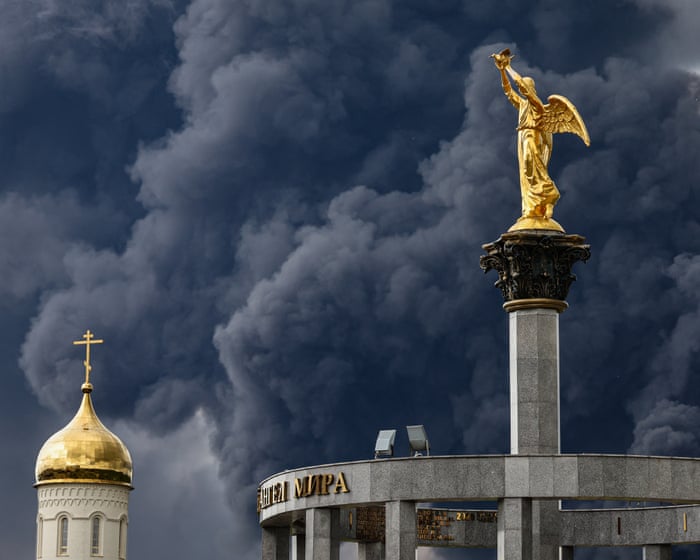
Since the start of the full-scale invasion of Ukraine, there have been several waves of Russian sabotage and provocative activity, including the planting of firebombs in DHL parcels in the UK, Poland, and Germany in the summer of 2024. Last September, 19 Russian decoy drones crossed into Polish airspace, prompting NATO to scramble jets to try to shoot them down as people in three eastern provinces were told to shelter indoors. Ukraine has gradually developed…They developed a homegrown deep-strike attack capability that can hit targets up to 2,000 kilometers inside Russia. Last week, nearly 200 drones struck several locations in Moscow, and black oil rained down on parts of the Russian capital after a refinery was bombed.
A Western military source said there were concerns that Russia could strike back if Putin felt pressured, as the war moved to the skies over Moscow and St. Petersburg. “I can’t lie, that’s a dangerous period,” they said.
Fears of a possible Russian escalation also emerged in the fall of 2022, when a sudden series of setbacks in Kharkiv province led Western officials to worry that Moscow might even use a nuclear weapon to defend itself. But there was no evidence of steps toward an actual deployment, and the front line stabilized by the end of the year.
Frequently Asked Questions
Here is a list of FAQs about the reported possibility of a Russian provocation in the Baltic states or Poland written in a natural clear tone with direct answers
BeginnerLevel Questions
1 What does provocation mean in this context
It means a deliberate action designed to create a crisis cause a military overreaction or destabilize a countrywithout launching a fullscale invasion Examples could be a fake border incident cyberattack on infrastructure or a staged attack on Russian speakers
2 Why would Russia do this
To test NATOs response create division among allies distract from its war in Ukraine or justify further aggression It could also aim to weaken public trust in local governments
3 Which countries are most at risk
Estonia Latvia and Lithuania and Poland These are NATO members bordering Russia or its ally Belarus
4 Is this a threat of an actual war
Unlikely to be a full invasion Provocations are designed to stay below the threshold of triggering NATOs Article 5 However they could escalate if mishandled
5 How would a provocation actually happen
Common scenarios include a fake shelling of a Russian border post a massacre of Russianspeaking civilians staged by false flags a sudden military drill near the border or a cyberattack on power grids or banks
IntermediateLevel Questions
6 What is Article 5 and how does it relate to this
Article 5 is NATOs mutual defense clause an attack on one member is an attack on all A provocation aims to create ambiguitymaking it unclear if the incident is a genuine attack or a fake one so NATO hesitates to respond
7 How do intelligence sources know about these plans
Through intercepted communications satellite imagery of unusual troop movements human intelligence from within Russian security services and analysis of past Russian tactics
8 What are false flag operations
Actions carried out by one party while pretending to be someone else For example Russian agents might attack a Russian border post while wearing Ukrainian or Polish uniforms then blame the victim
9 Could a provocation trigger a direct NATORussia war
Yes