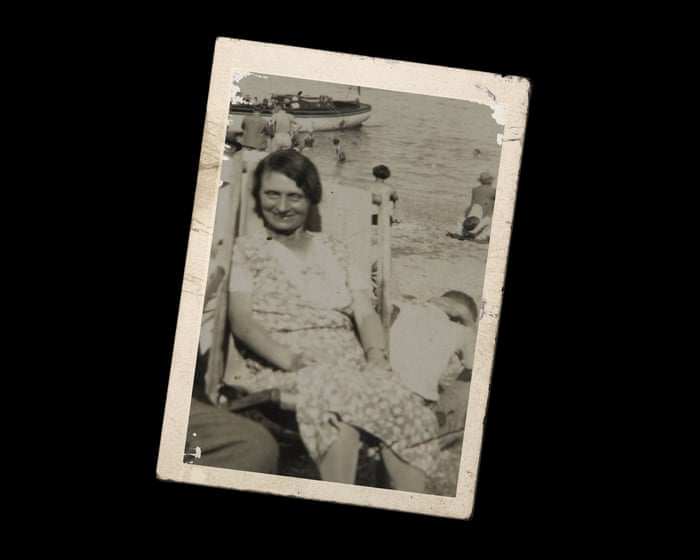
Mary first heard about gay hockey romance when her son advised her against it. As a 64-year-old non-profit executive from Toronto, she had asked her son—a queer writer in his twenties who shares her passion for hockey—if he knew about Rachel Reid’s Game Changers series. When she asked if she should read the books, he simply replied, “No. They’re not for you.”
Mary trusted his judgment. She sees herself as a skeptic, hasn’t touched a romance novel since tossing a Danielle Steel book aside in frustration decades ago, and insists she’d need to be “hogtied” to sit through a Hallmark Christmas movie. “I’m divorced. I’m old. I’ve had men and romance in my life,” she explained. “When I watch TV, I just think, that’s not how it happens. No.”
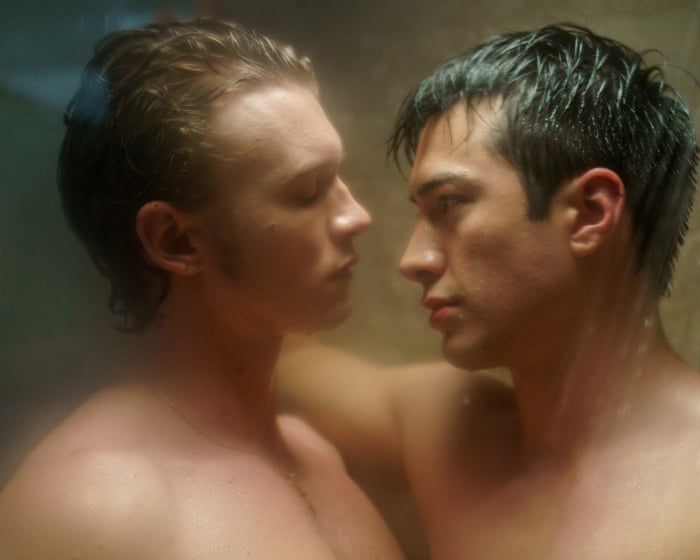
But everything changed late last year when gay hockey romance surged into the mainstream, fueled by the steamy TV adaptation of Reid’s Heated Rivalry on the Canadian streaming service Crave. Mary, who prefers to go by her first name, discovered that an explicit love story between two men was, in fact, very much for her.
“I admit I may have rewatched it more than once,” she said. “It’s super sexy. They’re fabulous to look at. There’s a huge emphasis on consent. I’d really love to have that feeling again—the ‘I can’t keep my hands off you’ kind of passion.”
Women of all backgrounds—straight, queer, cisgender, transgender; young and old, single and partnered, from Canada, the U.S., and beyond—are falling hard for the love story between Shane and Ilya, two closeted professional hockey players on rival teams. Their intense chemistry spans a decade as they gradually open up to the possibility of love.
But what does it say about gender dynamics today that so many women are drawn to gay romance? The overwhelming popularity of Heated Rivalry suggests that for many, the real fantasy isn’t sex and romance with mythical creatures, but sex and romance free from misogyny and rigid gender roles. If the only way to find that in today’s media is through stories without female characters, they’re willing to embrace it.
The Women Who Love Men Who Love Men
Lillian King might seem like an unlikely fan of a show that opens with a locker room seduction scene and features tender, intimate moments. A writer for NPR’s Wait Wait… Don’t Tell Me!, King is 30, straight, engaged, and describes herself as “sex-negative” when it comes to media. She’s uneasy about onscreen kissing and prefers the subtlety of classic literature—like Tolstoy’s suggestive “dot, dot, dot” approach to sex scenes. “When my fiancé told me about that scene with Timothée Chalamet and Gwyneth Paltrow in the ping-pong movie, I thought, ‘I don’t need to see that.’”
But King decided to give Heated Rivalry a try after learning it featured a song by the indie band Wolf Parade. She planned to have it on in the background while doing laundry, but instead, she was hooked. “I inhaled the first three episodes and ended up being late to meet a friend,” she said. “I couldn’t let it go. I was just so into it.”
The show seems to intentionally portray being gay as inherently masculine, offering a vision of masculinity that is both strong and non-toxic, free from anxiety or aggression.
King is amused but untroubled by her newfound appreciation for gay romance. “There was a moment when I thought, ‘Wait, why is this hot?’” she recalled. “Well, of course it’s hot. If I find one attractive guy appealing, imagine two together…”The fact that many women enjoy watching gay male relationships on screen isn’t new—PornHub reports that nearly half of its gay porn viewers are women—but the fandom for Heated Rivalry might be the first mainstream North American example. As the show’s audience has grown, HBO data reported by the New York Times shows it has become even more female-dominated.
TikTok and Instagram are filled with videos of female fans crying over scenes from The Cottage or expressing how the tender longing between characters Shane and Ilya contrasts with their own frustrating dating app experiences. Lesbian and women’s sports bars are hosting marathon viewings of all six episodes; one bar promoted its event with the tagline: “Sapphics love a slow burn.” Jimmy Fallon recently compared the screaming crowd that gathered to watch his interview with Hudson Williams, who plays Shane, to the enthusiasm he’s seen for BTS and Harry Styles.
The show’s success has turned its leads, Connor Storrie and Hudson Williams, into breakout stars who presented at the Golden Globes.
I saw this fervor firsthand when I asked on social media for women who enjoy Heated Rivalry. I’ve never received so many responses so quickly. Some were longtime fans of MLM (men loving men) romance; others were new to finding gay storylines appealing. Many had already watched the series multiple times, bought the rest of Rachel Reid’s Game Changers book series, or planned to read only MLM going forward. A lesbian viewer called it home to “some of the all-time best kisses on TV.” A trans woman shared that, despite initial hesitation because people had pressured her to “just” be a gay man when she transitioned, she loved the show and has since downloaded all the audiobooks.
Some even said the gay and bisexual characters in Heated Rivalry made them reconsider dating straight men. “I’ve been single forever and off dating apps since August, but I’m ready to get back out there,” said Marie Stone, a 35-year-old social media manager from Philadelphia who mostly dates men. After watching the series “about 15 times,” she feels her brain has been “rewired—for the better.” “I’m open to dating and love again,” she said. “Thanks, Canada.”
Jacob Tierney, the Canadian showrunner who wrote, directed, and produced the series, knew the show’s chance at broad popularity depended on a demographic much larger than gay men. “I always said: ‘Once you film this, gay men will watch it—we’ll watch anything with gay men in it,'” he told Teen Vogue. (Much of the show’s promotion has targeted women’s outlets.) “We’re not wildly discerning in that way, and we’re starved for stories. But the secret fanbase of this is women, and that’s a much bigger target than just queer people or queer men.”
The genre of gay romance stories created by and for women goes by many names online: MLM, MM, slash fiction, boy’s love (BL), and yaoi, among others. But women producing and enjoying gay erotica predates the internet. “There’s a whole tradition of women, often lesbian women, writing historical fiction set in classical eras with strong man-on-man themes,” said Adrian Daub, a professor of comparative literature and gender studies at Stanford University. Mid-century writers like Mary Renault and Marguerite Yourcenar wrote novels exploring homosexual relationships.The settings of these stories are ancient Greece and Rome, and their audience is likely predominantly female, according to Daub.
Daub draws a direct parallel between the confident masculinity of the hockey players in Heated Rivalry and those classical literary depictions of gay love. “The show seems to intentionally emphasize that being gay is very masculine, which is exactly why people enjoy those classical romances where homosexuality is portrayed as a natural overflow of masculine energy,” he said. “It presents a vision of a non-toxic, non-anxious masculinity—one that doesn’t require constant affirmation from women.”
As one anonymous commentator noted, there is a conscious effort in these stories to explore who leads and who yields, how care and vulnerability are expressed, and how these roles can shift fluidly.
Clare Sears, a professor of sociology and sexuality studies at San Francisco State University, traces the origins of commercial MLM (men-loving-men) romance novels to fan fiction. This emerged in the 1970s and often featured fictional male pairings, most notably Kirk and Spock from Star Trek. At the time, same-sex relationships weren’t represented on television, but fans—mostly straight women—picked up on the erotic subtext between male characters and expanded on it in self-published zines and “slash” fiction (often shortened to “fic”).
The internet led to an explosion of fan culture and the development of websites like LiveJournal and Archive of Our Own (AO3), where slash fiction continued to show a strong preference for gay male pairings.
The cultural impact of fan fiction is undeniable. Fifty Shades of Grey began as Twilight fan fiction, and some Harry Potter fan fics have even surpassed the original in popularity within parts of the fandom. Commercial MLM book publishing, of which the Game Changers series is one example, evolved from the online appetite for MM fan fiction. (Author Rachel Reid initially published a draft of the first Game Changers novel as a Marvel fanfic, later replacing Steve Rogers and Bucky Barnes with the hockey captain and smoothie maker who start the series.)
This history points to MLM romance as a distinct genre with clear origins. “Gay romance novels are written by gay men for gay men,” Sears said. “In contrast, MLM romance novels, similar to slash fan fiction, are intentionally written by women for women. They tap into women’s fantasies and are exclusively about men having sex with men.”
Whether it’s problematic for women to read and write MLM romance is a debate that has been extensively discussed in online communities where such stories are shared. The debate became so pervasive that the MM_RomanceBooks subreddit instituted a blanket ban in 2021 on complaints about female authors and readers, arguing they were reductive and unresolvable. Some worry that female authors misrepresent the gay experience and that female readers objectify or even feminize gay men. In a recent TikTok about Heated Rivalry, gay, non-binary influencer Griffin Maxwell Brooks offered a conciliatory perspective: “When people say, ‘Oh, they’re fetishizing gay men,’ I’m like, ‘Girl, if anything they’re fetishizing men who are not abusing women, and I think we can’t be mad at that.'”
Perhaps the more interesting question is why so many women fantasize about gay sex in the first place. On one hand, the answer to “why?” might as well be “why not?” Sears noted, “Sexual fantasy is totally different from sexual identity. Many people enjoy fictional stories or fantasies that are really removed from who they are or what they want to do in real life.”
Still, stories that cater to our desires can reveal what those desires are—and that’s useful in a society that often prefers to tell women what they should want rather than listen to them. Scholars like Lucy [the text cuts off here].Neville, a lecturer at the University of Southampton and author of Girls Who Like Boys Who Like Boys: Women and Gay Male Pornography and Erotica, has identified something important, according to Sears: “Erotic stories that focus exclusively on men avoid the gendered power imbalances that shape intimacy between men and women, both in fiction and in real life.”
At a time of “tradwives,” Trumpism, and pundits scolding women to spend more energy addressing men’s loneliness, heterosexuality itself can seem to be in a death spiral. Women are acutely aware of the threat of sexual violence, the expectation to accommodate a male partner’s career, the ongoing rollback of reproductive and LGBTQ+ rights, and the frequent disappointment of sex and dating.
“Is having a boyfriend embarrassing now?” Vogue recently asked in an article about women who avoid posting about their male partners on Instagram. Others are swearing off men altogether, a phenomenon known as heteropessimism or heterofatalism.
Many major book-to-film franchises of the 21st century, like Twilight, Fifty Shades of Grey, and Bridgerton, exemplify extreme yet normalized gendered power imbalances—male vampire versus female mortal, male billionaire versus female mortal, male aristocrat versus female mortal—which Heated Rivalry defies. (Men who complain about the term “toxic masculinity” might consider what women find so compelling about Shane and Ilya’s relationship, but I won’t hold my breath.)
“This is our dream romance,” said Mary, who cited a lifetime of facing sexism and workplace inequality—starting with her first job out of college, where she was paid less because she was expected to marry and quit—to explain why Heated Rivalry felt so refreshing. “Number one: I wish I looked that good in the shower. Number two: that there was someone who was literally my equal.”
This was a common theme among the women who contacted me, some of whom had sought out MLM romance for years for this exact reason. “Without the default expectations, the power dynamics had to be negotiated more consciously,” one woman said. “In these romances, there is a conscious effort to identify who leads, who yields, how care and vulnerability are expressed, and it can shift more fluidly.”
The genre also allows women readers to explore their own sexual and gender identities. “This kind of MLM romance offers a more complex and fluid viewing position because you’re free to identify with either character or both,” said Sears. “Your identification isn’t predetermined by gender, so it opens up imaginative space for women to access more masculine parts of themselves or to fantasize about different sexual roles or scenarios.”
Daub described the dynamic as “the opposite of the friction one feels when realizing, ‘Oh, this isn’t made for me.’ It allows a certain viewer, usually women, to engage in a male gaze without a woman being offered as its object. You’re not having to think of yourself as an object of male power relations.”
“It’s extra fun and escapist for me to watch a relationship that is hard to possibly project myself into,” said Annie Vought.
In Heated Rivalry, nude male bodies are filmed with a lingering, appreciative gaze, while women keep their clothes on. Though early episodes mimic the gendered dynamics typical of straight romance—initially casting Ilya as the more experienced, emotionally withholding Russian top to Shane’s…The first episode of the season introduces a vulnerable and emotionally needy Asian Canadian bottom, while the third features a Cinderella story about a star hockey player and the smoothie-serving cater waiter he falls for. However, the second half of the season thoroughly upends these patterns.
It also helps that Shane and Ilya are wealthy enough to have almost all domestic tasks handled offscreen, likely by well-paid housekeepers, interior designers, and stylists. When these characters cook for each other, it carries purely emotional meaning.
Many women described to me the sense of freedom they found in Heated Rivalry and other MLM (male/male love) stories, allowing them to indulge in fantasy without the weight of their own experiences. “It’s seeing a romantic relationship where you don’t have to think about your own baggage and hurt,” one woman said. Women dealing with disability or chronic illness noted that MLM freed them from comparing their own bodies to those of traditional romance heroines.
“It’s extra fun and escapist for me to watch a relationship that is hard to possibly project myself into,” said Annie Vought, a 34-year-old bisexual woman from Seattle. “There is zero room for me personally to be like, ‘Wish that was me.’ I’m just like, ‘Get it, boys!'”
An Escape from Misogyny
For some women, the gender equality shown in Heated Rivalry is aspirational; for others, it’s a necessary refuge.
“The main reason I read MM is I just absolutely cannot stand reading or watching women suffer at the hands of men—in any way, big or small, anymore,” said Dawn Bovasso, a 49-year-old queer woman from Boston.
Bovasso is a voracious reader, estimating she reads 250 to 350 books a year, but she reached her limit with fictional portrayals of women after reading Fourth Wing, a hugely popular romantasy novel from 2023. Despite featuring a “strong female lead who is smart, fierce and brave,” Bovasso said the plot involves significant emotional abuse, disrespect, and poor treatment.
“I have never found one novel—romance or other—where the woman is just treated well from the beginning,” she said. Even lesbian romances, she noted, almost always include “women being treated with disdain and trauma when they’re at work and when they’re talking to their families and when they’re moving through life.”
The constant reminder of misogyny and inequality makes it impossible for her to relax and enjoy a story. That isn’t a problem with MLM in general, and Heated Rivalry in particular, Bovasso explained. “The women who are in it are all treated with respect. The men do their own emotional labor. It’s not on us to fix, defend ourselves, or worry. We, as women, can just watch this and relax.” She now reads almost exclusively MM and encourages other women to do the same: “I realized how much better these were for our psyche and our wellbeing.”
In MLM stories, “the women who are in it are all treated with respect. The men do their own emotional labor,” said Dawn Bovasso, a queer woman and avid reader.
The stark contrast between this imagined space free of gendered hierarchy and real-world attempts, like those by the Maga movement capitalizing on backlash to #MeToo to reinforce female subservience, provides meaningful context for Heated Rivalry’s runaway success.
Maya Lorey, a 30-year-old bisexual lawyer in Seattle, switched from literary fiction to romance novels at the start of the second Trump administration. She was clerking for a federal judge at the time and was “very, very keenly aware of the degree to which the judiciary was being dismantled and the rule of law was being attacked.” She began using Romance.io, a site where readers rank books by their level of explicitness, and by March 2025, she had read “easily” 40 gay hockey romances.
Romantasy, Bridgerton, audio porn.It’s a great time for women seeking steamy stories. Lorey enjoys how MLM romance subtly challenges traditional gender roles. “In typical heterosexual romance, women are often portrayed as the less powerful partner,” she explained, while MLM romances tend to show true equality between characters. “It reflects what women can—and should—expect and demand in their own relationships: genuine equality.”
However, no matter how many MLM novels she reads, Lorey remains acutely aware that the freedom for women and queer people to enjoy passionate, fulfilling sex lives is in serious danger. “It’s heartbreaking to get lost in these stories, knowing they felt more plausible just a few years ago,” she shared. “The current administration has made any sexual expression outside of straight marriage feel fundamentally unsafe. I believe if they could, they would reinstate laws criminalizing sodomy—and that’s absolutely terrifying.
“Maybe that’s why it felt like such a natural shift from books like Fourth Wing and other romantic fantasy novels to MM romance. This, too, is a form of fantasy.”
Frequently Asked Questions
Of course Here is a list of FAQs about why women are often so passionate about books written in a natural conversational tone
General Beginner Questions
1 Why do so many women seem to be such avid readers
Its a common passion because reading offers a powerful combination of escape emotional connection and selfdiscovery For many its a cherished form of metime and a way to explore different lives and perspectives from the comfort of home
2 Is this just a stereotype Do all women love reading
No not all women are passionate readersinterests vary widely However its a very visible and common passion because historically reading was one of the more socially acceptable forms of entertainment and intellectual engagement for women
3 What kinds of benefits do women get from reading
The benefits are universal but often deeply valued stress reduction increased empathy improved focus a sense of community mental stimulation and pure entertainment Its a lowcost highreward hobby
4 Why are book clubs so popular among women
Book clubs combine the love of reading with social connection They provide a structured way to discuss ideas share emotional responses to a story and build friendships turning a solitary activity into a shared experience
Deeper Dive Bookish Culture Questions
5 Why is there a huge market for romance novels specifically read by women
Romance novels are ultimately about hope emotional fulfillment and a guaranteed happy ending They focus on characterdriven stories emotional journeys and the fantasy of being deeply understood and valuedthemes that resonate powerfully
6 Whats the deal with BookTok and Bookstagram Why are they dominated by women
These platforms have created massive accessible communities where women can share recommendations gush over characters and find others who love the same books Its a digital extension of the book club making reading a highly social and visual hobby
7 Why do some women get so emotionally attached to fictional characters
Great writing creates empathy When a character is welldeveloped their struggles and triumphs feel real Investing in a characters journey can be a safe way to process complex emotions see personal experiences reflected or simply feel a deep sense of companionship