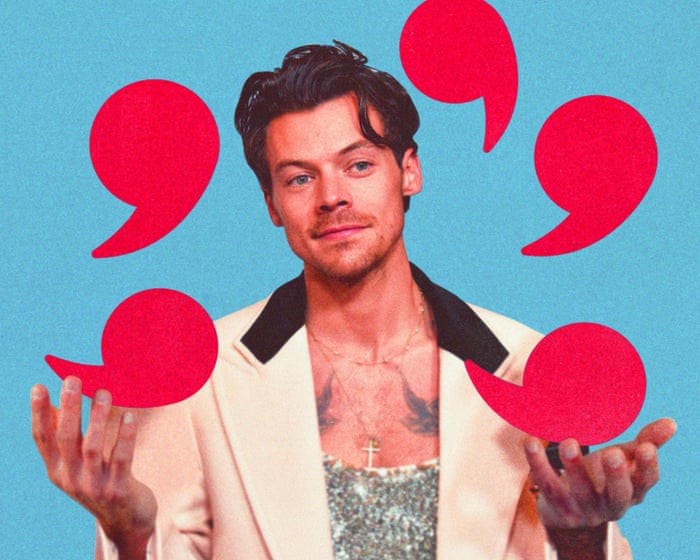
Vi ved ikke meget om Harry Styles' første album i fire år ud over titlen – og den har allerede vakt grammatisk bekymring.
Opfølgeren til det Grammy-vindende Harry's House fra 2022 har et mere esoterisk navn: Kiss All the Time. Disco, Occasionally. I en tid, hvor fans omhyggeligt analyserer alle aspekter af popstjerners liv, var det måske uundgåeligt, at Styles' valg af tegnsætning ville drage opmærksomhed.
Det centrale dilemma: er kommaet placeret korrekt? "Vi gennemgår en virkelig eksperimenterende periode med kommabrug," skrev @poeticdweller i et opslag på X med næsten 1 million visninger. En bekymring er, at de to sætninger ikke følger samme struktur: "Kommæet gør den anden sætning fra en parallel imperativsætning til et fragment, der vagt henviser til discos tilstedeværelse lejlighedsvis," bemærkede et andet opslag, en følelse der blev gentaget andre steder.
Dette rejser to spørgsmål: for det første, tog Styles fejl? Og for det andet, betyder det noget? (Spørgsmål tre er selvfølgelig: hvem bekymrer sig? Men det er rart med en afledning fra dagens nyheder.)
Hvad angår det første spørgsmål, er det sandt, at linjerne ikke er parallelle. Hvis Harry taler i imperativ, og beder os om at kysse konstant og også lejlighedsvis at disco – hvor "disco" bruges som et verbum – så ville det være konsistent at udelade kommaet. Men det betyder ikke nødvendigvis, at Styles lavede en fejl.
"Det er ikke en perfekt konstruktion efter vores grammatiske standarder, og det er sjovt," siger Britt Edelen, også kendt som @poeticdweller, som skrev det virale opslag og er ph.d.-studerende i engelsk ved Duke. Resultatet, bevidst eller ej, er at "det tilføjer noget energi til det, der ellers ville være kedeligt" og "passer ind i en større tendens med folk, der forsøger at udtrykke ting via kommaer på ukonventionelle måder." Han nævner Virginia Woolf – kendt for lange, kraftigt tegnsatte sætninger – som et eksempel; mere for nylig udelader filmen Die My Love et komma, hvor man måske ville forvente et.
"Jeg tror, amerikanere er overdrevent nøjeregnende med tegnsætning. De har en tendens til at være meget opmærksomme på regler og forbud," siger Ellen Jovin, forfatter til flere grammatikbøger og stjerne i roadtrip-dokukomedien Rebel With a Clause, hvor hun rejste landet rundt og mødte mennesker gennem samtaler om sætningsstruktur og tegnsætning.
Desuden er "disco" normalt ikke et verbum. "Når jeg ser 'disco, komma,' giver det mig en lille mental pause," tilføjer Jovin. Edelen er enig: kommaet blev sandsynligvis tilføjet for at "gengive talens rytme grafisk, som i: disco [pause] lejlighedsvis."
I den anden sætning har Styles "ændret ordklasser. Jeg arbejder nu med et navneord, og så er det på en måde legende," siger han. Kommaet fører til "en anden adverbial idé: ikke hele tiden, kun lejlighedsvis." Og Kiss All the Time. Disco, Occasionally. er surrealistisk sprog fra starten – du vil sandsynligvis ikke se sådan en sætning i en forskningsartikel eller en international traktat. "Folk forsøger at påtvinge standard sætningstegnsætning på noget, der slet ikke er det," bemærker Jovin.
Derudover betyder kontekst noget: dette er en albumtitel, ikke en engelsktime i gymnasiet. Selv i en engelsktime kan man se denne slags ting i en roman – "kommaer, som man ville stille spørgsmålstegn ved: 'Vent, det er ikke rigtigt. Det hører ikke til der,'" siger Jovin. "Dette er bare kreativitet, og jeg synes, det er perfekt."
Det visuelle betyder også noget her; måske kan Styles bare godt lide, hvordan kommaet ser ud, især i en verden, hvor vi ofte ser sang- og albumtitler vist mere, end vi læser dem. Og mere. I modsætning til fysiske medier eller tidlige MP3-filer, som tillod en vis brugerkontrol over metadata som sangtitler, fremviser musikstreamingapps nu hver sangs navn med kunstnerens valgte stil og tegnsætning. Kunstnere har omfavnet denne funktion i de senere år. For eksempel, på Billie Eilishs 2017-EP dont smile at me, var de fleste sangtitler med små bogstaver, mens hendes 2024-album HIT ME HARD AND SOFT brugte store bogstaver. Dijons 2023-album Baby inkluderer numre som HIGHER! og (Freak It). Ifølge en analyse fra Quartz, i den sidste uge af 2018, brugte otte af Spotifys Top 200 sange enten kun store eller kun små bogstaver; året efter havde "mere end 30 sange i en typisk uge" "ikke-standard stort og småt." (Quartz foreslår, at denne tendens er forbundet med den uformelle stil i sms'er.)
Det er vigtigt at huske, at grammatikregler er fleksible og varierer mellem stilvejledninger. Derfor er album- og filmtitler i denne artikel for eksempel ikke kursiveret eller sat i anførselstegn (se "titler"). I modsætning til, hvad vi måske lærer i skolen, er der ingen Officiel Global Konsortium for Korrekt Engelsk, der sender håndhævere ud for at straffe kommafejl. "Jeg tror, amerikanere er overdrevent nøjeregnende tegnsættere. De har en tendens til at være meget opmærksomme på regler og forbud," siger Jovin.
Det er ikke for at sige, at grammatik aldrig betyder noget, selvfølgelig. Mange regler er bredt accepteret af stilvejledninger og eksperter, med klarhed som nøglen. Overvej Guardian stilvejledningens eksempel på vigtigheden af et velplaceret komma: der er en forskel mellem at dedikere en bog "til mine forældre, Martin Amis og JK Rowling" og "til mine forældre, Martin Amis, og JK Rowling."
Når det kommer til en albumtitel, kan tvetydighed dog være hele pointen.
I et muligt tilfælde af nominativ determinisme viste Harry Styles tydeligt sin grammatikbegejstring til en koncert i 2015. Han rettede en fans skilt fra "your so nice" til "You’re so nice" ved at tilføje en apostrof og et E, skrev derefter "thank you – love, Harry" og returnerede det, hvilket efterlod ingen tvivl om beskeden. Hvis Styles er en grammatiknørd, var det kontroversielle komma sandsynligvis bevidst.
Ofte stillede spørgsmål
Selvfølgelig. Her er en liste over ofte stillede spørgsmål om den grammatiske korrekthed af albumtitlen Kiss All the Time. Disco, Occasionally.
Begynder-niveau spørgsmål
Spørgsmål 1: Er dette en komplet sætning?
Svar: Nej, det er ikke en standard sætning. Det er en stiliseret titel, der bruger sætningsfragmenter til kunstnerisk effekt, som et slogan eller en tanke.
Spørgsmål 2: Hvorfor er der et punktum i midten?
Svar: Punktumet skaber en bevidst pause, der adskiller to kontrasterende idéer: en konstant handling og en lejlighedsvis handling. Det får dig til at læse det i to dele.
Spørgsmål 3: Burde det ikke være "Disco Occasionally" uden komma?
Svar: Kommaet før "Occasionally" er grammatisk korrekt. Det fungerer som et indledende komma for adverbiet, tilføjer en lille eftertænksom pause, der fremhæver ordet "Occasionally".
Spørgsmål 4: Hvad betyder "Disco" her? Er det et verbum?
Svar: I denne kreative kontekst bruges "Disco" som et verbum, der betyder at gå til discodans eller engagere sig i discokultur. Dette er en legende og accepteret brug af ordet.
Spørgsmål 5: Er det okay, at en titel er grammatisk usædvanlig?
Svar: Absolut. Kunstneriske værker som album-, bog- og sangtitler bruger ofte kreativ grammatik, tegnsætning og store/små bogstaver for at skabe en specifik stemning, rytme eller brandidentitet.
Avanceret-niveau spørgsmål
Spørgsmål 6: Hvad er den grammatiske struktur af den første del, "Kiss All the Time"?
Svar: Det er et imperativt sætningsfragment med en adverbial sætning. Det underforståede subjekt er "du", og "All the Time" modificerer verbet "Kiss" og fortæller dig, hvor ofte du skal gøre det.
Spørgsmål 7: Hvordan bruger titlen parallelisme og kontrast?
Svar: Den etablerer en parallel struktur: [Verb] [Adverbialt udtryk]. Den kontrasterer derefter hyppighederne: "All the Time" versus "Occasionally". Dette gør den fængende og mindeværdig.
Spørgsmål 8: Kunne titlen betragtes som et eksempel på tmesis eller usædvanlig syntaks?
Svar: Ja. Den bruger usædvanlig syntaks til stilistisk effekt. Placeringen af punktumet og kommaet tvinger en specifik læserytme, som standardgrammatik ikke ville, hvilket er et almindeligt poetisk virkemiddel.