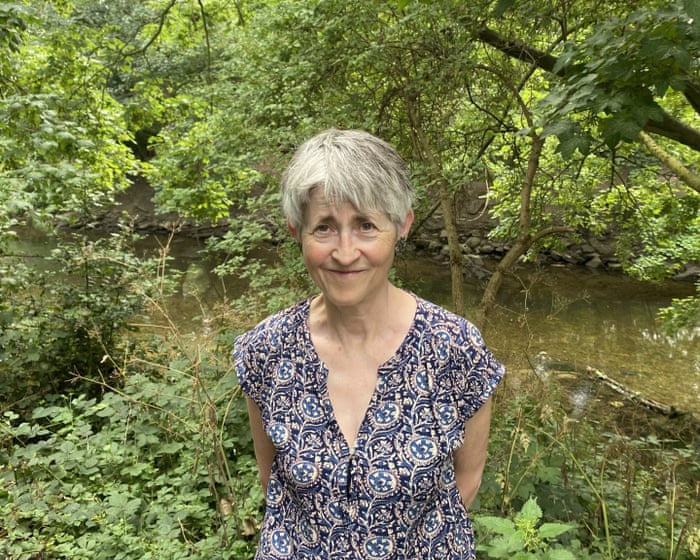
After my husband passed away, the birds started acting strangely around me. I’m not imagining it—it really happened. During my daily walks, I was surprised by how close they would come to me, hopping alongside me and chirping. When there were many of them, and no one else around, it felt like they were keeping me company, almost as if they were trying to tell me something.
For years, I had walked on the heath near our home with my husband. But his illness meant that, in his final months, he couldn’t walk with me anymore. When he died in January 2023, I had already been walking alone for six months, and I’m certain the birds hadn’t paid any attention to me before that.
Of course, I wondered if this might be a message from my husband. When you’ve just lost someone, it’s easy to cling to any sign that they might still be around. But in my husband’s case, I knew that couldn’t be true. First, he had told me before he died that he was sure there was no afterlife, and that it was completely irrational of me to think there might be. Second, he would never have chosen to come back as a bird. He was a big man who admired large, powerful animals. If he were inclined that way, he might have returned as a tall stag with many antlers, roaring at me from a misty mountainside. Or, perhaps more likely, since he could be gloomy, he might have come back as a moose or an elk, lumbering out of a dark forest at dusk.
One evening, a robin followed me home. I know robins often interact with people, perching on gardeners’ spades and making eye contact. But this robin hopped beside me for an unusually long time, watching me and seemingly accompanying me. In a moment of foolishness, I stopped and quietly said to the bird, “OK, if it’s you, follow me home.” At once, it flew away in a big fluttering rush.
Three months after my husband’s death, I went to France, to a small village in the foothills of the Alps. One evening, as I was climbing the outside stone staircase to my room, a young magpie appeared out of nowhere and perched on the banister beside me, making a huge fuss. It squawked, flapped its wings, and bounced up and down, clearly beside itself. Since it was less than two feet away from me, this was quite unsettling. I still don’t know what was upsetting it, but I do know that things like that never used to happen to me.
This made me start paying much more attention to my natural surroundings than I ever had before. I discovered the simple pleasure in a strangely shaped mushroom, or in the steady clicking sound of gorse bushes when the sun shines on them. I wasn’t skipping through the woods, feeling carefree—I was far too sad for that. But my need to walk every day, which I’ve always had, took on a new and deeper meaning.
Everywhere I went that first year, I looked for comfort in nature. I had to keep moving, whether walking on the heath or leaving home to travel. It was when I stayed still that the pain was worst.
Over time, I came to realize that when you walk in nature with someone you love, you observe it and enjoy it, but you’re somewhat separate from it. Your companionship creates its own little world. When you walk alone, you become more fully part of the world around you. So, no doubt, I was paying more attention to the birds. But I also think they sensed something was wrong with me—I was a wounded creature—and maybe they really were accompanying me.
Back home, there’s another robin who regularly tries to get my attention through the glass of the garden door. In the afternoons, an urban fox—always the same one, I recognize him by the scar on his forehead—snoozes in my garden. On many evenings, a mouse runs across the garden path at 8:30pm, always in the same direction.While overhead, through the urban dusk, flocks of green parakeets trace their familiar routes across the sky, heading home. Nature constantly reminds me how much there is still to discover in emptiness.
I relate to the natural world differently now that I’ve learned to see it as company. I still enjoy being around people, but with creatures, there’s no need for pretense. On the busiest night of the Perseid meteor shower, I got up at three in the morning and saw three shooting stars from my open bedroom window. The next day, someone told me it was a good omen—but I knew it wasn’t anything like that. It simply was.
This might all sound quite whimsical, but these moments have shaped my experience of living alone for the first time in 35 years. Still, as I walk in the woods, I sometimes imagine my husband laughing and rolling his eyes at how I told everyone that, after he died, the birds started acting strangely around me.
Frequently Asked Questions
Here is a list of FAQs based on the article title A moment that changed me when my husband died birds started acting strangely around me
General Background Questions
1 What is this article about
Its a personal essay about a womans experience with grief after losing her husband The central focus is on the strange behavior of birds around her during that time and how that unusual connection helped her process her loss
2 Is this a scientific article about animal behavior
No Its a firstperson narrative While it describes real events its more about the emotional and psychological experience of grief than a scientific study of why birds act a certain way
3 Why would birds act strangely around someone who is grieving
The author suggests it might be a reflection of her own altered stateshe was moving differently crying or spending more time outdoors in a daze However the essay leaves it open to interpretation allowing readers to see it as a spiritual sign a coincidence or a natural reaction to a change in her routine
4 What is the main takeaway or message of the story
The main message is that moments of profound grief can make us hyperaware of the world around us Sometimes finding meaning in small unexpected thingslike a bird landing nearbycan provide comfort and a sense of connection when we feel most alone
Questions About the Birds Behavior
5 What exactly did the birds do
The specific behaviors vary but they typically include birds flying very close to her landing on her porch or windowsill and staring at her or gathering in unusually large numbers when she was outside They seemed to be paying specific attention to her
6 Did the author think the birds were a sign from her husband
The essay is ambiguous She considers the possibility but she seems more grounded in the idea that the birds were a comforting presence that helped her feel less isolated rather than a direct message from the afterlife
7 Are the birds dangerous or aggressive
No the behavior described is not aggressive Its more about proximity and curiositythey are drawn to her but not attacking her Its a gentle strange and unsettling occurrence
8 How did the author react to the birds at first
Initially she was confused and a little unnerved It added to