Vladimir Putin’s marathon press conference on December 19, an annual year-end event, offered no indication that Russia might abandon the goals he set for the “special military operation” against Ukraine in February 2022: conquering Donetsk, Luhansk, Zaporizhzhia, and Kherson. True to form, Putin appeared unbothered that nearly four years into the war, his army has only fully occupied Luhansk, despite having already taken control of more than a third of that region, along with Donetsk, by 2015.
Putin’s unyielding stance should come as no surprise. Soon after the invasion, Russia’s State Duma passed legislation incorporating these four Ukrainian regions into Russia, and this month, Foreign Minister Sergey Lavrov and Deputy Foreign Minister Sergei Ryabkov reiterated Putin’s territorial claims.
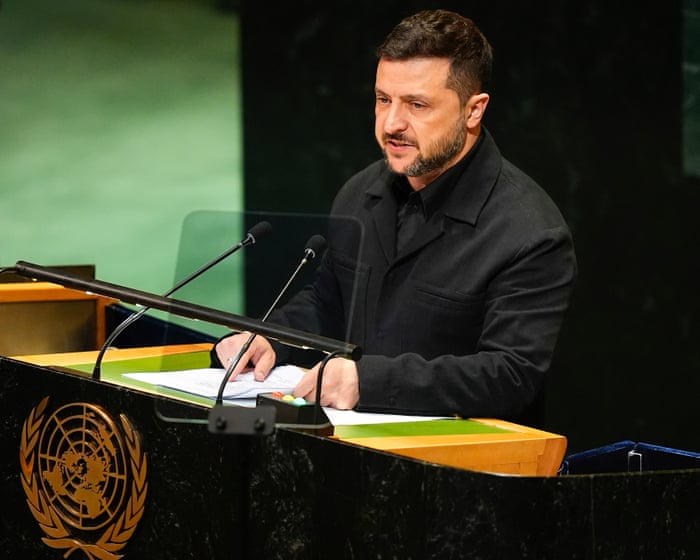
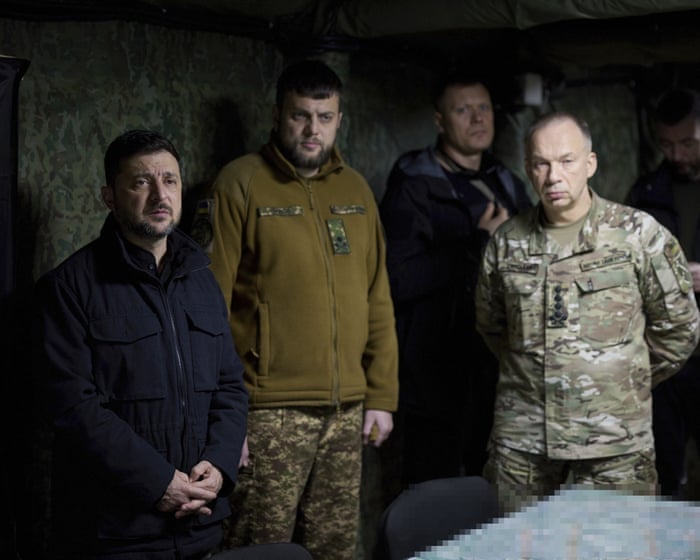
Russia’s inflexibility clashes with Donald Trump’s desperate efforts to reach a political settlement by Christmas. To meet his self-imposed deadline, Trump even tried to pressure Volodymyr Zelenskyy into surrendering the parts of Donetsk still under Ukrainian control. Though Zelenskyy refused, he was willing to end Ukraine’s years-long pursuit of NATO membership and adopt neutrality in exchange for solid Western security guarantees.
Zelenskyy’s shift will not placate Putin. Russia’s long-standing—and understandable—anxiety about NATO expansion predates him. But Putin’s 2022 war stems from something deeper, as there is no evidence that Ukraine was any closer to formal NATO membership on the eve of Russia’s invasion than it had been in 2008, when NATO declared at its Bucharest summit that Ukraine would join at some unspecified future date.
Just as in 2008, NATO countries remain divided on Ukraine’s candidacy, perhaps even more so. This matters: Article 10 of NATO’s 1949 founding treaty requires unanimity to admit new members. When NATO truly wants to expand, it can act quickly, as seen with the rapid induction of Finland in April 2023 and Sweden in March 2024, both of which applied in May 2022. To explain Putin’s motivation for invading Ukraine, we must consider grievances rooted in history.
He has repeatedly and at length stated that Ukrainians and Russians have been one people for centuries; that their separation into two states after the USSR’s disintegration was a tragedy; and that Ukraine’s south and east, home to large numbers of ethnic Russians or Russian-speaking Ukrainians, rightly belong to Russia. In short, Putin believes Russia was robbed.
Still, at his press conference, Putin praised Trump for being “absolutely sincere” in launching negotiations to end the war, adding that Russia remains committed to them and would halt its military offensive if its interests are taken seriously.
Putin’s flattery has a purpose and a susceptible target. Trump has praised Putin’s “genius,” blamed Ukraine for starting the war, and seeks a rapprochement with Russia that includes multibillion-dollar joint investments. He has backed Putin’s demand that Zelenskyy hold elections despite the war to demonstrate democratic legitimacy. Like Putin, Trump disdains Europe and would prefer a deal that sidelines Europeans and Ukrainians. These are all reasons for Putin to court Trump and deepen the divide between the U.S. and Europe.
Despite their convergent views and Trump’s sympathy for Russia, he has not produced a deal that suits Putin. Unless he does, the bloodshed will continue. It has already taken a terrible toll on Ukraine, which is unsurprising as it is by far the weaker side. The real surprise is the Russian army’s massive losses in casualties and equipment. Russia’s economy is also under increasing stress and barely growing, though it is far from collapse. But the hardships faced by Russians…Putin’s disregard for Ukrainian lives will persist as long as he believes his goals are within reach—whether through negotiation, by convincing Trump to pressure Zelenskyy, or on the battlefield.
Meanwhile, the EU has taken a significant step to reduce Russia’s chances of a quick victory by ensuring Ukraine’s finances remain stable. While the bloc initially hoped to use interest from frozen Russian assets to support Ukraine, that plan was blocked by opposition and reservations from some member states. Instead, the EU found an alternative: it will borrow €90 billion to fund Ukraine for two years, with repayment required only if Russia pays reparations—an unlikely scenario.
Media reports focused on EU disunity over the frozen assets, but the real story is that 27 often-divided nations still rallied to prevent Ukraine’s collapse. Just as Putin’s words signal the war will go on, the EU’s actions do the same. This decision also highlights Europe’s growing willingness to act independently, even if it creates distance from the U.S.
In August, Trump claimed Americans have no stake in Ukraine’s war because of the “big, beautiful ocean” separating them. Europe lacks that geographic buffer. Combined with Trump’s new National Security Strategy, which portrays Europe as troubled and less important to the U.S., this may have pushed European leaders toward more autonomous action.
Given Trump’s halt to direct military aid in March, European support alone may not secure a peace Ukrainians consider just. Yet this war has been full of surprises, not least that Ukraine’s army remains undefeated.
Europe has thrown Ukraine a lifeline, but illusions are dangerous. Ukraine continues to fight with its back to the wall against an adversary with far greater resources—and whose idea of compromise looks no different from surrender. Unless Russia shifts its stance on territory, Trump will not get the Christmas gift he wants. Both Putin’s rhetoric and the EU’s loan package make it almost certain the war will continue into next year.
Frequently Asked Questions
Here is a list of FAQs about the statement The EUs actions along with Putins rhetoric are both contributing to the continuation of the war in Ukraine
BeginnerLevel Questions
1 What does this statement mean in simple terms
It means that some people argue two things are prolonging the war 1 The specific policies and sanctions from the European Union and 2 The aggressive and uncompromising language and demands from Russian President Vladimir Putin
2 How could the EUs actions be making the war continue Werent they trying to help
This perspective suggests that while the EU intends to help Ukraine certain actionslike some sanctions that hurt the global economy or slow military aidmight create conditions where neither side feels enough pressure to negotiate seriously or might even harden Russias resolve
3 What is Putins rhetoric and why does it matter
Rhetoric refers to the language and arguments Putin uses publicly This includes his stated goals for the war his framing of it as an existential fight against the West and his refusal to acknowledge Ukraines sovereignty This matters because it sets nonnegotiable conditions making diplomatic talks very difficult
4 Isnt Russia the only one responsible for continuing the war
Legally and morally Russia is the aggressor who started the war This statement however is an analysis of factors that might be prolonging it suggesting other actors policies can unintentionally affect the conflicts duration even if they are not the cause
Advanced Analytical Questions
5 What specific EU actions are critics pointing to as problematic
Critics often cite dependency on Russian energy internal disagreements on the speedscale of weapons deliveries the potential for sanctions to fragment global alliances and cause blowback on European economies and any perceived ambiguity about Ukraines future EUNATO membership
6 How does Putins rhetoric directly prevent a ceasefire or peace talks
By consistently framing the conflict as a defensive war against an expanding NATO and a neoNazi regime in Kyiv Putin boxes himself into a corner Accepting a compromise could be portrayed domestically as a defeat making it politically risky for him to back down from his maximalist goals