When Pakistan’s most powerful man, Gen Asim Munir, stood in Riyadh last September, the world looked very different. The army chief was there to witness the signing of a historic defence pact with Saudi Arabia, which he had personally arranged with Crown Prince Mohammed bin Salman. To Munir, it seemed like a major strategic win: Riyadh would give cash-strapped Pakistan billions of dollars in vital investments and loans. In return, Pakistan agreed to train the Saudi military, and Pakistan’s armed forces would defend Saudi Arabia if its territory were ever attacked. Analysts say it was clear Pakistan assumed US-Iran relations would soon improve and that the risk of conflict spreading across the Middle East and the Gulf was low.
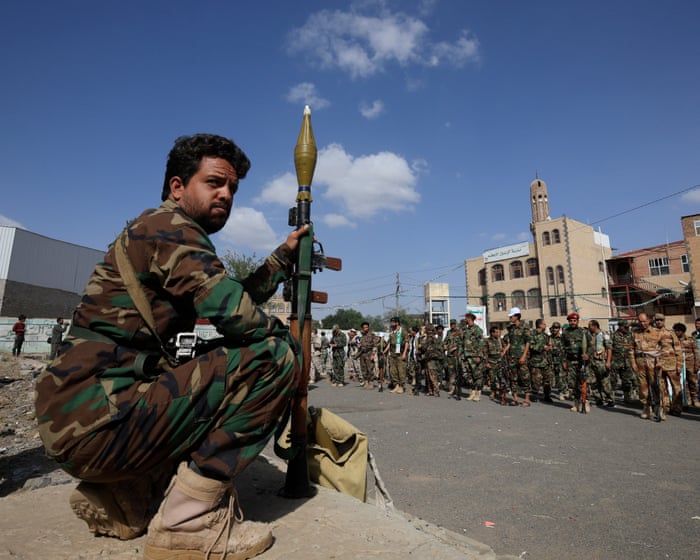
But a very different situation quickly emerged. By February, the Middle East was in flames after the US and Israel began bombing Iran – and Iran started firing missiles at Gulf states, including Saudi Arabia, in retaliation. It did not take long for the war to reignite Saudi Arabia’s conflict with the Houthis, the Iran-backed rebel group in Yemen, and for their fragile truce to collapse. Earlier this month, the Houthis made unprecedented territorial gains in Yemen and struck Saudi territory with attacks and drones. Saudi Arabia responded by heavily bombing Yemen. Some believe a return to full-scale war is coming.
Pressure is now mounting on Pakistan, especially on Munir. In August, the defence pact with Saudi Arabia was expanded to include Turkey and renamed the Mecca joint defence agreement. The countries agreed that an armed attack on any one of them would be treated as an attack on all three.
Ayesha Siddiqa, a defence analyst and senior fellow at King’s College London, said: “I don’t think Asim Munir properly calculated the threats the region was facing – and that Pakistan might need to put its troops on the line quite so soon.”
Saudi Arabia has tens of billions of dollars in fighter jets and war machinery, but it has no combat experience fighting the Houthis, who have proven to be tough, resilient fighters. Pakistan’s forces, trained to deal with the constant threat from India, would be highly valuable on the frontline.
Analysts say that if Saudi Arabia decided to activate the Mecca pact to fight the Houthis, Pakistan would have no choice but to send in its troops, including thousands already deployed in Saudi Arabia for training. Beyond being a defence partner, Pakistan is almost completely economically and geopolitically dependent on Saudi Arabia, which recently gave the country a lifesaving $8bn (£6bn) in funds and investments.
Last week, Pakistani government ministers and senior military figures made increasingly confident statements, confirming their “unconditional” commitment to the pact and saying Islamabad would go to “any extent” to defend Saudi Arabia.
But privately, officials in Pakistan are deeply worried about being dragged into the never-ending war unfolding across the Middle East. The country is already economically crippled, in a de facto war with the Taliban in Afghanistan, and facing an uncontrollable surge in militancy in its border areas.
To many, activating the Mecca pact would be seen as Islamabad taking a clear stance against Iran. Before the US and Israeli strikes on Iran, Pakistan had good relations with its neighbour – ties that Munir used to bring Tehran to the negotiating table in his attempt to secure a lasting ceasefire. But as the war has dragged on, Pakistan has become increasingly furious with Iran, while Tehran has little trust left in Islamabad.Iddiqa stressed that Pakistan joining the fight against the Houthis “would come with major repercussions.” After Iran, Pakistan has the second-largest Shia Muslim population, and they would likely protest any involvement in strikes on the Houthis.
Iran also has good ties with the Taliban in Afghanistan, which risks provoking one of Pakistan’s biggest security threats and making militancy and security problems along the Afghanistan-Pakistan border even worse.
It could also inflame Balochistan, Pakistan’s unstable border region with Iran, where a long-running and uncontrollable insurgency persists.
Raja Nasir Abbas, the opposition leader in Pakistan’s senate, said only a very few at the top of Pakistan’s military even knew what conditions and agreements were made in the Mecca pact. Since the military is Pakistan’s de facto ruler, the decision to join was not even put before parliament.
“It will be a disaster for the country if Pakistan jumps into war,” said Abbas. “We are already facing two deadly insurgencies; our economy is in shambles and inflation has skyrocketed. If we take Saudi Arabia’s side in this conflict, the country will face chaos, instability and religious division.”
So far, no one has been able to pinpoint what the “red line” would be that would force the pact to be activated. Analysts said Pakistan appears to be counting on Riyadh’s reluctance to enter open warfare with Iran by escalating its fight with the Houthis. Turkey has also made it clear it does not want to join the fray.
“Pakistan will do its best not to get involved in any incursion on Yemeni soil,” said Muhammad Amir Rana, director of the Islamabad-based Pak Institute for Peace Studies.
Speaking privately, one senior official said he did not think the Saudi crown prince “wants to activate the pact now.”
“If the kingdom plans to send its ground forces, Pakistan would support that,” he said. “But I don’t think Saudi Arabia would start a full-fledged war against the Houthis without American approval, and Trump has snubbed them. Right now, the US does not want to open another front; they prefer talking to the Houthis.”
He added: “You can’t predict the future though.”
Frequently Asked Questions
FAQs A Pact with Saudi Arabia Risks Pulling Pakistan into a Middle East Conflict
1 What pact with Saudi Arabia are we talking about
A reported mutual defense agreement between Pakistan and Saudi Arabia Under such deals if one country is attacked the other is expected to help defend it The concern is that this could drag Pakistan into Saudi Arabias regional disputes
2 What does a mutual defense pact actually mean
Its a formal promise that if one country is attacked the other will come to its aidusually with military support NATO is the most famous example
3 Why would Pakistan sign such a pact with Saudi Arabia
Pakistan and Saudi Arabia have deep ties religious economic and military Saudi Arabia has given Pakistan oil on deferred payments and financial aid Pakistan also sends many workers to Saudi Arabia whose remittances are vital The pact deepens an already close relationship
4 How could this pull Pakistan into a Middle East conflict
If Saudi Arabia gets into a warsay with Iran Yemens Houthis or in a broader IsraelIran escalationPakistan could be obligated to help That means Pakistani troops weapons or bases could get involved in a war far from home
5 Which conflicts are the main worry
Mainly the SaudiIran rivalry the war in Yemen and tensions between Israel and Iran Any of these could flare up and trigger the pacts obligations
6 Is Pakistan legally bound to fight for Saudi Arabia
It depends on the exact wording which hasnt been fully made public Many such pacts have escape clauseslike consultation instead of automatic military action So the obligation may be looser than it sounds
7 Doesnt Pakistan already have a defense relationship with Saudi Arabia
Yes Pakistani troops have been stationed in Saudi Arabia before and Pakistan has trained Saudi forces But a formal pact goes further by creating a public written commitment
8 What does Pakistan get out of it
Financial support oil supply security investment and diplomatic backing For a country with frequent economic crises thats a big incentive
9 What are the risks for Pakistan
Getting entangled in a war it didnt choose straining ties with Iran angering its own Shia population and spending scarce military and financial resources on someone elses conflict