Deep beneath London’s streets, thousands of miles from Caracas, the U.S. seizure of Nicolás Maduro has reignited a multibillion-dollar question: who controls Venezuela’s gold reserves held at the Bank of England?
While global attention has largely focused on Venezuela’s vast oil wealth—the largest proven reserves in the world—since Maduro’s ousting, the country also holds significant gold. This includes bullion worth at least $1.95 billion (£1.4 billion) frozen in Britain.
For years, these gold bars have been the subject of a legal battle in London courts, entangling the Bank of England and the UK government in Venezuelan politics and a geopolitical struggle that is now taking a new turn.
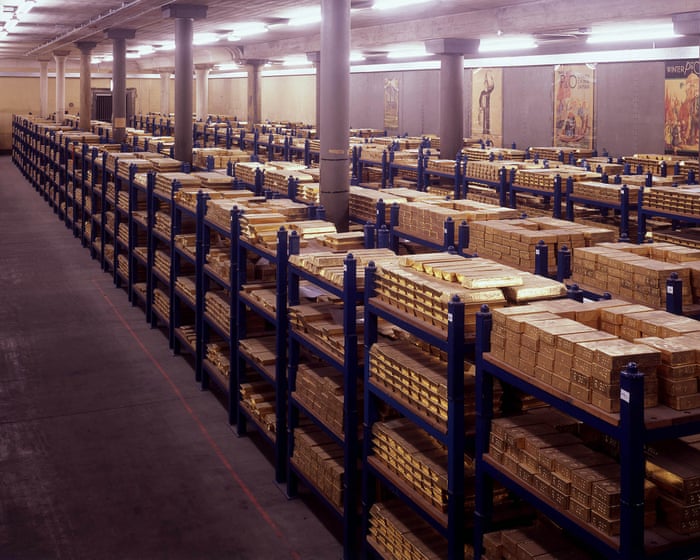
Venezuela holds about 31 tonnes of gold in the Bank of England’s vaults on Threadneedle Street, equivalent to roughly 15% of its total foreign currency reserves. UK court documents valued the gold at about $1.95 billion in 2020. Since then, the gold price has more than doubled, meaning the bars are likely worth considerably more today.
The practice of governments storing gold in Britain is not unusual; the bars have been held in London since the 1980s. The Bank of England keeps about 400,000 bars on behalf of governments and institutions worldwide, making it the second-largest global storage hub after the New York Federal Reserve.
However, since 2018, Caracas has been blocked from repatriating its gold amid political pressure on Maduro. This followed the disputed outcome of Venezuela’s presidential election that year and the imposition of U.S. sanctions by then-President Donald Trump.
Britain, along with dozens of other countries, did not recognize Maduro as Venezuela’s legitimate leader. Opposition figures at the time urged the Bank of England not to release the gold, arguing his administration would either steal it or use it to finance his authoritarian government.
A memoir by Trump’s former national security adviser, John Bolton, later revealed that the UK Foreign Office agreed to block the gold transfer at the request of the United States.
In 2020, Venezuela sued in London courts to recover the gold, with the Maduro government arguing it needed the funds for its pandemic response. However, the then-opposition leader, Juan Guaidó, also claimed control. The legal battle became more complicated after the UK government formally recognized Guaidó as interim head of state.
Despite multiple twists—and with Guaidó no longer recognized—the legal case remains unresolved.
Venezuela’s interim leader following Maduro’s deposition, Delcy Rodríguez, previously struck a defiant tone. During her time as Maduro’s vice-president, she labeled the Bank of England’s refusal to release the gold as “blatant piracy.”
In 2020, Rodríguez was involved in a scandal in Spain known as “Delcygate,” involving the alleged sale of $68 million in gold bars. This occurred after she took a surreptitious flight to Madrid to meet Spain’s transport minister despite an EU travel ban.
While Rodríguez has adopted a more conciliatory stance since Maduro’s capture, offering to work with the U.S., UK Foreign Secretary Yvette Cooper told MPs on Monday that Britain continues not to officially recognize the Venezuelan administration. She stated it was “important that we have the pressure in place to have a transition to a democracy.”
“Obviously there are independent decisions for the Bank of England to take, but our principles are about maintaining and pursuing the stability and the transition to a democracy, and that is what is guiding our approach to recognition,” Cooper said.
The freezing of sovereign reserves is not an issue unique to Venezuela.The trend of storing gold abroad is growing more contentious amid strained geopolitical relations, with an increasing number of countries seeking to bring their overseas reserves back home. Analysts see this as a key factor behind gold’s recent price surge, fueled by declining international trust in the U.S. under Trump and the erosion of the rules-based global order.
Following Vladimir Putin’s full-scale invasion of Ukraine in 2022, Western governments—led by the U.S. and including the UK and the EU—froze roughly $300 billion in Russian central bank assets. Most of these were held at Euroclear in Brussels, prompting pressure from Moscow on the Belgian government last month.
The first known instance of international sanctions targeting central bank assets is believed to date back to 1918, when the Soviet Union confiscated gold that Romania had shipped to Moscow during World War I. During World War II, Washington also targeted assets of Axis powers. Other examples include North Korea and Egypt in the 1950s, and Vietnam, Cambodia, and Iran in the 1970s.
The Bank of England declined to comment.
Frequently Asked Questions
Of course Here is a list of FAQs about Deep in the Vaults The Bank of Englands 14 Billion Venezuelan Gold Dilemma structured from beginner to more advanced questions
Beginner Definition Questions
1 What is this story about in simple terms
The Bank of England is holding about 14 billion worth of gold bars that belong to Venezuela The countrys government led by Nicolás Maduro wants it back but the UK and many other nations recognize a different opposition leader Juan Guaidó as Venezuelas legitimate president The Bank is caught in the middle of this political and legal dispute over who has the right to access the gold
2 Why does Venezuela have gold stored in London
Many countries store part of their gold reserves in the Bank of Englands vaults because its considered one of the most secure and politically stable locations in the world Its a longstanding practice for central banks to hold assets abroad
3 Who is Juan Guaidó and why is he involved
Juan Guaidó is the leader of Venezuelas opposition In 2019 following a disputed presidential election he declared himself the countrys interim president arguing that Maduros rule was illegitimate Over 50 countries including the UK US and most of the EU formally recognized Guaidó as the legitimate leader This recognition is central to the legal battle over the gold
The Core Dilemma Legal Issues
4 So who does the Bank of England think owns the gold
The Bank itself doesnt make a political decision It follows the guidance of the UK government Since the UK government recognizes Guaidó it has instructed the Bank not to release the gold to Maduros administration The Bank is essentially waiting for a final unambiguous legal ruling from UK courts
5 What does Maduros government want to use the gold for
The Maduro government has stated it wants to sell the gold to fund its response to the COVID19 pandemic including purchasing medicine and medical equipment through the United Nations Critics and the UK government fear the funds could be misappropriated circumvent international sanctions or be used to prop up the regime rather than help the Venezuelan people
6 Has there been a court case about this
Yes The case has been through the UK High Court