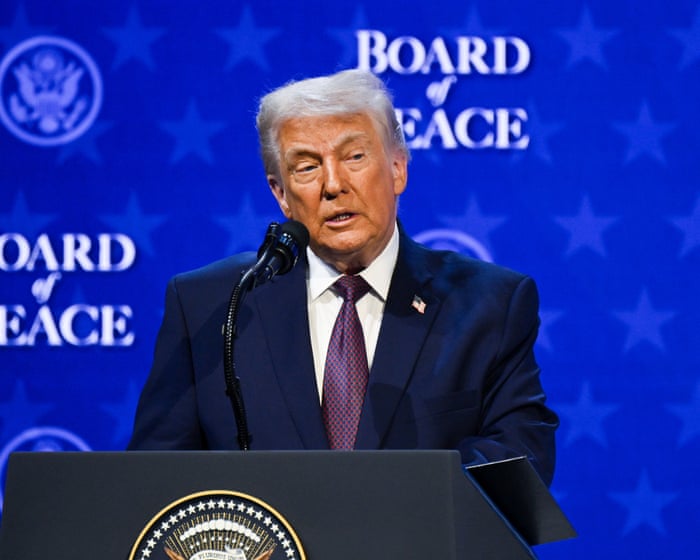
Donald Trump’s reversal was striking after days of escalating rhetoric, during which he had refused to rule out a military attack to seize Greenland. In his Davos speech, he reiterated his desire to own the island, arguing that you cannot defend what you do not own, only to then declare he would not conquer it by force. Hours later, he claimed to have reached an unspecified deal regarding Greenland and said he would therefore hold off on imposing additional tariffs on European countries that had dared to participate in a joint military exercise there at Denmark’s invitation.
We do not know the details of the framework agreement Trump reached with NATO Secretary General Mark Rutte, nor whether it carries any real weight given the U.S. president’s unpredictability. But it appears the deal, while open to discussing Arctic security, mineral rights, and possibly even the sovereignty of U.S. bases, maintains Greenland’s status within the Kingdom of Denmark. In short, this represents a remarkable U-turn.
Several factors may explain this reversal. Discomfort among Republicans and the American public over attacking a NATO ally, turbulence in global markets, and Rutte’s flattery are all possibilities. Domestic pressures in the U.S. likely played a role, though they were not yet strong enough to fully account for the sudden shift.
While Trump appreciates Rutte’s deference, it probably did not deter his ambition to be remembered as the first president since the late 1950s to expand U.S. territory. The market downturn offers a more convincing explanation. This is not the first time: Trump’s abrupt retreat on trade last spring, after his grandiose “liberation day” pronouncements, coincided with a market plunge and China’s refusal to back down, ready to retaliate in the trade war.
Yet markets do not care whether Greenland belongs to Denmark or the U.S., nor do they lose sleep over violations of international law. When Trump attacked Venezuela without even seeking a UN Security Council resolution, the market reaction was muted. Markets also remained calm when, shortly after, the U.S. threatened another war with Iran.
This time, markets reacted negatively—as they did in spring 2025—because Europe signaled it would not be a pushover again.
Everyone knows Europe does not hold the same cards as China in dealings with the U.S., and that the U.S. can hurt Europe more than vice versa. But Europe does have some leverage. Even the hint of using it, reopening the prospect of a trade war, sent shivers through the markets and pushed Trump to step back from the brink.
The lesson for Europeans is clear. For a year, they tried to placate, charm, and appease Trump. They offered him gilt-framed birth certificates, broke protocol to send royal invitations, played golf with him, and sent fawning text messages. They accepted a poor trade deal and agreed to raise defense spending to 5% of GDP, knowing many countries would never meet that target. They did so to buy time, hoping to win Trump’s support on Ukraine and secure his commitment to European security.
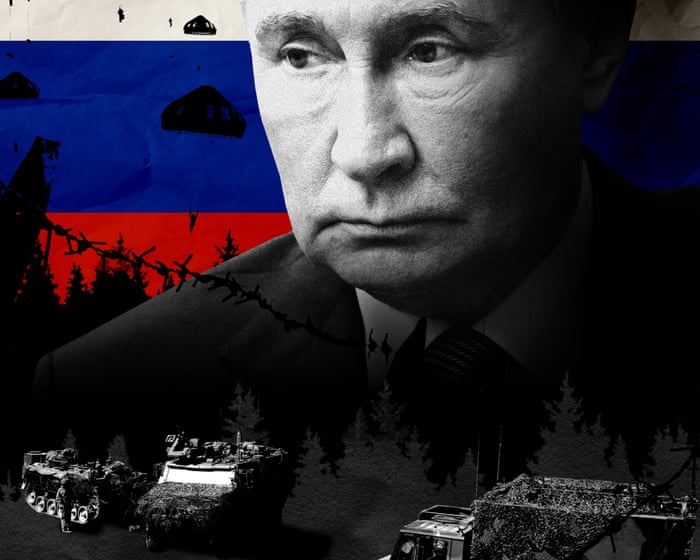
But Trump has humiliated Ukrainians and mocked Europeans, stubbornly refusing to pressure Vladimir Putin. Yes, the U.S. still sells weapons to Europeans, who then send them to Ukraine. More recently, it has opened the door to providing postwar security guarantees to Kyiv. But U.S. military support for Ukraine has dwindled, and any security guarantees remain hypothetical while a ceasefire is nowhere in sight.
Moreover, what is the value of any agreement signed with Trump if he can tear it up at any moment, as he has already shown with trade? Europeans tacitly condoned Trump’s illegal war on Iran and were ambiguous about his equally illegal attack on Venezuela. In return, they received the threat of Greenland’s annexation. The U.S. president could not have been more candid in Davos when he…It has been said that no one defends what they don’t own. If anyone still doubted his commitment to NATO, there went Article 5 on collective defense—thrown out the window.
Europe’s year of deference has been a spectacular failure. But something is shifting. Europeans held firm on Greenland. European leaders, both individually and together, voiced solidarity with Denmark and supported its sovereignty. A group of European countries even sent troops to Greenland for a joint military exercise. Most EU nations, aside from Hungary and Bulgaria, have avoided Trump’s so-called “peace board.”
The European Parliament suspended ratification of the EU-U.S. trade deal on tariffs, and EU institutions began debating possible retaliatory steps if the U.S. moved ahead with economic pressure. These could include counter-tariffs worth nearly €100 billion and deploying the EU’s most powerful trade tool—the anti-coercion instrument—to restrict access to the European single market or impose other measures aimed at limiting the ability of U.S. firms to invest in Europe.
All of this remains hypothetical, given the U.S. backed down. We can’t be sure whether the EU would have the stamina to follow through if American economic coercion actually intensified. And it’s very likely that if the EU did retaliate, it would do so gradually, seeking consensus and always offering a way out. In other words, the EU would continue to act in a quintessentially European way.
But the lesson Europeans should take from this latest episode of the Trump show is that the firmness they’ve tentatively shown works far better than the subordination they tried over the past year. Tensions have eased, so the risk is that European leaders will slip back into their comfort zone of caution and inaction. Yet this calm won’t last long. When the next transatlantic crisis erupts, they should remember that Trump, like any strongman, understands only strength.
Nathalie Tocci is a Guardian Europe columnist.
Frequently Asked Questions
FAQs Trump Greenland and the Strongmen Respond to Strength Lesson for Europe
BeginnerLevel Questions
1 What actually happened with Trump and Greenland
In 2019 President Donald Trump publicly confirmed his interest in the US purchasing Greenland from Denmark When the idea was immediately and firmly rejected by Danish leaders as absurd Trump reacted strongly He canceled a planned state visit to Denmark and insulted the Danish Prime Minister creating a major diplomatic rift
2 What does strongmen only respond to strength mean in this context
This takeaway suggests that leaders like Trump who often use aggressive transactional and unilateral tactics are seen as respecting and engaging only with counterparts who project firmness unity and resolve Weak or divided responses are viewed as invitations for further pressure
3 Why is this a lesson specifically for Europe
The incident highlighted Europes vulnerability A single comment from the US President disrupted relations with a key European ally overnight It forced Europe to confront its dependence on a US security guarantee from an administration that treated alliances as deals not partnerships underscoring the need for greater European strategic unity and autonomy
4 Was Trump serious about buying Greenland
While the idea of purchasing territory may seem farfetched the underlying strategic interest was serious Greenlands location and resources are geopolitically valuable The way the idea was floatedpublicly and without diplomatic preparationwas the dramatic and disruptive part treating an allys territory like a real estate deal
Advanced Analytical Questions
5 Beyond the insult what was the strategic signal to Europe in this episode
The episode signaled a fundamental shift from the US as a predictable alliancebased leader to a transactional unilateral power under Trump It demonstrated that even core NATO allies were not immune to capricious treatment if they did not acquiesce to US demands pushing Europe to reconsider its own defense and diplomatic posture
6 How did Europes response illustrate the strength it needed to show
Initially Europe was shocked and divided in its reaction The lasting lesson however catalyzed a push for strategic autonomythe idea that Europe must build its own capacity to act independently in defense technology and diplomacy A unified firm