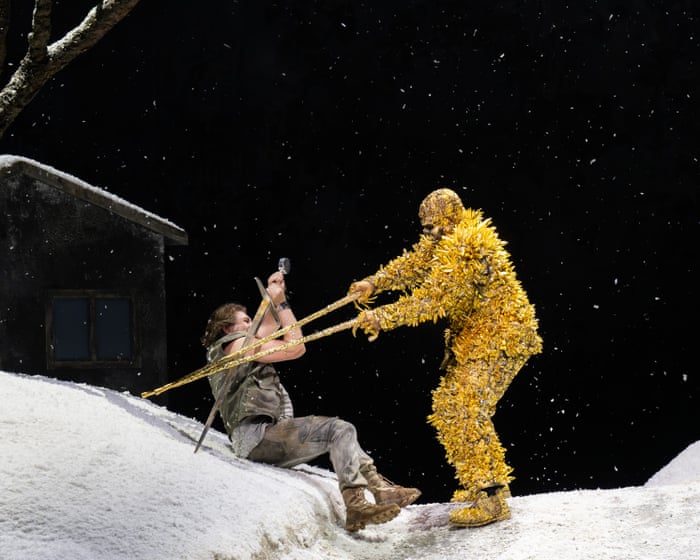
The morning I meet Oliver Mears, the director of opera at Covent Garden, I’m still walking on air. The day before, I’d seen Wagner’s epic Siegfried, the third part of the Ring cycle. Nearly six hours long, it immerses you in a world of gods and giants, heroes and warrior women—but also profound and poignant human relationships. With the remarkable Andreas Schager in the title role among a superb ensemble cast, it was the Royal Opera at its best. On the way to his office, Mears walks through the backstage labyrinth. Singers are warming up; wardrobe staff discuss a last-minute costume fix; and a couple of mice scurrying across the canteen lend a bohemian atmosphere. Heaven (rodents aside).
Mears tells me about next season: course after course of an operatic banquet. There will be a new Parsifal, conducted by music director Jakub Hrůša and directed, in his house debut, by the “brilliantly charismatic and interesting” Kazakhstan-born Evgeny Titov. There’s a new Un Ballo in Maschera by Verdi, with another director new to the house, the “stylish and rigorous” German Philipp Stölzl. Richard Jones’s brilliant production of Janáček’s Kát’a Kabanová returns, with Hrůša conducting—his interpretation of Janáček’s Jenůfa last season was one of the great musical experiences of my life.
After the popular success of Mark-Anthony Turnage’s Festen last year—an adaptation of Thomas Vinterberg’s film about a family party where a legacy of child abuse is horrifyingly revealed—there will be no main-stage operatic premiere next season. Mears says that in an ideal world of limitless money, he would like to stage a couple per season, but it’s a huge financial commitment. With money tight, each major new piece, whether Festen or Kaija Saariaho’s Innocence, which premiered in 2023, needs to be a “bullseye.”
It’s a reminder of how the national opera scene has been affected by a series of aggressive Arts Council England cuts. Glyndebourne and Welsh National Opera are touring less; English National Opera has been semi-relocated from London to Greater Manchester. “I’ve always said that we thrive when we have a friend down the road that’s in good shape,” says Mears. I wonder whether, in light of all this, the Royal Opera feels a more urgent role in nurturing emerging opera composers. Recent successes in smaller-scale works have included Philip Venables’ 4.48 Psychosis, which is being revived for the second time next season, and Oliver Leith’s Last Days, which premiered four years ago and returned to the Linbury in December.
But the program that produced these two works—a collaboration with the Guildhall School of Music and Drama—has been paused, and across the board, opportunities are dwindling. “What I think is most important is that we create and generate work ourselves, and we’ve just committed to a very large investment in research and development here,” says Mears. What they are looking for, he says, is pieces that will have “audiences on the edge of their seats.” Too often, he notes, “when you go and see a contemporary opera, you fall asleep because there isn’t enough contrast, there isn’t enough variety in the vocal writing. And they may have asked a friend or a poet to write a libretto, which doesn’t work.” (He won’t tell me which new works he’s nodded off in, and though I see his point, poets and friends can make pretty good librettists—consider Myfanwy Piper’s The Turn of the Screw for Britten, or W.H. Auden’s The Rake’s Progress for Stravinsky.)
The Royal Opera, he says, has one main-stage commission with a UK composer underway and is in talks with another.Regarding those at an earlier stage in their careers, since there are “literally dozens of different composers,” he prefers not to single anyone out. I look forward to seeing these research and development projects evolve into full commissions.
Beyond the walls of the Royal Opera House, the world is marked by wars, divisive politics, destruction, and violence—a reality Wagner captured accurately, if you look past the magic and mythology. Covent Garden is not isolated from these issues. Last July, a performer unfurled a Palestinian flag during an opera curtain call. A staff member immediately emerged from the wings and tried to forcibly seize it, an incident captured on video by multiple audience members and widely reported.
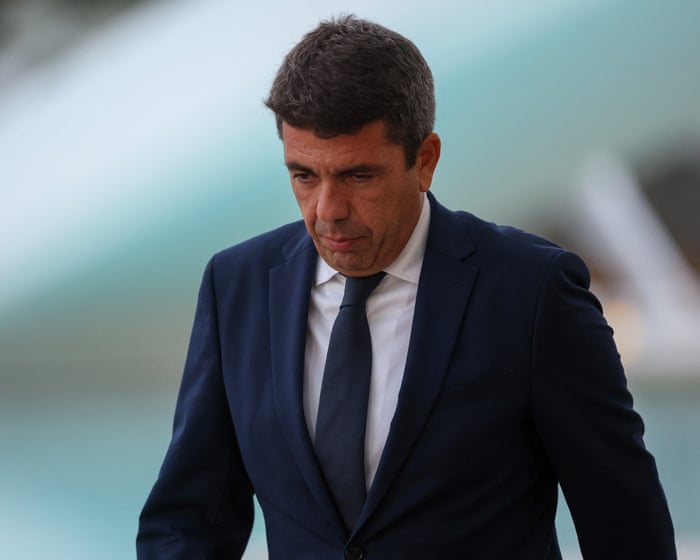
That staff member was Mears. When asked if he regrets his reaction, he says, “The curtain call is not the place for an impromptu personal political protest, especially when it could be seen as speaking for the entire organization. I stand by my principles, but it was a messy and unfortunate situation.” There might have been other ways to handle it, such as lowering the curtain—a protocol now in place for any future incidents. I don’t envy Mears having to make a split-second decision. However, 182 of his Royal Ballet and Opera colleagues signed an open letter criticizing his “visible anger” and praising the “moral clarity” of the performer, dancer Daniel Perry. Perry later claimed Mears told him he would never work at the Royal Opera again. Mears responds, “I’m not going to comment on a professional conversation that may or may not have happened.”
I’m interested in understanding the RBO’s stance on expressions of political solidarity. After Russia’s full-scale invasion of Ukraine, blue-and-yellow flags were displayed and the national anthem was played, showing unequivocal support. Yet this season—and next, in Mears’s own production of La Gioconda—Russian soprano Anna Netrebko will perform. Netrebko has previously received honors from Vladimir Putin, appeared on lists of his supporters during elections, and was photographed in 2014 holding a “Novorossiya” flag, an emblem used by Russian-backed separatists in Ukraine. (She told Die Zeit she didn’t understand the flag’s significance or know about her name on Putin’s 2018 supporters list.)
“Anna has made her opposition to the war clear on many occasions,” says Mears. “She hasn’t returned to Russia, even personally, since the invasion.” A dual national living in Austria, Netrebko has been welcomed at major opera houses since 2022 (though not at New York’s Metropolitan Opera, and a concert in Romania was canceled following an appeal from Ukraine’s embassy). However, her statements condemning “the war” without naming Putin or addressing Russia’s war crimes have been seen as insufficient by many, especially given Russia’s history of using culture as propaganda.
When asked what guides the company’s approach to such difficult issues, Mears notes that management declined requests to fly the Israeli flag on the building after October 7, 2023, and, on another occasion, the flag of the Democratic Republic of the Congo.”All of these are responses to horrific events. There’s no question about that, but you can see where this might lead. We haven’t always gotten it right, but we have strived to be as impartial as possible.”
We conclude by discussing the magnificently unfolding Ring cycle—a huge undertaking that was first discussed with conductor Antonio Pappano and director Barrie Kosky back in 2019. “The Ring cycle,” he says, “is one of the cornerstones of the entire repertoire, and it’s a sign of any opera house’s ambition and vitality”—a kind of testing ground for an opera company. “When people come into our theater, I want them to feel those big emotions and to experience those huge stories of betrayal, despair, jealousy, and elation,” he says. “When opera is done really well, it’s the most overwhelming experience you can have.” Full details of the RBO 2026-27 season are available here, and general booking opens on June 24.
Frequently Asked Questions
Frequently Asked Questions Royal Opera Houses New Season Recent Controversies
Beginner General Questions
Q Who is Oliver Mears
A He is the Director of Opera at The Royal Opera House in London responsible for planning and overseeing the opera productions
Q What does people on the edge of their seats mean in this context
A It means Mears wants the new seasons productions to be thrilling emotionally engaging and dramatically intensenot just traditional or predictable
Q What were the main controversies from the last season
A They primarily involved modern productions of classic operas that divided audiences This included bold directorial choices updated settings and reinterpretations that some traditionalists felt were disrespectful to the original work
Q Is the Royal Opera House only for opera experts
A No Mears and the ROH actively want to attract new audiences They offer introductory talks cheaper tickets and contemporary productions that can feel more accessible
Q Whats a key goal for the new season
A To balance artistic ambition with audience engagement creating exciting and relevant theatre while learning from past debates about tradition versus innovation
Advanced Detailed Questions
Q How does Mears plan to address the criticism of being too woke or politically correct
A While not shying away from relevant modern themes he emphasizes that the core goal is compelling storytelling and musical excellence not messaging The focus is on theatre first
Q What is the artistic philosophy behind staging controversial modern productions
A The philosophy is that opera is a living art form Reimagining classics for contemporary audiences can reveal new meanings keep the works vital and spark necessary conversations about their relevance today
Q Can you give an example of a common problem when updating a classic opera
A A major problem is alienating the core traditional audience who have specific expectations while also potentially confusing new audiences if the modern concept isnt clear or coherent
Q What practical tips does Mears suggest for someone unsure about a modern production