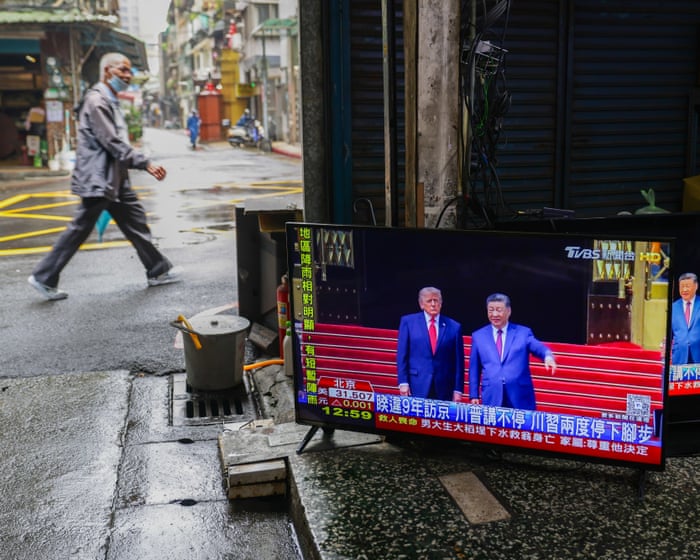
While the Labour Party was falling apart last week, Donald Trump was visiting China. By the time Wes Streeting had sent his resignation letter to Keir Starmer, the US president had already finished a two-hour meeting with his Chinese counterpart, Xi Jinping, and moved on to sightseeing.
These events happened at the same time, but in the battle for media and Westminster attention, the superpower summit couldn’t compete with the moves against the prime minister. That’s normal. A domestic crisis will always push foreign events off the news agenda.
There were no surprises in Beijing. Trump was on his best behavior. In public, the two leaders stuck to a script of mutual flattery and avoiding conflict. What they said in private—about trade, Taiwan, AI, and Iran—might turn out to be important. It’s hard to tell when the details are secret. Andy Burnham’s chances of winning a by-election in Greater Manchester probably didn’t come up.
Similarly, Sino-US relations won’t be a topic on the campaign trail in Makerfield over the coming weeks. It’s not what party strategists call a “doorstep issue.” When voters have limited attention for political messages, candidates are advised to focus only on the most pressing public concerns. That usually leaves out the world beyond Britain’s borders.
There are exceptions. Gaza has driven support for Greens and independent candidates in recent elections, but more as a source of anger than a clear plan for what the UK government—let alone a local councillor in Hackney—could realistically achieve in the Middle East.
Starmer performs better on the international stage than at home. Even his rivals for the Labour leadership praise his decision not to get Britain involved in the US-Israeli conflict with Iran. Streeting’s resignation letter highlighted it as an example of “courage and statesmanship.” It also stands out as a sign of good judgment compared to the reckless impulses Nigel Farage and Kemi Badenoch showed in the early days of the conflict, which they soon regretted.
But the prime minister gets no credit for making a big foreign policy decision right, and not just because voters have other things on their minds. Keeping British forces out of battle doesn’t stop Britain from feeling the effects of war. The economic pain from closing the Strait of Hormuz isn’t limited to the countries fighting, and it doesn’t even hit them the hardest. Starmer’s military restraint doesn’t prevent an energy price spike from feeding into inflation, which adds pressure on already stretched household budgets. It also raises market expectations that the Bank of England will have to increase interest rates, which pushes up gilt yields, meaning the government has to spend more on paying off its debts, leaving less money for the public services Labour MPs wish the chancellor could fund more generously.
Turbulent waters in the Gulf ripple around the world and wash up on doorsteps in Makerfield. The same goes for the Trump-Xi meeting, though the impact is more subtle. The summit showed China’s status as a superpower on par with, or close to, the US. No single country can match the top two in economic strength and technological progress. Europe is a contender, but only if it pools its continental wealth with strategically focused investment.
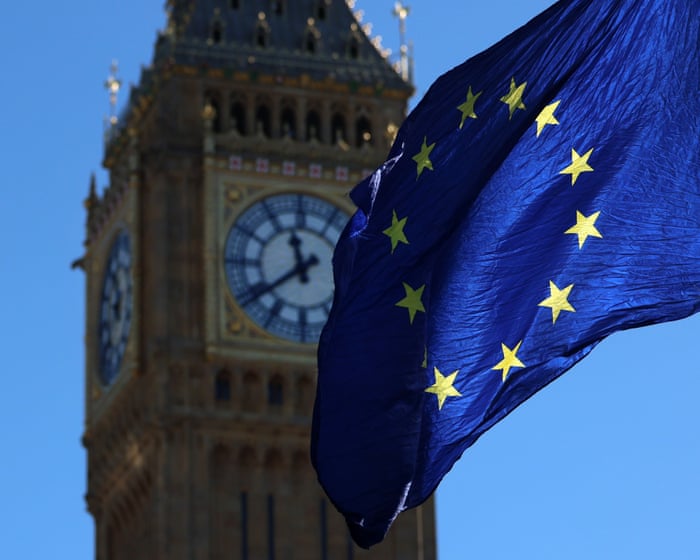
Britain can choose to be a partner in that project or accept a role on the sidelines. National power could be boosted in an alliance of neighbors with broadly similar global interests. Or it can be limited by the Brexit cult of sovereignty, which sees regulatory alignment with Europe as colonization but welcomes subordination to US tech giants and industrial lobbies, calling it free trade.
British politics isn’t facing up to this dilemma, which requires an honest look at the huge costs and small benefits of life outside the EU. That’s less taboo than it was two years ago, when Starmer fought a general election thinking he could “make Brexit work.” Now he callsIt was a disaster. But the terrain is still tricky for Labour.
To have any chance of winning a seat where the majority voted to leave the EU in 2016, Burnham feels he must treat the referendum result as a symbol of unchangeable democratic will. In his first major speech since announcing he would run in the by-election on Monday, the mayor of Greater Manchester said Brexit had been damaging, but also that “the last thing we should do right now is revisit those arguments.” He promised a “relentless domestic focus” to “fix our own country.” This narrow focus is understandable given the circumstances, but it’s still disappointing in a speech that was otherwise thoughtful about the roots of Britain’s economic problems. Burnham would rather not have brought up the issue at all, but Streeting had already put it on the table days earlier by saying he would prefer to rejoin the EU.
This isn’t just a Labour problem. Farage, the ideological father of Brexit, doesn’t dare boast about it as an achievement. His vision of Britain’s future is as a junior partner in a US empire led by Trump’s “Make America Great Again” movement. Given Trump’s unpopularity in the UK, the Reform UK leader keeps that to himself. Badenoch’s culture-war approach pushes her in the same direction. Her most memorable comment on Europe was endorsing a speech by JD Vance, where the US vice-president described European liberals as a bigger threat to democracy than Vladimir Putin.
Wes Streeting’s Brexit strategy might be clever gamesmanship – but it has nothing to do with Europe | Anand Menon
Read more
The Tories have no sensible strategic vision for Britain in the 21st century. When Starmer visited Beijing earlier this year, Badenoch dismissed it as “kowtowing.” She said she wouldn’t have gone in his place. This tough talk was meant to show loyalty to Washington in the great power rivalry. Presumably, she disapproves of Trump showering Xi Jinping with compliments and calling it an honor to be his friend. Maybe she just thinks British prime ministers need a signal from the White House before bowing down.
Opposition leaders don’t have to think about foreign issues if they don’t come up on the doorstep. That’s the trap Labour fell into. The electoral benefit of avoiding tough questions about Britain’s place in the world delayed finding answers and limited them to the barren field of Brexit-focused policy options. Having failed to place national problems in their proper global context, Labour ended up stuck in shallow political debate. That’s the comfort zone for demagogues who blame the country’s problems on immigrants and benefit claimants.
It’s hard to build a compelling doorstep campaign around a complex geopolitical situation, especially for a government in power. It risks sounding like dodging responsibility, blaming mistakes in office on global bad luck. But that’s also why the mistake of Brexit has to be confronted directly. There’s a reason “take back control” was such an effective slogan in the referendum. It spoke to feelings of anxiety and powerlessness in a world of confusing change.
Those feelings haven’t gone away. They’re worse because leaving the EU reduced, not increased, Britain’s ability to influence global events. That’s the core argument. I suspect many people are open to being convinced, if they aren’t already: the path to control leads back to Europe.
Rafael Behr is a Guardian columnist.
Frequently Asked Questions
Here is a list of FAQs about the changing global balance of power and Britains ongoing Brexit deadlock
BeginnerLevel Questions
1 What does the global balance of power is changing actually mean
It means that countries like China India and others are becoming much richer and more influential while the traditional dominance of the US and Europe is shrinking The world is no longer run by just a few Western nations
2 What is the Brexit deadlock
Its the ongoing political argument in Britain about exactly how to leave the EU which started in 2016 Instead of moving on the country is stuck arguing over trade rules Northern Ireland and fishing rights even though Brexit has already happened
3 Why is Britain trapped in this deadlock while the world changes
Because all of Britains political energy and government time is spent fighting about Brexit This means it cant focus on building new trade deals with fastgrowing countries like India or Indonesia or on investing in new technology and energy
4 Is Britains economy suffering because of this deadlock
Yes The uncertainty has made many businesses less willing to invest in the UK It has also created new paperwork and costs for companies trading with the EU which is still Britains closest and biggest market
Advanced Questions
5 How does the UKs obsession with Brexit compare to the rise of the Global South
While the UK argues over tariffs on sausages and car parts countries like Brazil South Africa and Indonesia are forming new trade blocs and investing heavily in each other The UK is missing out on these new partnerships because its looking backwards not forwards
6 What is a concrete example of Britain losing out because of this deadlock
The UK was slow to negotiate a trade deal with the huge CPTPP It eventually joined but only after years of delay Meanwhile China is already the biggest trading partner for most of those Pacific nations leaving the UK far behind
7 Could the deadlock ever be resolved or is it permanent
It could improve but not easily The current government is unlikely to rejoin the EU or its single market A practical fix would be a Swissstyle deal that reduces trade friction but this is politically toxic because it looks like