Ukraine’s leading arms company is now producing around 100 long-range Flamingo cruise missiles each month. That pace is enough to support an ongoing campaign of deep strikes against targets hundreds of miles inside Russia.
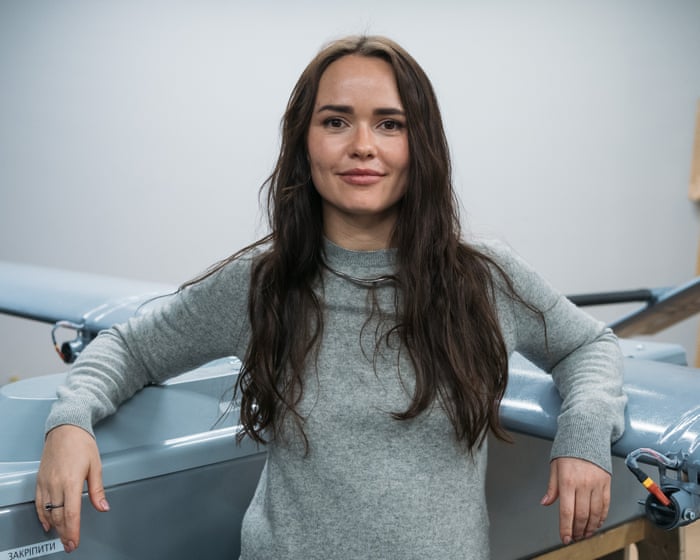
Fire Point is also manufacturing FP-1 and FP-2 fixed-wing drones at a rate of “hundreds per day,” according to CEO Iryna Terekh. Large-scale production has restarted after a pause caused by delays in approving €90 billion in EU loans to Ukraine.
The company’s growth since it was founded after the war began in 2022 shows how quickly Ukraine’s domestic defense industry is maturing. It is finally giving the military the long-range capabilities that Western countries were unwilling to provide earlier in the conflict.
“I’m not aware of any deep strike attack in the past few months that didn’t involve our products,” Terekh said. Missile and drone strikes using Fire Point munitions are happening daily, “on average five to 15 times.”
Flamingo missiles, which carry up to 1,150 kg of explosives—enough to break through concrete walls—were used in June to attack a Russian military components factory in Cheboksary, more than 600 miles from Kharkiv in northeastern Ukraine.
Terekh said the actual flight distance was among “the longest recorded in the history of cruise missile missions,” at about 1,800 km (1,118 miles), due to the complex flight path. Each Flamingo costs just under $600,000, which is cheaper than a US Tomahawk at around $3.5 million.
The lighter FP-1 drones, with a range of over 1,000 miles, are mainly used to attack less heavily defended Russian oil refineries. This campaign has cut Russian oil production by 20% and caused long lines at gas stations. These drones cost between $55,000 and $75,000, Terekh added.
Fire Point now operates from 83 factories in Ukraine and one in Denmark, employing 6,000 people—up from 3,500 at the end of last year, according to Terekh. The Guardian visited one manufacturing site last December, where dozens of workers were assembling drones from plywood, plastic, and carbon fiber parts.
“What we’re seeing now is the result of several years of effort by the Ukrainian side,” said Ben Hodges, a former US Army general who commanded forces in Europe. “They can not only reach deep inside Russia with precision and get past Russian air defenses, but their weapons also carry a payload big enough to cause real damage.”
This marks a shift in the long-running war, as Ukraine is catching up to Russia’s ability to carry out deadly long-range attacks. According to Ukrainian estimates, Russia produces up to 70 air-launched Kh-101 cruise missiles, 25 sea-launched Kalibrs, and about 60 Iskander M ballistic missiles each month.
Fire Point is also developing Ukraine’s first ballistic missiles, which Terekh hopes will be test-launched by the end of the year.
A short-range variant of the FP-7 will form the basis of the separate Freyja initiative—an international effort involving Ukraine and nine other European countries to create an alternative air defense system to the US Patriot. Fire Point will produce the launchers and interceptors, with a target cost of $1 million per interceptor.
“We adore Patriot,” Terekh said, but added that global production is nowhere near meeting current demand. Only Patriot systems can stop Russian ballistic missiles from hitting Kyiv and other cities, but Ukraine’s stockpiles are running low.
“The entire global production of Pac-3 missiles is around 600 to 700 per year—and that’s exactly the number of Patriot missiles that were used.””…used in the Middle East within two weeks,” she added. The hope now is that the technology can be first tested by July next year.
Fire Point is mostly owned by its founder, businessman Denys Shtilerman. Although Shtilerman had talks about selling a stake to Timur Mindich—a friend and former business associate of President Volodymyr Zelenskyy, who was accused last year of running an energy corruption scheme—the founder says no deal went through.
Terekh, who studied architecture before joining Fire Point in the summer of 2023, when it had 18 employees, said the company shows how the Russian invasion has urgently pushed Ukraine—once the heart of Soviet industry—to modernize and reinvent itself.
“Ukraine, in a postwar economy, will need to export things with high added value. We don’t want to just be the world’s breadbasket anymore,” said Terekh, referring to Ukraine’s historical strength in agriculture. For now, though, the demands of the war mean Fire Point’s weapons are not exported.
Frequently Asked Questions
Here is a list of FAQs about a Ukrainian startup taking the missile fight deep into Russia written in a natural tone with clear answers
BeginnerLevel Questions
1 What is this Ukrainian startup doing
They are building longrange drones and missiles that can hit targets hundreds of miles inside Russia The goal is to strike military bases oil refineries and supply lines that are far from the front lines
2 Why cant Ukraine just use the weapons the West gives them
Many Westernsupplied weapons come with restrictions barring their use on Russian soil These Ukrainianmade weapons have no such limits allowing Ukraine to attack strategic targets deep inside Russia
3 How is this different from regular drones
These are much larger and more powerful than the small commercial drones you see in videos They are designed specifically for longrange strikes carrying bigger explosives and flying hundreds of kilometers
4 Is this legal under international law
Ukraine argues it is legal as an act of selfdefense against an aggressor International law allows a country to strike legitimate military targets on an attackers territory if it is necessary for its defense
5 What kind of targets are they hitting
They are hitting military airfields ammunition depots fuel storage facilities and logistics hubs The idea is to disrupt the Russian militarys ability to supply and support its frontline troops
AdvancedLevel Questions
6 How do these Ukrainian drones and missiles get past Russian air defenses
They use a combination of lowaltitude flight route planning that avoids known air defense systems and sometimes decoy drones to overwhelm and confuse Russian radar They are also designed to be harder to detect
7 What are the main challenges for this startup
Scaling up production is a huge challenge They need to rapidly manufacture thousands of these systems while securing funding sourcing rare components and constantly upgrading the tech to beat Russian electronic warfare
8 How does this affect the overall war strategy
It forces Russia to thin out its air defenses and protect rear areas taking resources away from the front It also damages Russias war economy by hitting oil refineries and logistics making it harder for them to wage war
9 Whats the difference between a drone and a missile in this context
A drone can loiter be controlled in realtime and return if a