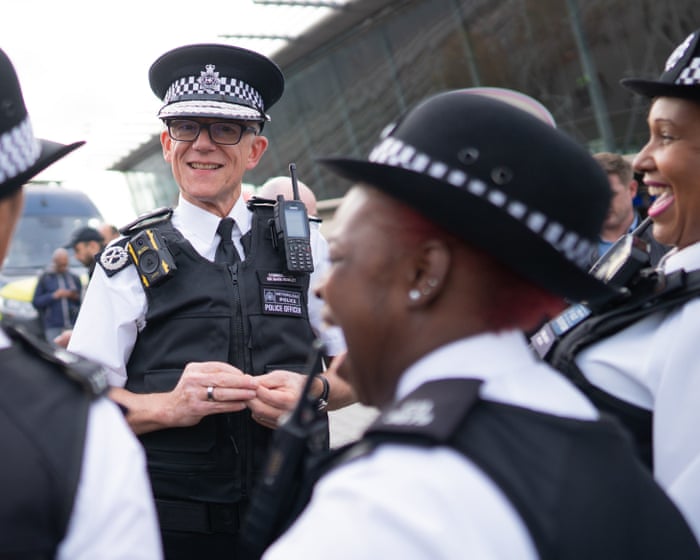
Effective policing depends on inclusivity. If you are committed to policing by consent—which depends on the trust of all communities—you cannot do without it. Last Monday, we launched a major recruitment campaign. We have no interest in the politics and ideologies of the culture wars. Inclusion is an operational necessity.
London is the world’s greatest, most diverse, and globally connected city. Nine million people live here. Hundreds of languages are spoken. The scale and complexity of policing London today is unlike anything Sir Robert Peel imagined when he founded the Metropolitan Police. Yet in 1829, he recognised that successful policing in a democracy relies on public approval, respect, and cooperation as much as on “impartial service to the law.”
We cannot be effective if large sections of society do not trust us, do not work with us, or do not see policing as a service that understands their experiences. An inclusive workforce is not a public relations exercise. It makes us better at protecting victims, catching criminals, and preventing crime.
We cannot provide an equally good response to all victims if our understanding of some Londoners is weaker than others. That is obvious when it comes to issues such as language barriers or supporting deaf people, but it is just as important when culture, experience, or background may make a victim less willing to talk about sexual abuse, domestic violence, or other traumatic crimes.
When victims speak to officers and staff who understand them, and therefore feel fairly and impartially treated, we solve more crime and prevent more harm. When victims feel understood, they are more likely to come forward. When communities trust the police, they are more likely to report crime, share intelligence, and support investigations. That trust underpins our effectiveness and goes to the very heart of policing by consent.
We cannot police London effectively without the trust and confidence of the communities we serve. By listening to people’s lived experiences and working in partnership with communities, we can build stronger relationships and greater legitimacy. This is particularly important when using police powers, including stop and search, where fairness, empathy, and accountability are essential to maintaining public confidence and keeping London safe.
We need men and women who can carry out surveillance, work undercover, and operate effectively across London. We need officers and staff who can build trust with victims of violence against women and girls, who can connect with London’s communities, and who bring different experiences, perspectives, and skills to complex policing challenges.
These are not ideological arguments. They are practical policing realities. And yet, despite progress, we are still not attracting talent equally. Some worry they will not fit in. Others are discouraged by family or friends. We have a responsibility to challenge those perceptions and remove those barriers. That is what our recruitment campaign is designed to do.
Last year we had the most representative intake of recruits in our history. More women joined. More Londoners from ethnic-minority backgrounds joined. That is welcome progress. We want talent from every corner of London to join our courageous and resilient teams and to close the gap with communities we have previously drawn least from.
Some will wrongly suggest that increasing representation means lowering standards. Nothing could be further from the truth. For generations, talented people from some communities have faced barriers that limited opportunities to join policing or build a career within it. Tackling those barriers is not favouritism. It is fairness. Our standards are unchanged and uncompromising. By reaching further into communities where we have historically been underrepresented, we are ensuring we attract the widest and strongest possible pool of talent, helLet’s build a Met that truly reflects and understands every corner of London.
Skip past newsletter promotion
Free weekly newsletter
Sign up to Matters of Opinion
Guardian columnists and writers on what they’ve been debating, thinking about, reading, and more
Enter your email
Sign up
After newsletter promotion
We want to be an inclusive organisation where everyone has an equal chance to thrive. Fairness, not favour, should be at the heart of opportunity.
I also want to see more women and people from underrepresented backgrounds applying for some of the most exciting roles in British policing.
That means firearms teams, the flying squad, counter-terrorism, specialist operations, public protection and major investigations.
Public debate about inclusion has become increasingly polarised in recent years. Too often people assume that inclusion and impartiality or merit are competing goals. They are not.
As commissioner, I know the Met’s success in protecting communities and helping London thrive depends on inclusivity as well as impartiality. We will not be blown off course by the culture wars. This is not an ideological choice. It is, as Peel’s founding vision for “policing by consent” described, an operational necessity.
Mark Rowley is commissioner of the Metropolitan police
Do you have an opinion on the issues raised in this article? If you would like to submit a response of up to 300 words by email to be considered for publication in our letters section, please click here.
Frequently Asked Questions
Here is a list of frequently asked questions based on Mark Rowleys statement about increasing police diversity in London
Who is Mark Rowley
He is the Commissioner of the Metropolitan Police the top police officer in London
What did he promise to do
He promised to increase the number of police officers from ethnic minority backgrounds in London
What does ethnic minority mean
It refers to people whose race skin color or nationality is different from the majority white population in the UK This includes Black Asian and mixedrace people
What are the culture wars he mentioned
Culture wars is a term for heated public debates about social issues like race gender and history In this context it refers to people who might criticize or oppose his diversity efforts
Why is he doing this
To make the police force better reflect the diverse city it serves This is meant to build trust and improve how police work with all communities
Why is diversity in the police important
It helps the police understand and connect with different communities When people see officers who look like them they may feel more comfortable reporting crimes and trusting the police
What are the benefits of having more minority officers
Better trust Communities may trust the police more
Better communication Officers may understand cultural differences better
Better policing Different perspectives can lead to smarter solutions for crime
Legitimacy The police force looks more like the public it protects
What problems is he trying to fix
The Metropolitan Police has had issues with racism and a lack of trust from minority communities Increasing diversity is one way to address this
What are the challenges in hiring more minority officers
Trust issues Some people from minority groups may not want to join a force they dont trust
Culture The police force has a history of being unwelcoming to minorities
Retention Its not just about hiring its also about keeping officers and helping them advance
Public criticism He faces pushback from people who disagree with focusing on diversity
How will he measure success
Success would be seeing the number of ethnic minority officers go up and stay up It also means seeing them get promoted to higher ranks
What can be done to make this work